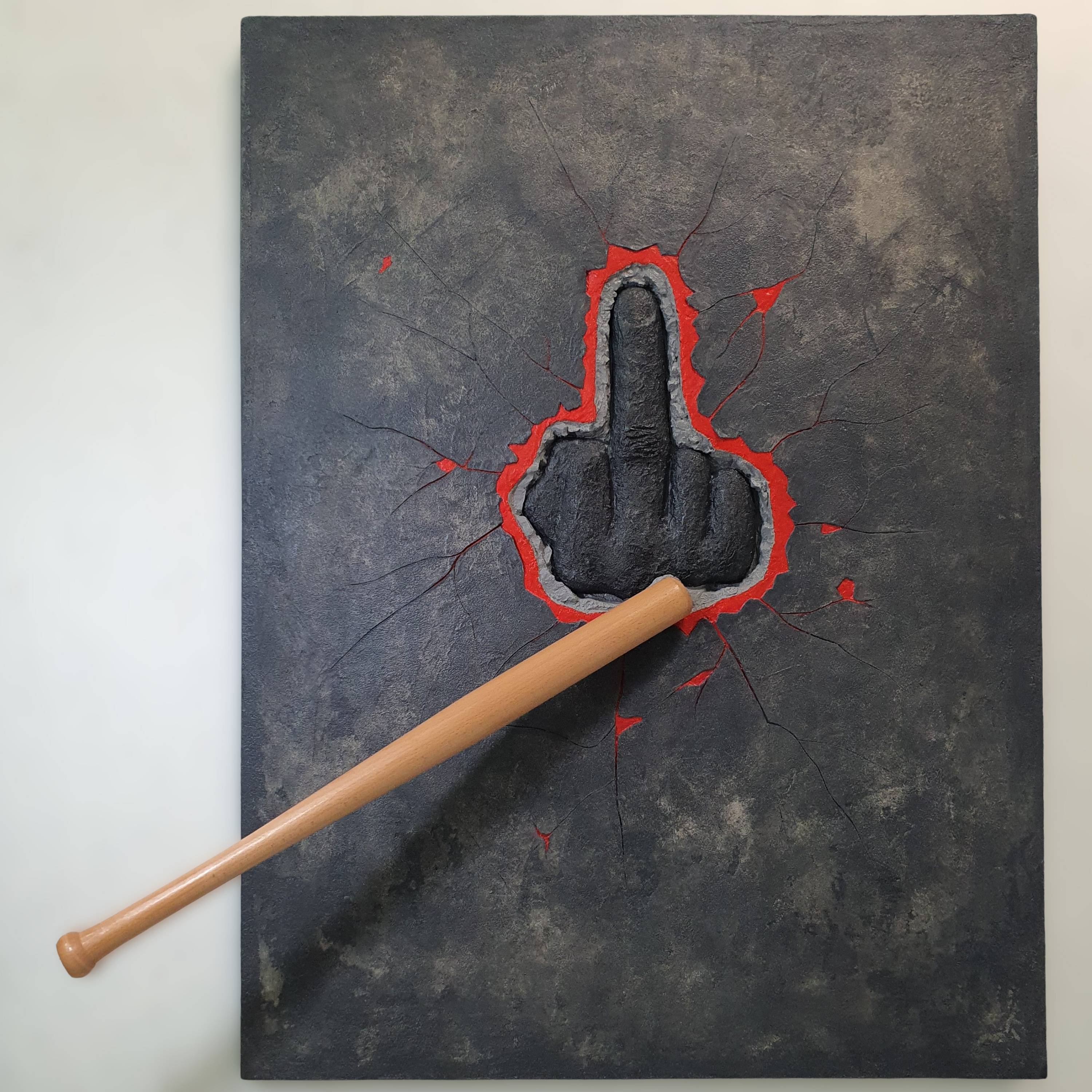
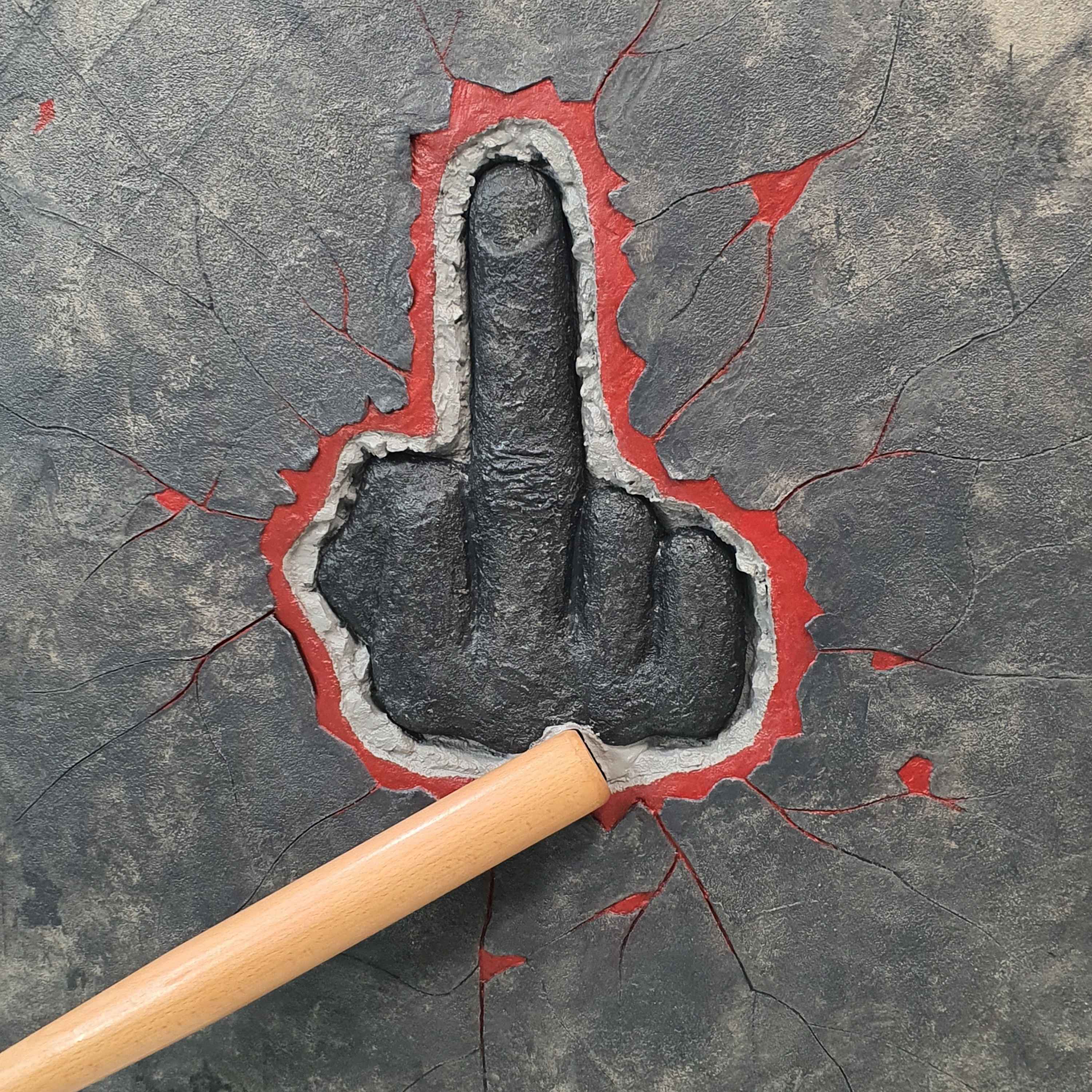
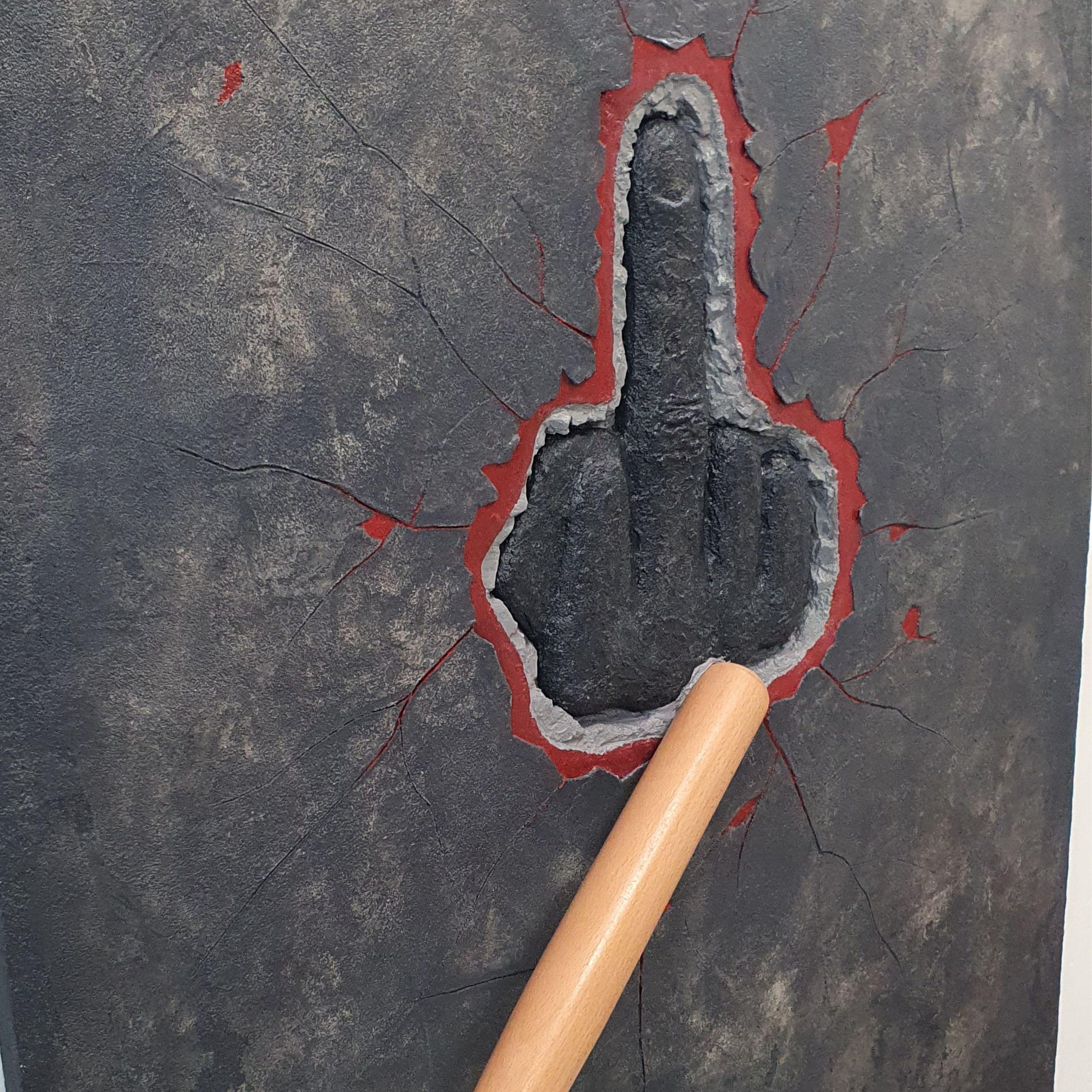
Hater is a work born out of the need to scream — but a scream that is controlled, intentional, and directed not into the void, but into the very heart of contemporary social tension. At first glance, its form may seem vulgar and confrontational: a middle finger smashed into a wall. And yet, it becomes a powerful metaphor for a civilization in fracture.
It’s not just a symbol of contempt. It is a collapse of language — where emotions are no longer communicated with words, but instead suppressed or erupt in acts of verbal violence. The red cracks radiating from the gesture resemble seismic shockwaves of pain and rage — emotional fractures that begin in the individual and echo through society.
Entirely crafted from jesmonite — a material known for its durability and sculptural potential — the piece gains a sense of weight and permanence. The dark, rough surface contrasts with the piercing red fissures, creating a tension between the restrained and the explosive. The protruding wooden baseball bat is not merely a tool of destruction; it serves as a bridge between the viewer and the inner conflict materialized by the artwork.
On a personal level, Hater may be read as a revolt against expectations, hypocrisy, and emotional violence — a deeply felt, unapologetic refusal to conform. On a social level, it acts as a universal commentary on online hate, cancel culture, and the erosion of empathy.
It also raises questions about the nature of art itself: can a gesture we dismiss in everyday life as obscene become, within the context of art, a legitimate language of raw emotion? Can symbolic violence lead to catharsis?
Hater does not allow for indifference. It forces confrontation, but offers no fixed interpretation. It speaks of what is uncomfortable yet real — and in doing so, becomes the voice of a generation that feels more than it can articulate.