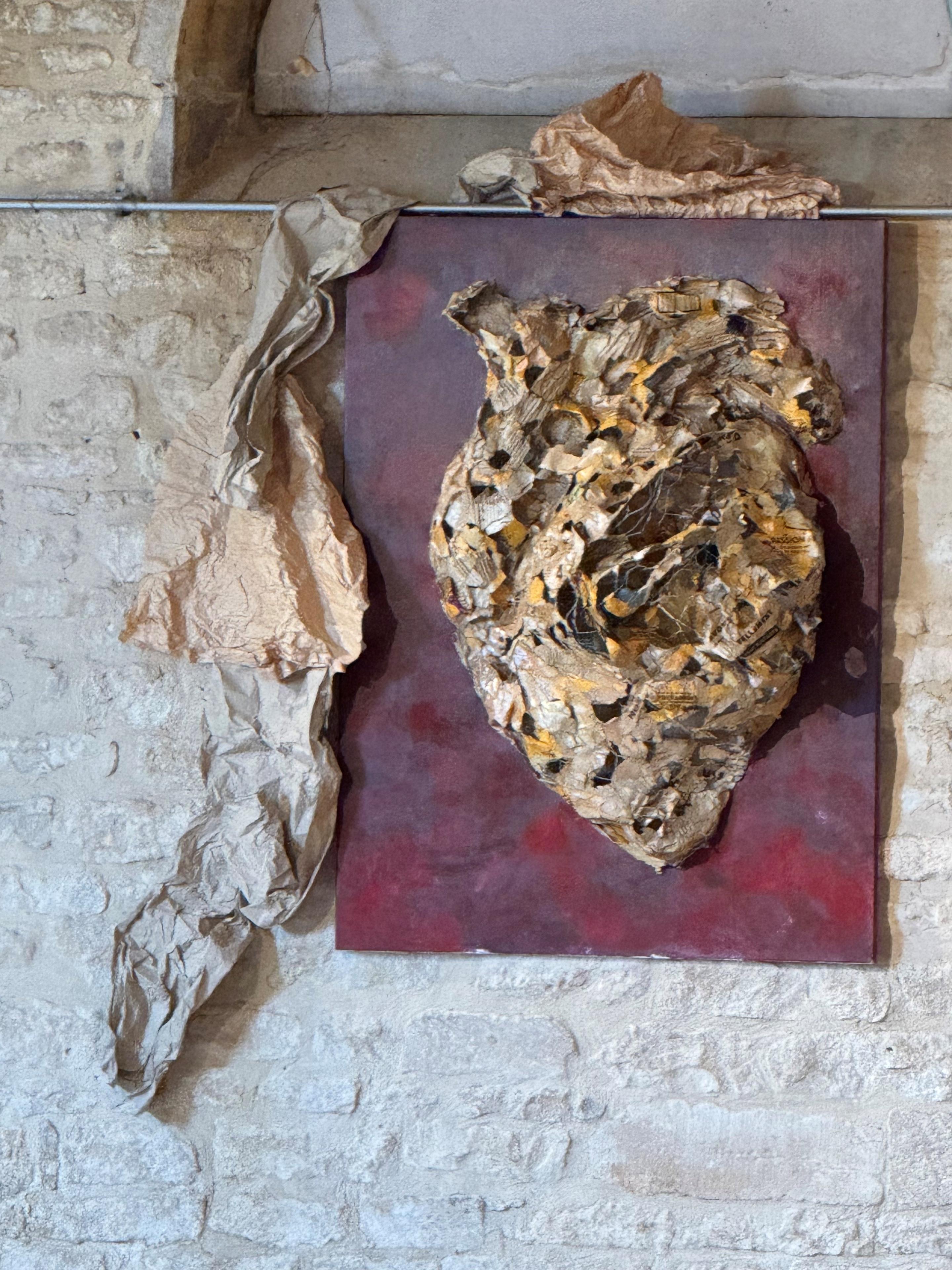
This artwork, created on a
recycled canvas, engages with a sociological reflection on the ties that bind
individuals in a fragmented society.
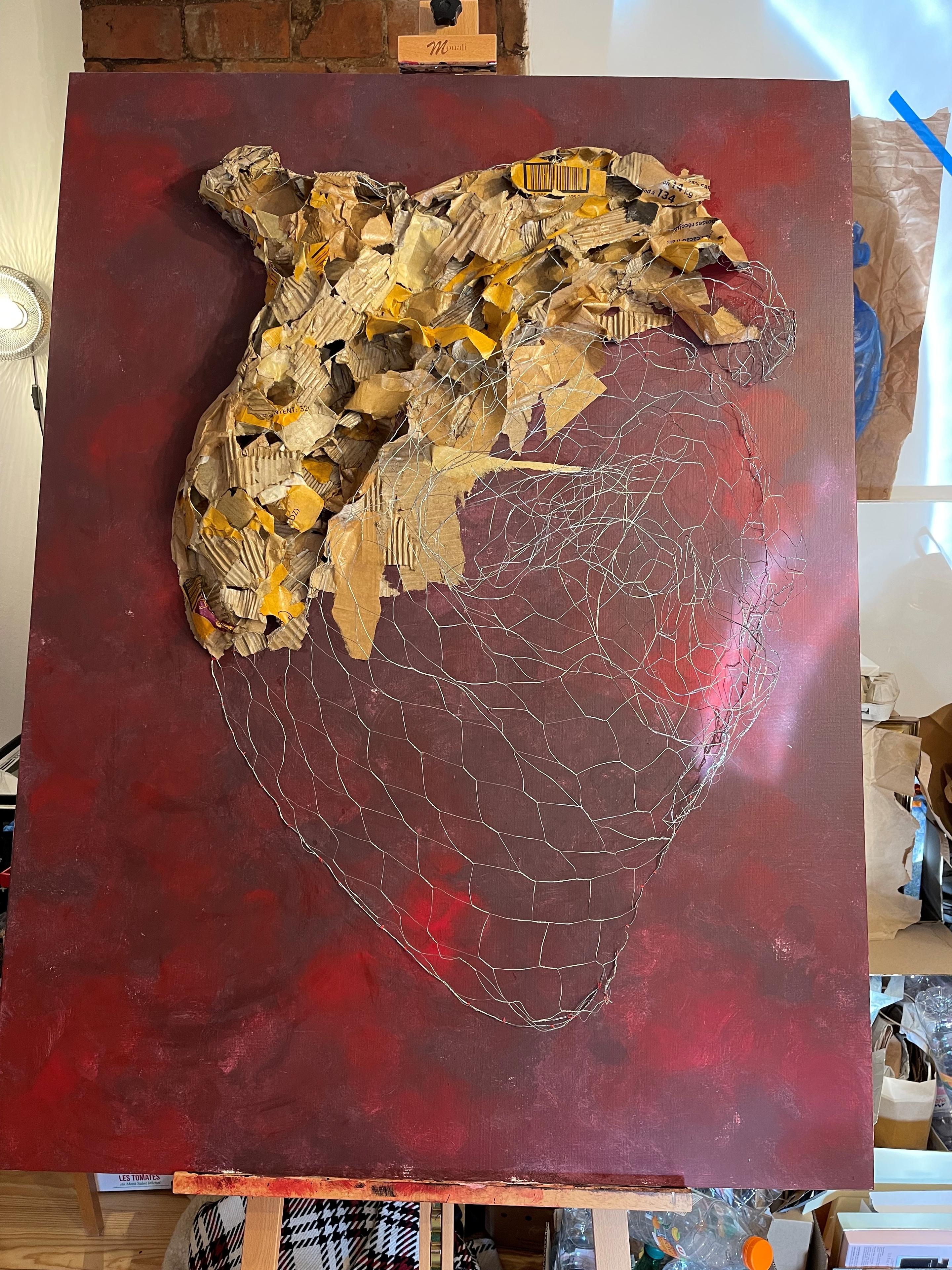
A metal grid, chicken wire shaped into a
heart, is sewn onto the canvas, evoking both the resilience and vulnerability
of human connections. This material choice is deliberate: the chicken wire,
typically used for cages, echoes the thoracic cage that protects the heart
organ, while highlighting a contrast between confinement and liberation. Onto
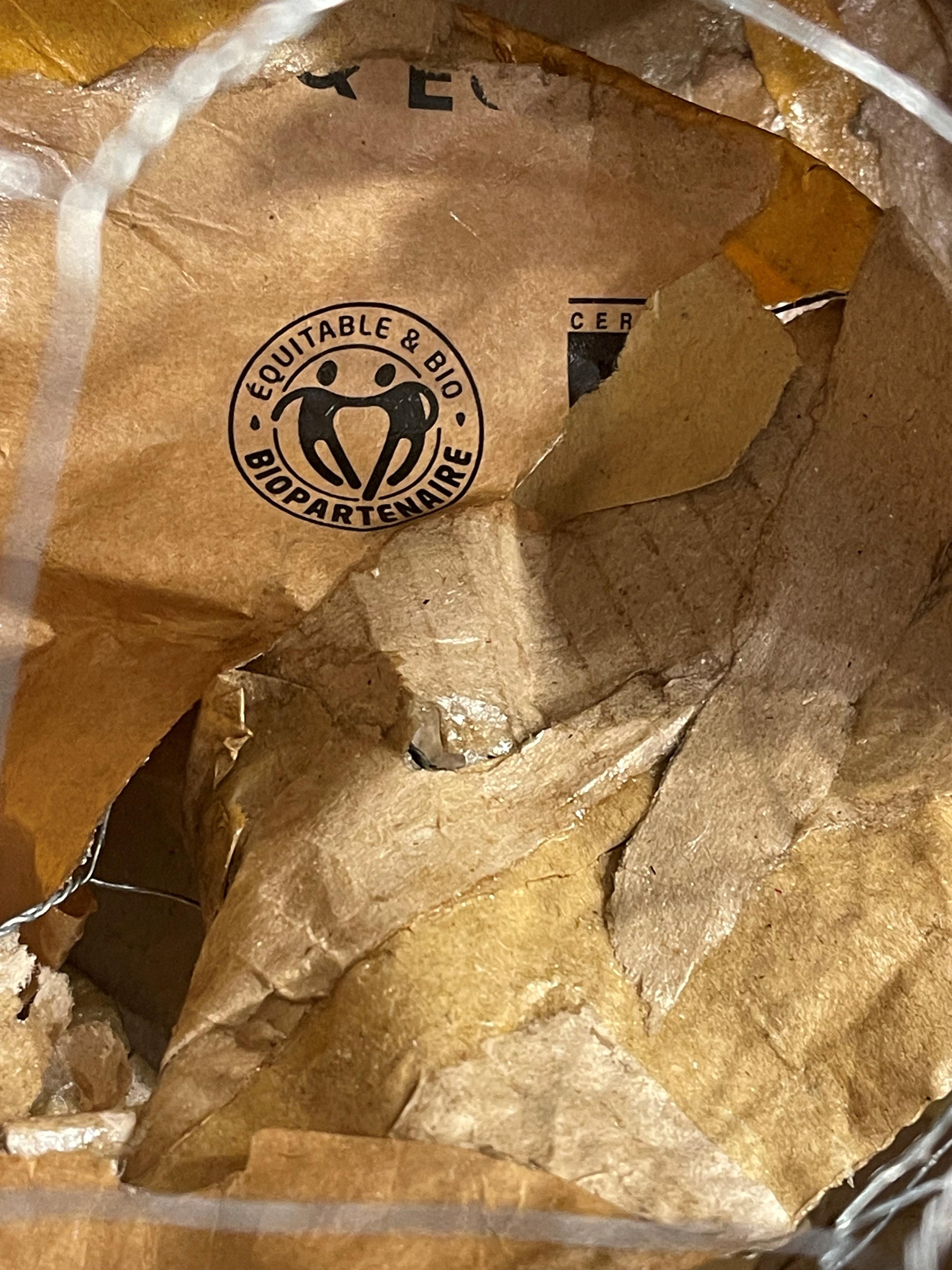
this structure, fragments of cardboard, gathered from greengrocers and small
fruit and vegetable shops within a five-kilometer radius of my home, are
affixed. These cardboard pieces, in shades of brown to yellow, bear words like
“organ” or “all together,” embodying collective narratives and traces of
ordinary lives. The canvas background, painted in purplish-red hues, recalls
the organic colors of the heart, while the heart itself, through the choice of
brown-to-yellow cardboard, subverts conventional pictorial norms where the canvas
is typically earthy and the heart red. This crafting and chromatic contrast,
combined with the symbolism of the wire as a thoracic cage, challenges visual
and cultural expectations, underscoring the tension between individuality and
universality, protection and openness.
Each material, sourced from donations or
recoveries, reflects an eco-responsible approach rooted in ecological awareness
and a sharing economy. Sociologically, the work explores resemblance: how do
individual singularities converge toward a collective identity? The heart, a
universal organ, becomes a metaphor for empathy and welcoming others in a world
marked by social and cultural divisions. This inversion of aesthetic codes—a
brown-yellow heart on a red-purple background, both protected and exposed by
the wire—invites a rethinking of our vision of humanity, where differences
become unifying forces.
Through this creation, I celebrate the richness of
local interactions while posing a global question: how do we build a
sustainable community that respects humanity and its environment? This artwork
is an artistic manifesto, where the aesthetics of recycling, the play of
colors, and the symbolism of the wire converse with a humanist vision,
advocating for a culture of care—care for the planet, care for others, care for
ourselves.