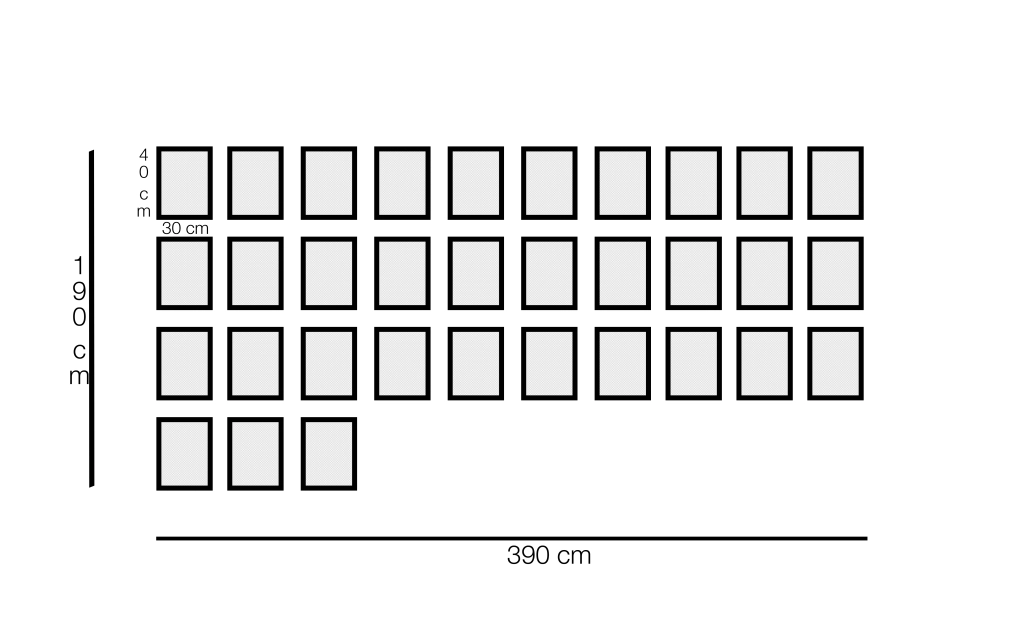
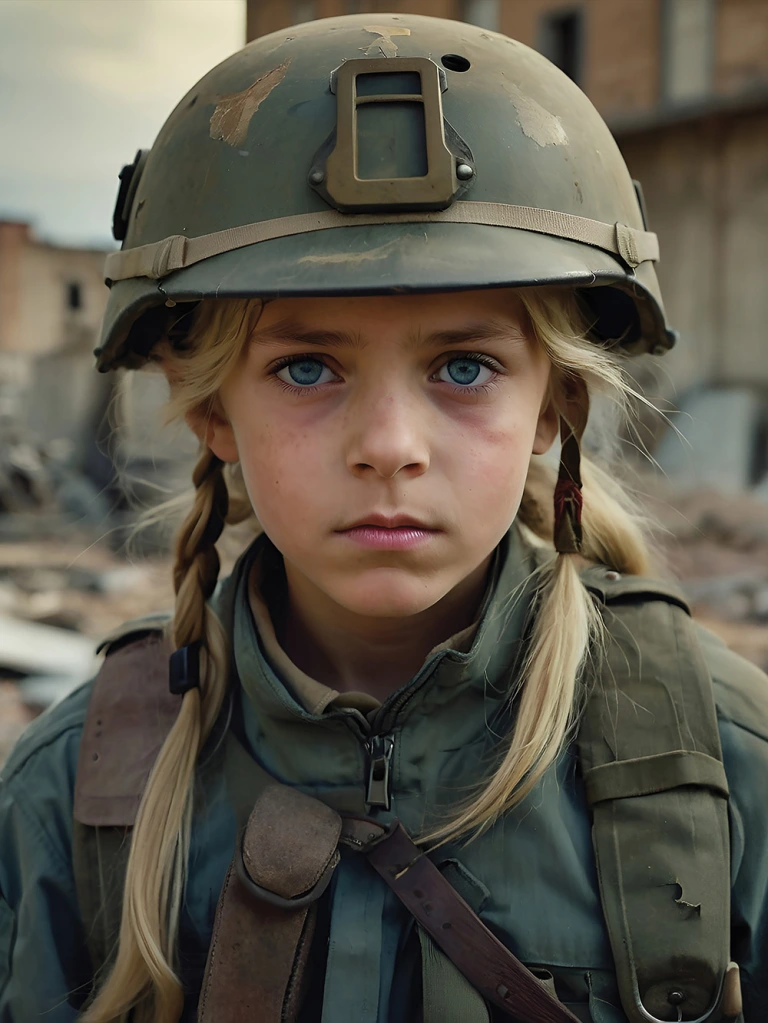
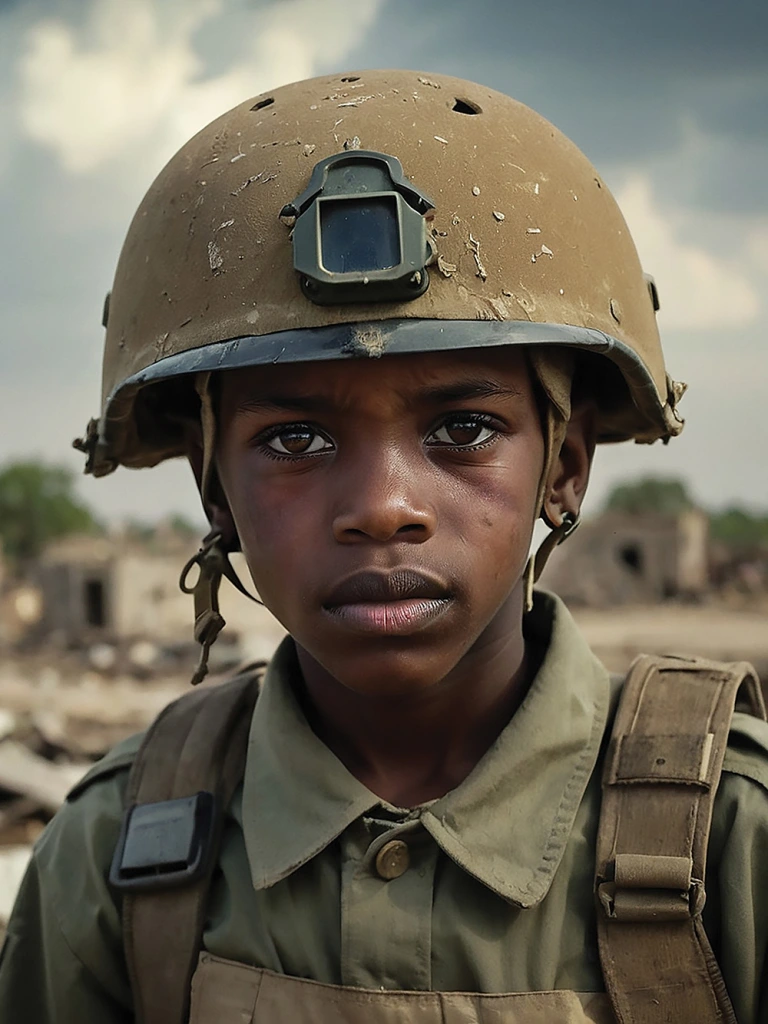
The installation “Child Soldiers” consists of 33 portraits of boy and girl soldiers, each measuring 30×40. These portraits were artificially created using AI tools and photo editing programs.
The subjects of the portraits come from different ethnicities, countries and cultural backgrounds, but they all share a worried and frightened look towards the camera lens, reflecting the viewer’s sentiment. The age of the protagonists is uniform (10 years old), and all are set in contexts of destruction and wear military uniforms.
The use of military uniforms is a sign of the artificiality of the photos, but also a point of reflection. Military uniforms and accessories recall the aesthetic characteristics of each child’s country of origin, but they are also “impossible” because there are no uniforms of this size marketed today. In countries where children are used militarily, they are often sent to their deaths with inadequate equipment or are used in adapted adult uniforms, as a result we are not looking at reality, but a mental projection that could become real.
Watching children of different nationalities, with tailored uniforms and stares marked by horror, propels us into an unsettling, but not too distant future. It is a reminder to seek solutions to protect young people and resolve global conflicts today.
The 33 portraits are arranged in three parallel rows of ten, reminiscent of a large plaque in memory of the fallen, with a final row containing only three portraits. This empty space invites the viewer to reflect: could it represent our child or a child we know? Will it soon be filled, or will it remain empty forever, depending on humanity’s actions in the face of horror?