Laquan McDonald was a 17 years-old Afro-American shot 16 times in 15 seconds with a fire gun by a Chicago police officer. The footage from the police bodycam is terrifying. The boy walks alone in a parking lot, with a knife in his hand. 8 officers arrive on the scene. The last of them gets out of the car and fires 16 shots at the boy. In 15 seconds. All of the shots hit the boy.
“YOLO” (You Only Live Once) reads the tattoo on the back of Laquan's left hand.
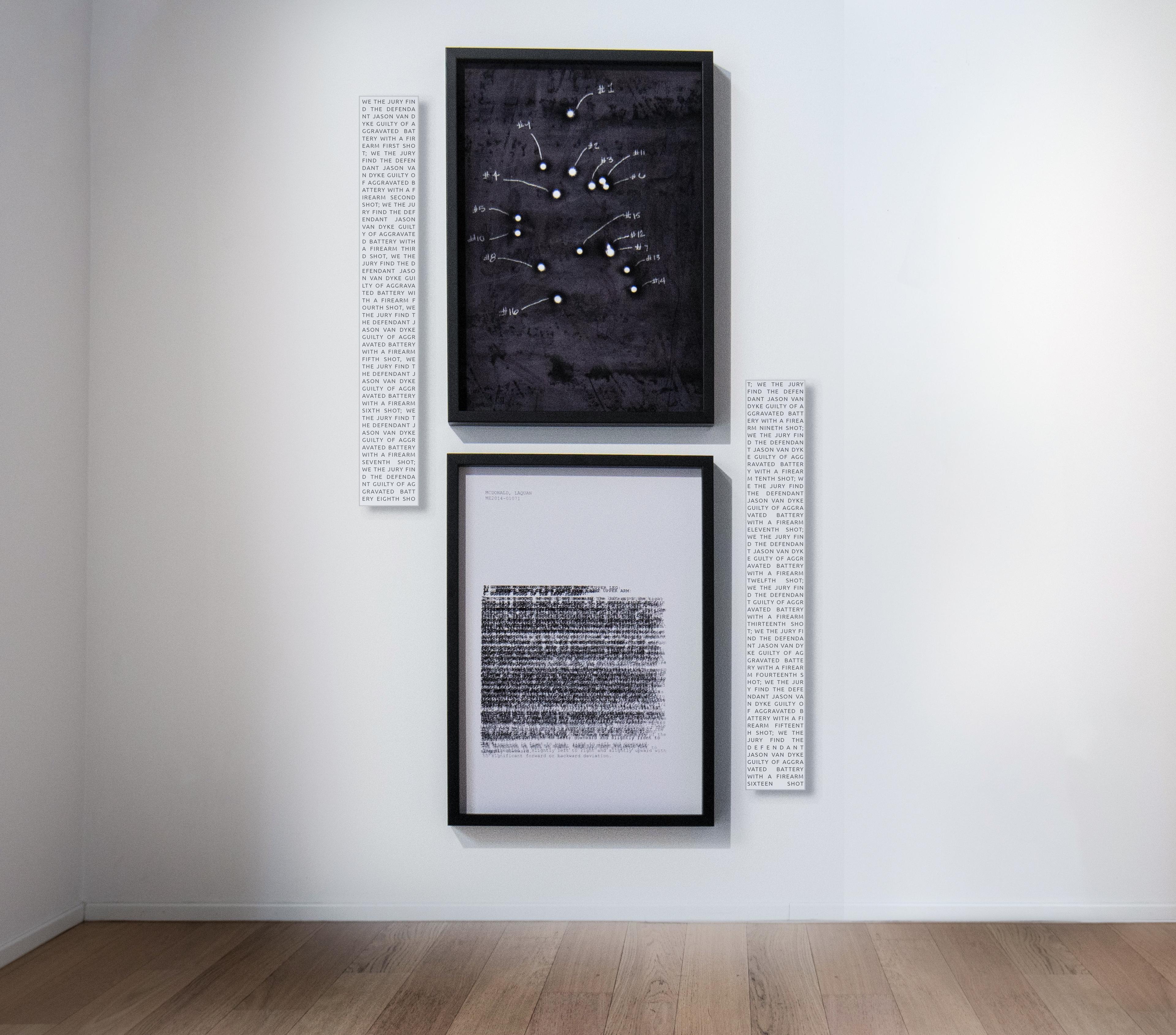
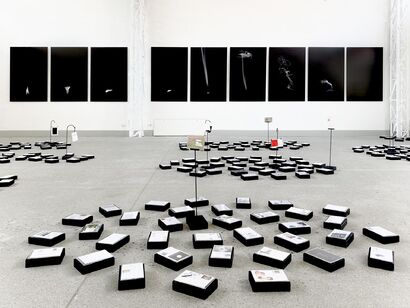
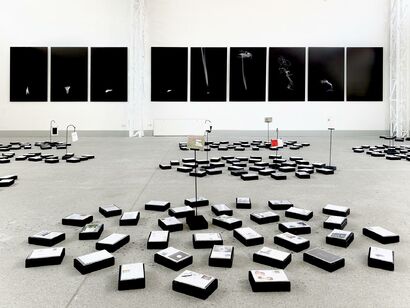
The artist asked a worldwide champion shooter to replicate that horror on a metal plate using a gun of the same model, from the same distance, firing according to the placement of the bullets shown in the autopsy. The result is captured in a sequence of 16 frames, one for each bullet, and a final frame with all the shots, almost an anthropomorphic mortal map with the original autopsy notes digitally overlapped. The sturdy metal plate devastated by the same blows received by the young Laquan is a squeeze in the stomach for the observer, immediately stimulating strong sensations and feelings.
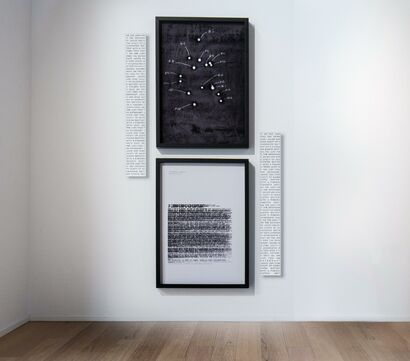
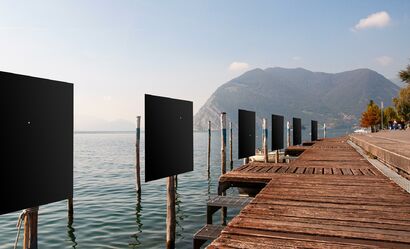
The installation YOLO stages the final frame, the most disturbing one. Beneath that frame, another image shows all the pages of the autopsy overlapped, an estranging figurative cacophony of characters.
On the sides, two images depict the text pronounced by the jury who condemned Jason Van Dyke (the policeman who shot): recognizing him as an aggravating circumstance for each of the 16 shots fired. To emphasize the horror, the jury repeated the same formula 16 times, one for each of the fireshots.
We the jury find the defendant Jason Van Dyke guilty of aggravated battery with a firearm first shot…We the jury find the defendant Jason Van Dyke guilty of aggravated battery with a firearm second shot….We the jury find the defendant Jason Van Dyke guilty of aggravated battery with a firearm third shot….
YOLO does not claim to speak for Laquan McDonald nor for the broader Black Community. Rather, it confronts the viewer with a visceral and forensic echo of an indisputable reality. It seeks to become a space of reckoning where we stop turning a blind eye and begin to look inward.