My mother-in-law passed away by her own hand on July 1, 2023. For a long time, she fluctuated between good days and bad days. Even after discharge from hospital, her condition did not improve. My husband began bringing homemade meals to her, living alone, once a week. That frequency gradually increased—until, in the days before her death, he was staying at her home every other day. I watched his exhaustion deepen, and I felt our hearts and lives beginning to fracture.
It became painful even to take photographs. We knew she was struggling with suicidal thoughts—but we weren’t able to save her.
My husband and I discovered her at home after becoming worried when she stopped responding to calls. Amid our confusion, I focused on keeping him alive, while remaining desperately composed.
Police interrogated us, suggesting her death might have been a criminal matter. The funeral officiant was incapable of meaningful communication. Her apartment’s guarantor company demanded enormous repair fees, despite there being no damage. Our family apologized to me and went back to work. Those days were less sorrowful than they were angry. I felt, “Are all the adults in this world worthless?”
Nothing in daily life seemed beautiful. Once everything started falling apart—on that day and the days after—I felt that none of it was needed.
Life is no longer just beautiful. But I have become more attuned to the moment just before “the everyday”—to the discarded items, packaged goods, receipts, the simple fact of being alive. These are quiet phenomena that exist one step before what I once thought of as everyday life. In fleeting moments, an inexplicable clarity emerges: the fact of living, the fact of dying.
All of it is sometimes overwhelmingly joyful, sometimes unbearably sad, sometimes so terrifying it brings me to tears. Constantly observing that “having a normal life = the possibility of losing it” requires immense emotional labor and can be utterly exhausting. Perhaps humans are designed to conveniently forget what they cannot bear—but I cannot allow myself to forget. I must bear this exhaustion as part of my life.
I live to preserve, even if it burdens me emotionally. This is my mission. The more of these fragile truths I encounter, the harder life becomes—but I cannot stop looking, cannot stop photographing them.
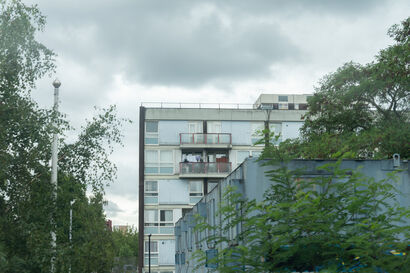
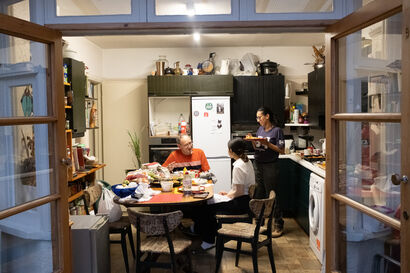
Yet I continued to photograph. From the day she died, the day after, and each day through the 49th day of mourning, I captured it all. Countless images of light, an unbearably hot summer, the meals, and the people who rushed to us.
These are photographic works intended to be presented as a group of framed photographs. The current frame sizes are provisional and can be adjusted as needed.