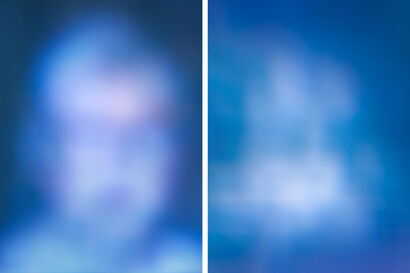
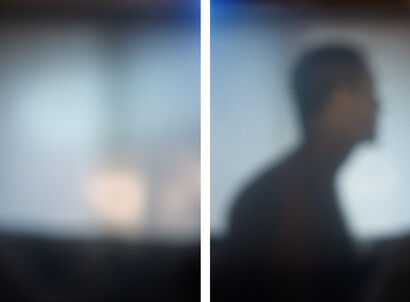
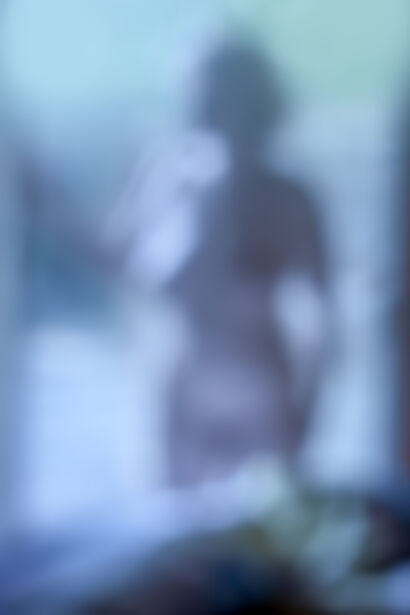
My work begins with instability and the uncertainty of looking. I live with impaired vision, and what I see is never fully fixed or reliable. Rather than using the camera to secure clarity or factual certainty, I treat it as a conceptual tool shaped by blur, physical lens and sensor modification, and material disruption. The resulting images ask how perception fails, how events are reconstructed from partial evidence, and how memory and emotion shape what can be seen, retained, or trusted.
Working without digital correction, I build uncertainty into the image from the start. Focus does not fail by accident; it is part of the work’s structure, built through handmade lenses, aged glass, and layers of translucent gelatin. Blur becomes both description and boundary, a way of acknowledging that perception is partial and that the photograph cannot function as objective evidence. Across photography, film, monoprints, and installation, I use analog materials to explore trace, instability, and the reconstruction of experience.
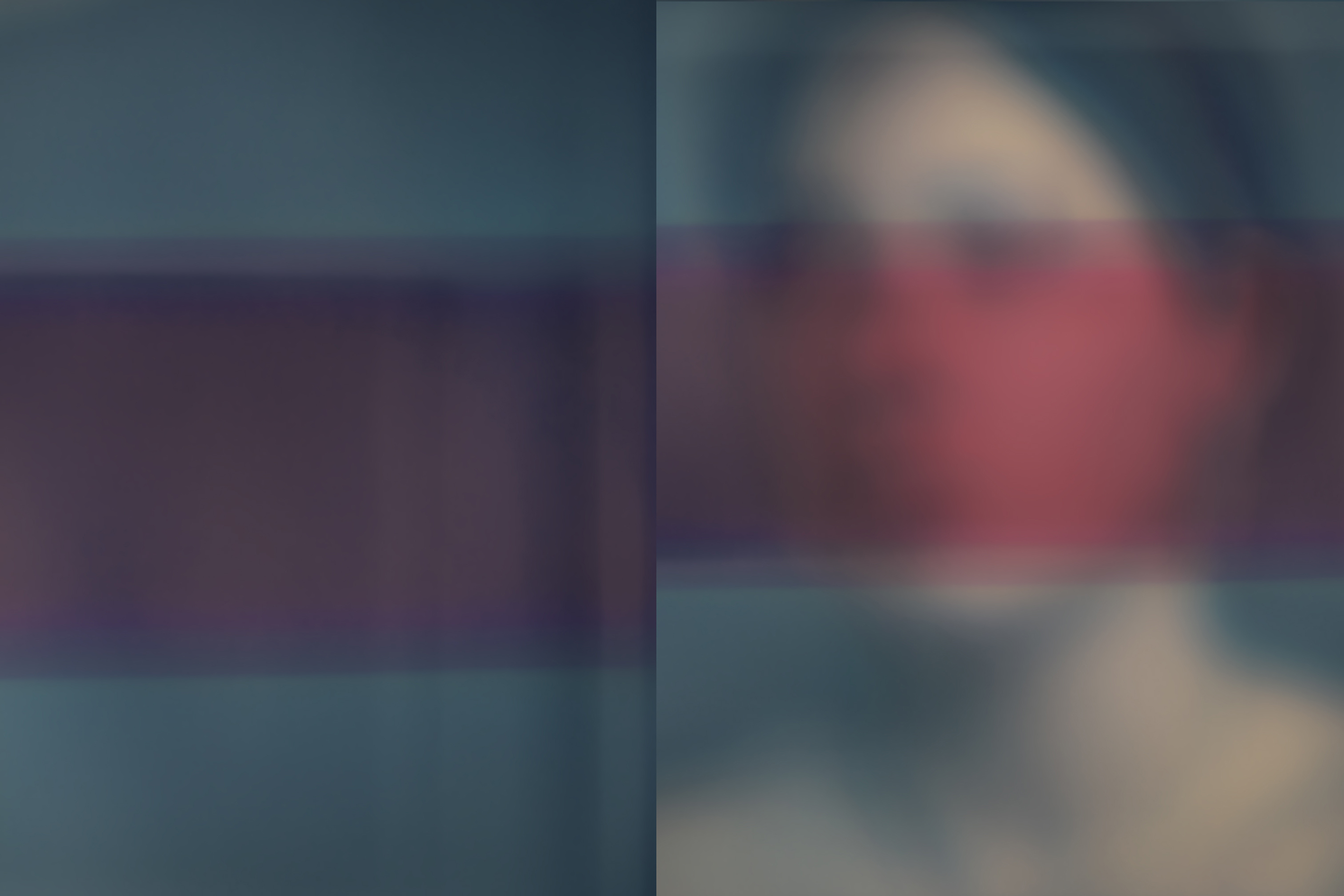
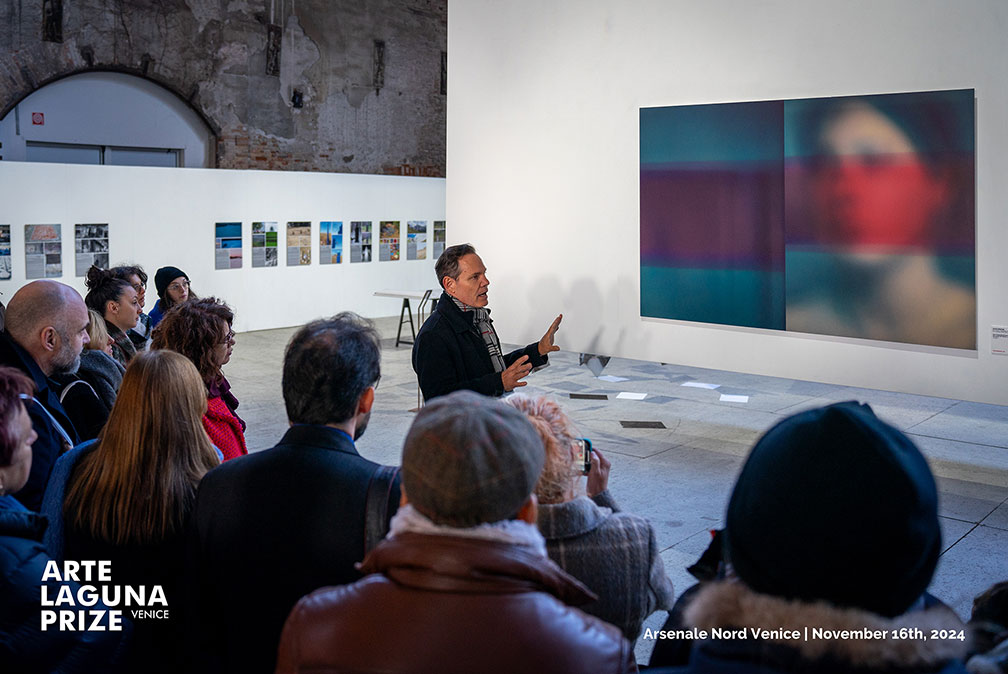
The artist uses the color bar to represent their visual impairment. Through this composition, viewers are prompted to contemplate the blurred boundaries between clarity and obscurity, offering insight into the nuanced experience of visual impairment.
Image description:
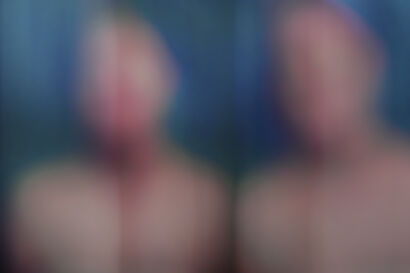
Diptych photograph: A Caucasian androgynous person with short brunette hair, depicted from the shoulders up and not clothed, is shown on the right panel, deliberately blurred to represent visual impairment. Across both panels, a horizontal color bar in shades of reddish, blue, and purple stretches from left to right. The bar is interrupted at the center where the two images meet, intersecting the person's face. This interruption symbolizes visual disruption, emphasizing challenges associated with impaired vision.