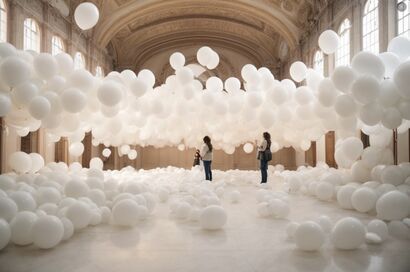
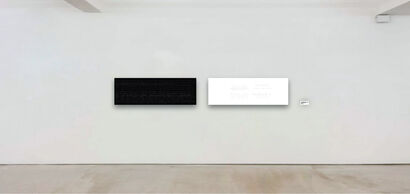
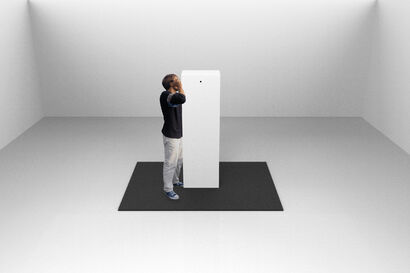
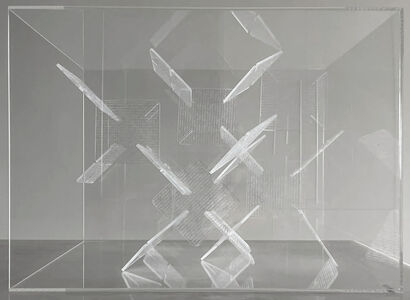
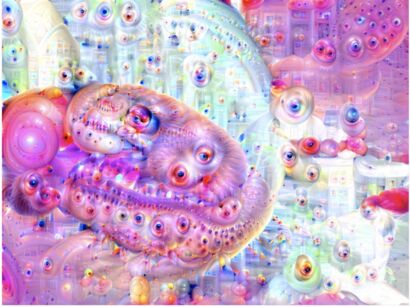
“Presence of the Absence” is a multimedia series by Isabel Englebert in collaboration with an MIT´s Neuro and Language Lab , exploring the fragile intersection between perception, memory, and light, inspired in the neurollogical phenomenon of the Afterimages or Phosphenes. Through sculptures, cyanotypes, video, and an interactive memory booth, the series investigates how ephemeral phenomena like afterimages mirror the way memories form, distort, and fade. Drawing on Shannon’s theory of communication and Oliver Sacks’ insights on perception, the project embraces ‘noise’—biological, technological, and emotional—as a creative force. AI-generated imagery, personal brain scans, and abstract forms coalesce to evoke the tension between presence and loss, inviting viewers to contemplate how the unseen, the residual, and the remembered shape our experience of reality.
Cyanotypes 1,2 and 3: Although uploaded as a single work, these pieces are conceived to also function as independent pieces.
These pieces, made using the cyanotype process, explore the idea of memory as a fleeting trace, much like afterimages. The overlapping rings, each progressively softer and more faded, evoke the transient nature of how memories linger before they fade. The method of creating the cyanotype—where light exposure captures the image—mirror how memories are formed in the mind: clear at first, but eventually softening and dissipating. The rings begin with strong definition but blur as they move across the surface, reflecting how afterimages slowly lose their intensity and fade after the initial visual impact.
Through the cyanotype process, the artwork becomes a metaphor for the act of remembering. The rings, marked by light and then gradually fading, suggest how moments or memories leave their imprint but are never permanent. Similar to afterimages, which vanish after their initial appearance, the cyanotype preserves these moments as fleeting imprints, capturing their brief existence. The contrast between the defined rings and the dark background highlights the tension between what is present and what is lost over time, inviting the viewer to reflect on how memories, like afterimages, linger in the mind before they eventually disappear.