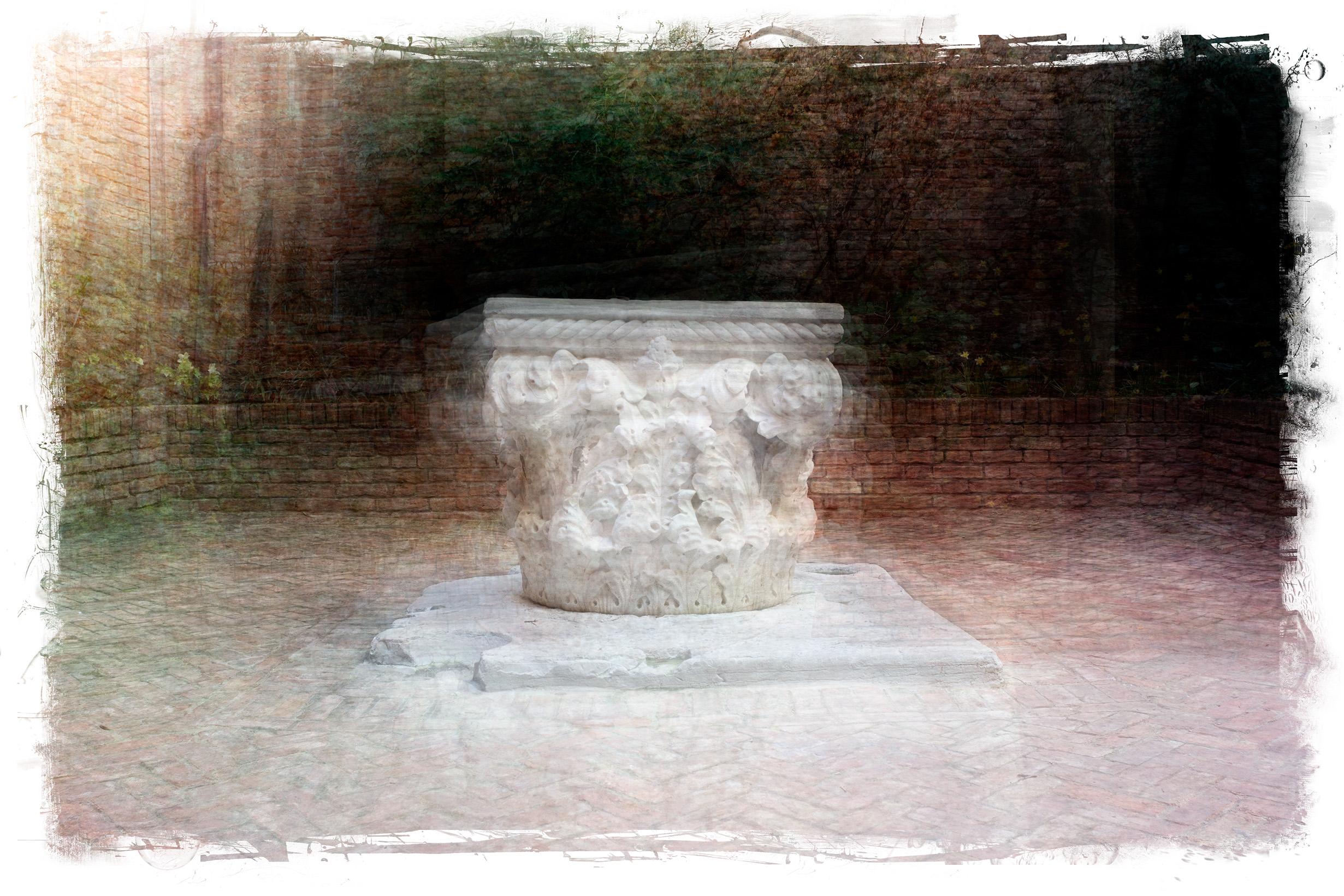
The historian Marin Sanudo (Venice, 1466-1536) wrote "Venezia è in aqua et non ha aqua" ("Venice is in water and has no water"). This phrase summaries the problem that the "Serenissima" has always had with the supply of this precious liquid. Since the 13th century, the local population used rainwater for its own supply. To do this, they used storage cisterns (about 3.5 metres depth) made of clay, gravel and sand to filter out impurities. On the surface, these cisterns were crowned with ornate pieces, known as "vere da pozzo" (well heads), many of which were made of the hard-wearing white Istrian stone. By 1858, the number of wells had risen to 6782. From 1884, when the public aqueduct was completed to supply the city with water, the wells fell into disuse. Today, only 600 of them remain for purely decorative purposes, a silent testimony to the city.
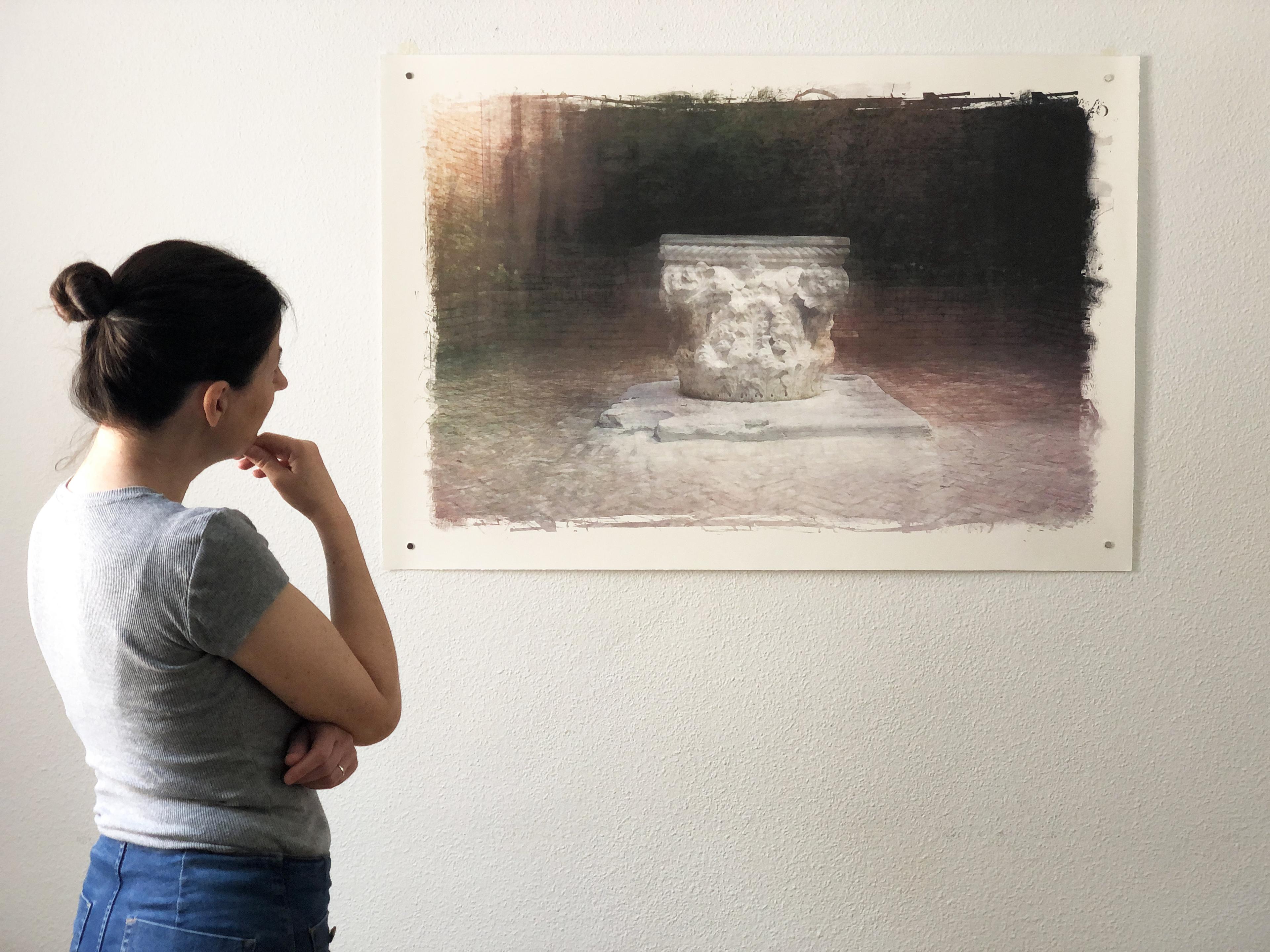
Using this historical heritage, the author aims to highlight the irresponsible use made of natural resources and the consequences this has on the current climate emergency, all of it from the water perspective. Through this heritage, this project invites the spectator to reflect on climate change. In the different images, and in a static foreground, the wellheads appear; solid and constant objects that simulate the rational use of the things. In contrast, the background: a scenario that trembles and represents our impact in a constant becoming. In short, a visual metaphor for the need to understand, value and manage water.
Reports from different organisations such as UNESCO, United Nations or the World Bank, among others, speak of wasted, polluted and unsustainably managed water. Water-related natural disasters are also linked in nine out of ten cases. Although there is enough fresh water to satisfy the entire world's population, its distribution is not done equitably.