There is something that touches us all when we are able to let go of our resistance and share a hug. The global pandemic has destroyed our trust in this simple act. "Peaceful Places" are the spaces between our arms. Can we learn to hug again?
Hugging is a gesture that we all know and share from birth.
Being in a hug forces us to confront our vulnerabilities, sometimes with the discomfort of proximity, but it can also open a temporal space where we can allow ourselves the luxury of slowing down and finally listening to ourselves.
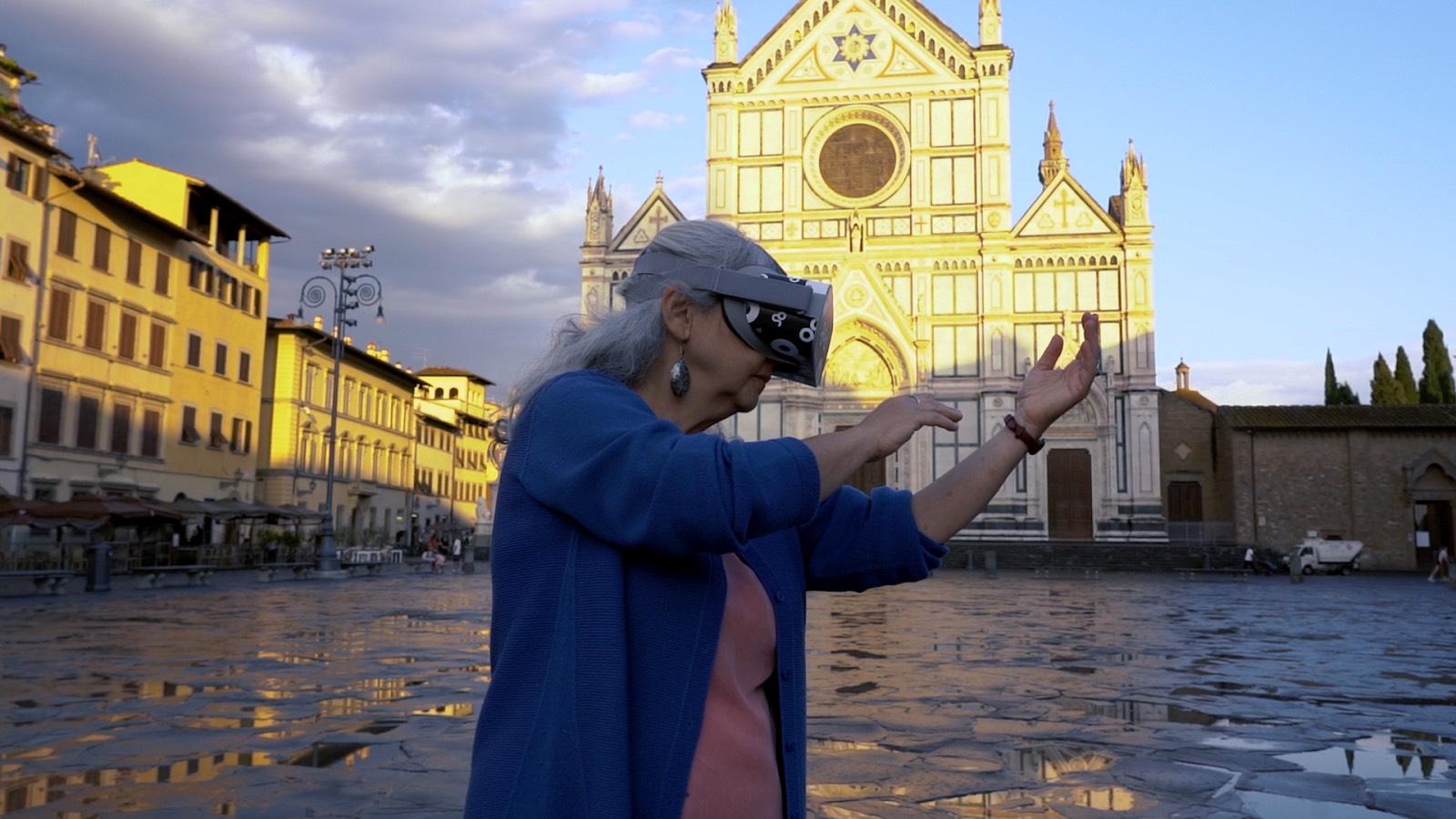
"Peaceful Places" allows everyone to transform their emotional state into motion, training their empathy and body to hug.
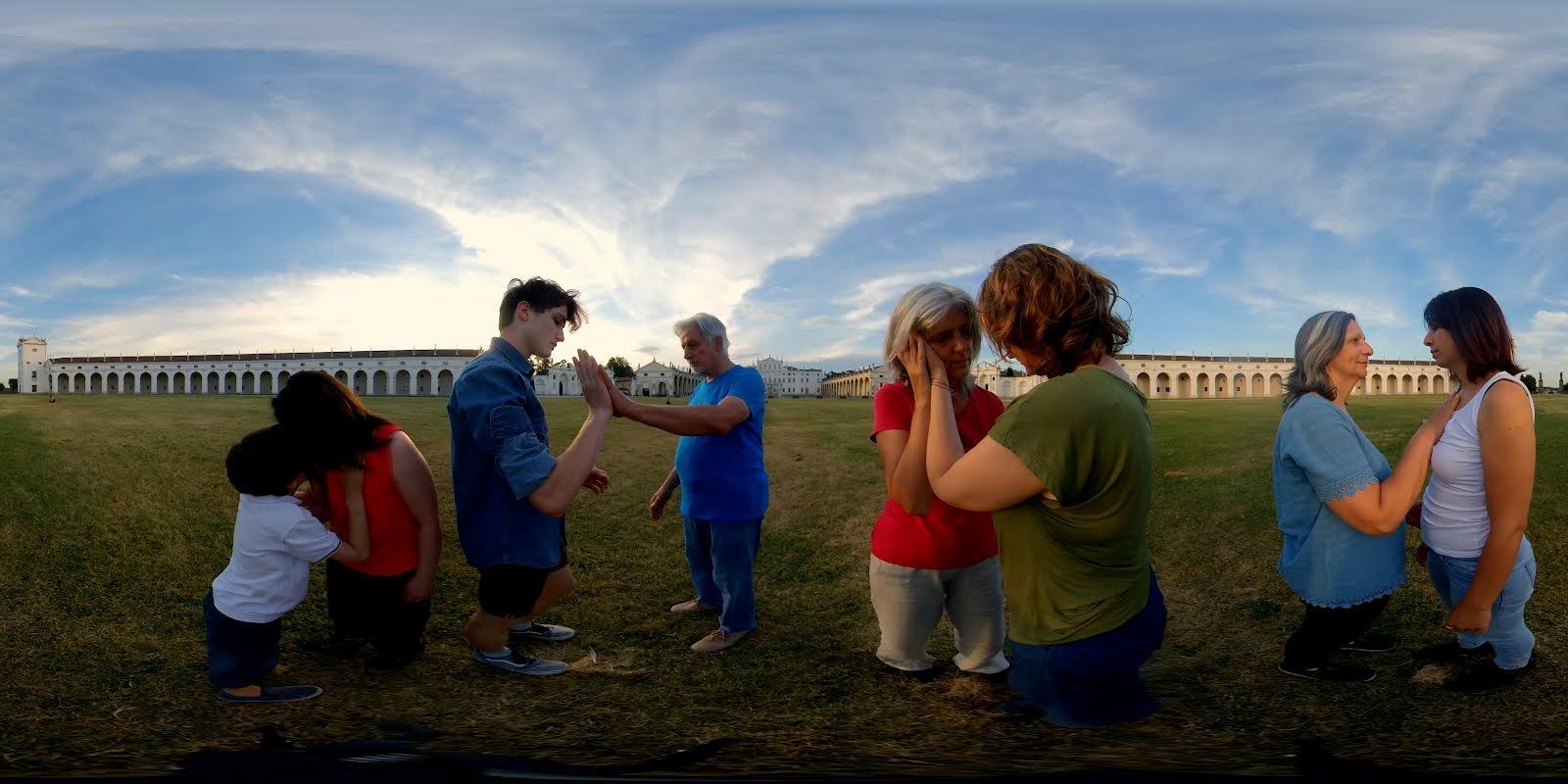
Real people, with real emotional bonds, lead the participant's movement by sharing their tenderness, becoming archetypal characters with whom we can all identify.
The project is a participatory and inclusive installation. An experience of closeness, thanks to real couples and their bodies, and at the same time an experience of absence, of loneliness, because touch and interaction are only imagined. An imagined action is nonetheless not less real for our mind. The movement that loses its function becomes symbolic, abstract, becomes dance.
"Peaceful Places" is innovative not only for the use of immersive technology but also for a completely different use of Virtual Reality, capable of redefining the relationship between the public and the performer: a performance (inside the headset) generates a performance (that of the participants) that shows human gestures, natural and yet deeply felt.
The artwork sits at the intersection of video art, digital art, performance, and XR experience. A completely new and unprecedented format—highly artistic yet leveraging the appeal of gaming and immersive technology to shift the focus towards presence, deep introspection, and empathy.
In contrast to the image of bodies as weapons, an image that has been used by various thinkers to define the relationship with others during the global pandemic, Margherita Landi and Agnese Lanza propose the image of bodies as peaceful places. A way to heal a deep trauma that we have all experienced. After avoiding so many bodies in recent years, we finally have the opportunity to share a moment of closeness. A soft and tender dance to change the world.
Movement as a Pathway to Foster Immersion, Inclusion, and Empathy
"It is deeply poetic for us to show an attentive, focused, emotional humanity. A political message that shifts the focus from performance and performative virtuosity to feeling, to inclusion. In our work, anyone can generously give the beauty of their gesture."
— Margherita Landi
Hugging is a universal gesture, innate from birth and transcending time, culture, and age. In Peaceful Places, this simple act becomes the foundation of an immersive experience, where movement serves as a bridge between the real and the virtual. The gestures in the video are raw, honest, and intuitive, forming a natural choreographic score for participants to follow.
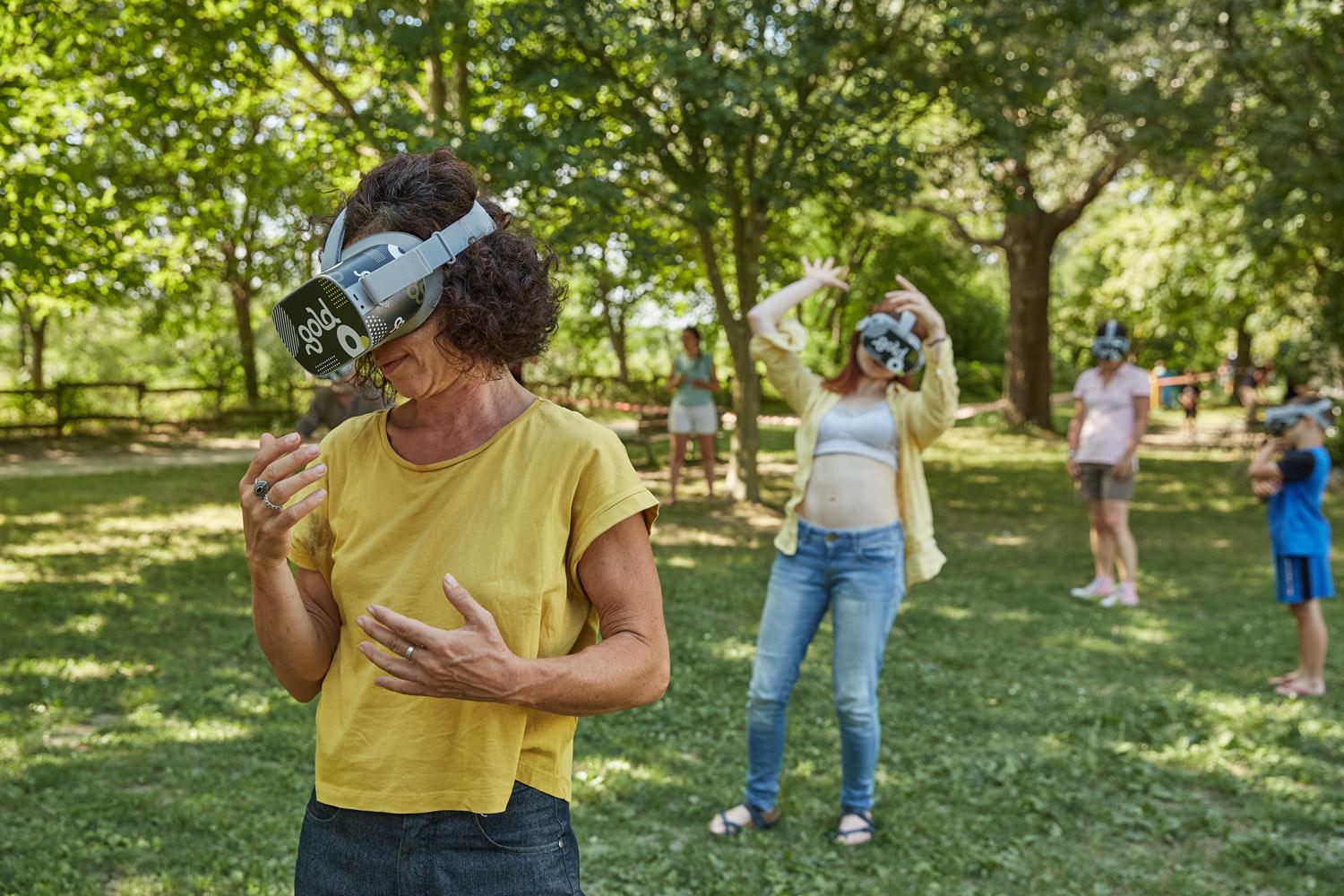
Unlike traditional VR experiences that rely solely on visual immersion, Peaceful Places deepens engagement through physical movement, fostering a profound emotional connection. Participants are not passive spectators but active performers, free to move, choose whom to imitate, and shift between different interactions at their own pace. By mimicking the embrace, the brain recognizes the action, strengthening empathy and presence.
Those without a VR headset also become involved, witnessing a group of 10–20 participants moving together. Sometimes they synchronize, other times their movements resonate in an organic flow, all reaching out to the void—creating a nostalgic and deeply moving atmosphere. This performative dimension allows even external observers to connect with the theme, blurring the boundary between audience and participant.
Peaceful Places has already demonstrated its universal appeal. Younger generations are drawn to the technological aspect, while older participants embrace its emotional depth. Many are visibly moved, often seeking real hugs after the experience.
Since 2022, the project has been presented worldwide, revealing how different cultures approach the act of hugging. While the embrace is universally understood, its variations across societies enrich the experience, fostering new connections and a sense of community. Inspired by these cultural nuances, we aim to create localized versions of Peaceful Places, documenting the diverse ways in which people express closeness. By doing so, we hope to make the project even more inclusive—offering individuals a space to rediscover familiar forms of connection while also exploring new, unexpected gestures of intimacy.
Peaceful Places transforms movement into a tool for empathy, healing, and inclusion—a poetic and tender dance to reimagine human connection.
to understand how it works and how every user can create his/her own movement path: https://vimeo.com/911375286