Sweet and Sour is a participatory installation and performance that explores the coexistence of tenderness and trauma, as well as the bittersweet nature of sharing and displacement. The work draws on my childhood experience of spending three years on the Bibby Challenge, a refugee ship in Hamburg, Germany, that was never intended to sail. Anchored in the harbour, the ship became a space of temporary residence, uncertainty, and waiting — a home for many despite offering no movement, freedom, or safety. In this installation, I transform that experience into a collective encounter, inviting audiences to reflect on mobility, memory, and belonging through interaction, taste, and presence.
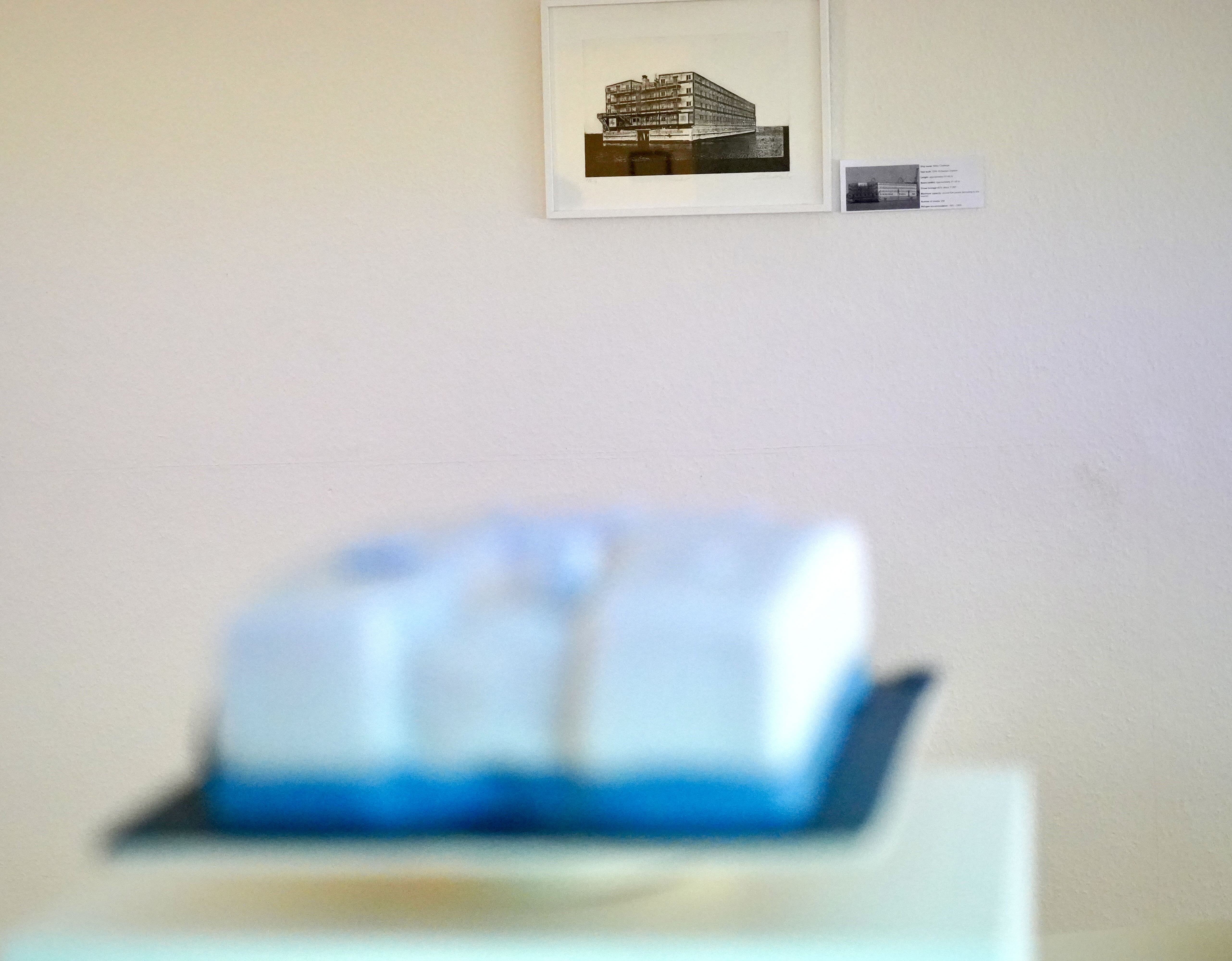
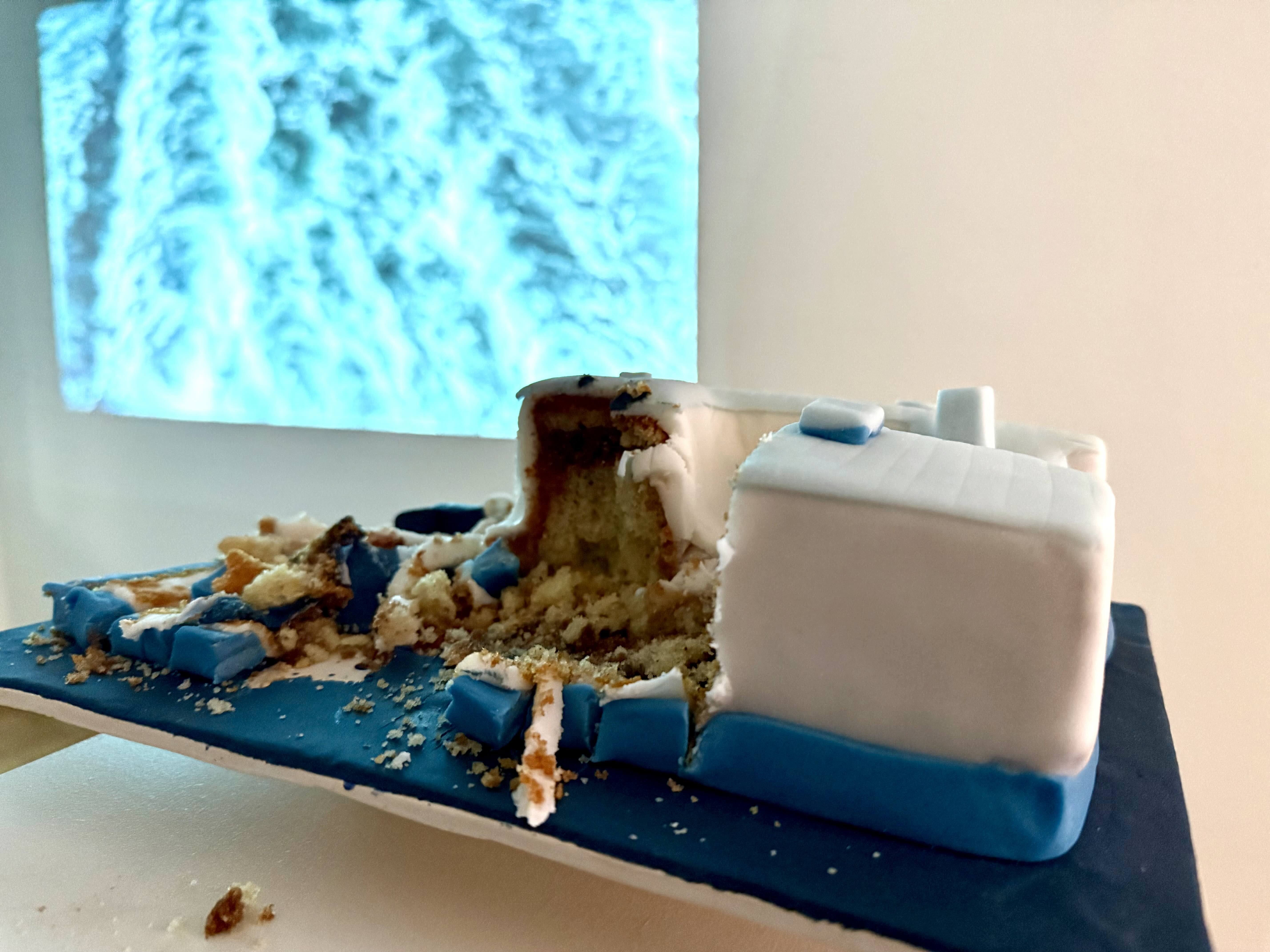
At the heart of the installation is a cake shaped like the Bibby Challenge, positioned on a sturdy table or pedestal in the center of the space. This edible sculpture turns a symbol of immobility into a participatory act: visitors are invited to approach, share, and consume the cake, celebrating the symbolic act of a ship launching. The cake embodies tenderness, fragility, and a circulating body that carries memory, standing in contrast to the cold, static, and forgotten nature of the real ship. By sharing it, audiences are invited to ‘sail’ with me across an imagined sea, collectively reflecting through taste, conversation, and presence on movement, futures, and the meaning of having — or not having — solid ground beneath one’s feet.
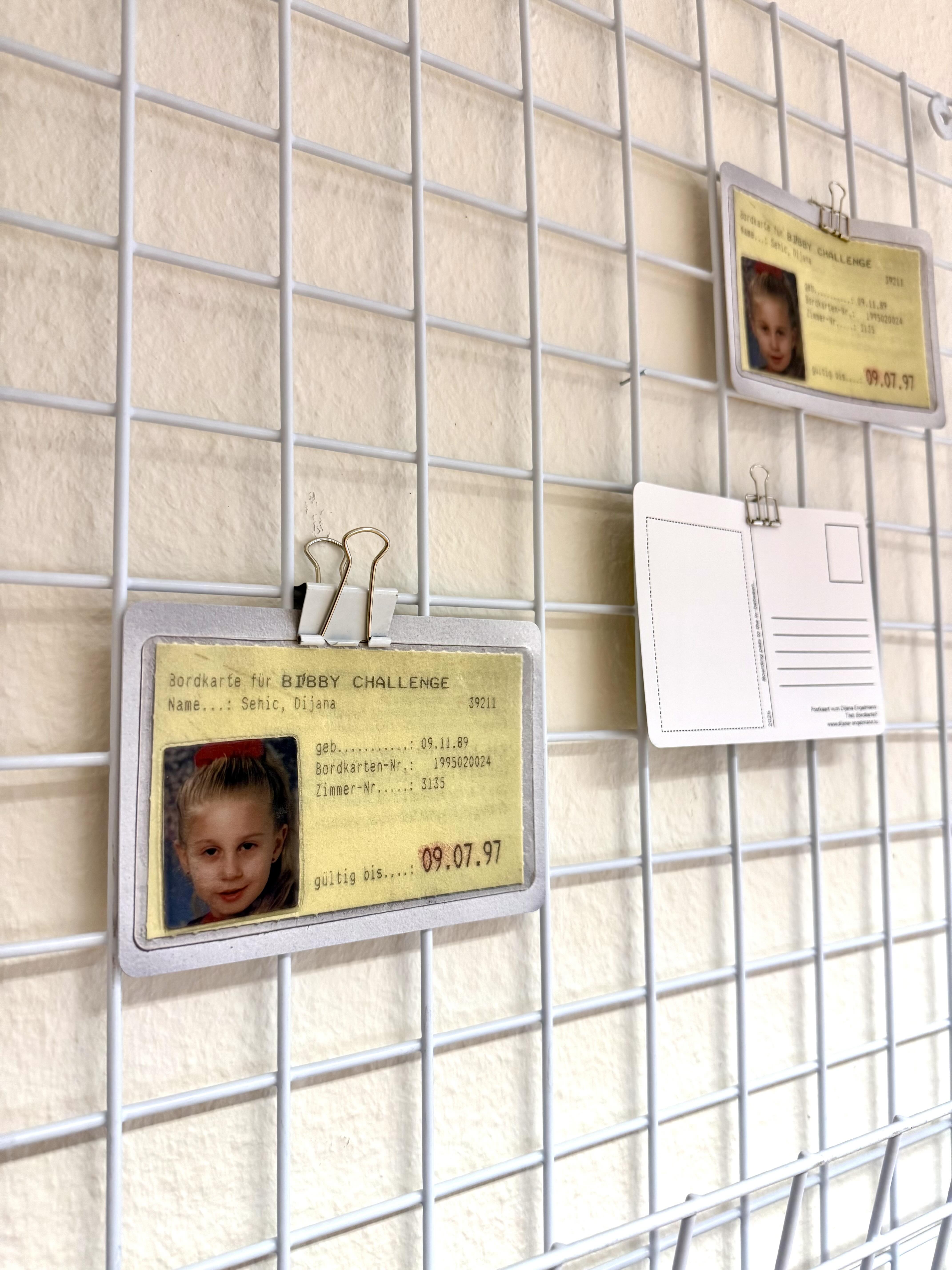
Behind the cake, a looping video projection shows the trace of a ship across the sea’s surface, offering a visual context that contrasts with the tactile, edible ship in the center. This representation evokes the utopian voyage of a vessel that never set sail, allowing visitors to experience movement and memory simultaneously. To the side, postcards featuring my refugee ID on one side and a blank space for writing on the other are made available. Visitors may take a postcard, leave a message, or contribute it back to the installation, adding another layer of interaction and personal reflection. Pens or markers are provided discreetly to encourage this participation.
The installation is designed to encourage fluid movement, participation, and dialogue without obstacles. The central contrast of materials — the cold, static metal of the ship versus the soft, sweet cake — emphasizes transformation, vulnerability, and the power of shared ritual. Leftover cake remains in the space as an artifact, preserving traces of collective engagement and memory for the duration of the exhibition.
Sweet and Sour also engages with broader social and architectural themes. It highlights the persistence of temporary structures — ships, camps, and containers — that have changed little since the 1990s, prompting reflection on future urbanism that includes refugee communities. While the work references Giorgio Agamben’s theory of ‘bare life,’ it simultaneously responds with tenderness, creating a space where trauma is translated into closeness, care, and empathy. Through the interplay of objects, projection, and audience interaction, Sweet and Sour transforms memory into connection and presence into a shared experience.