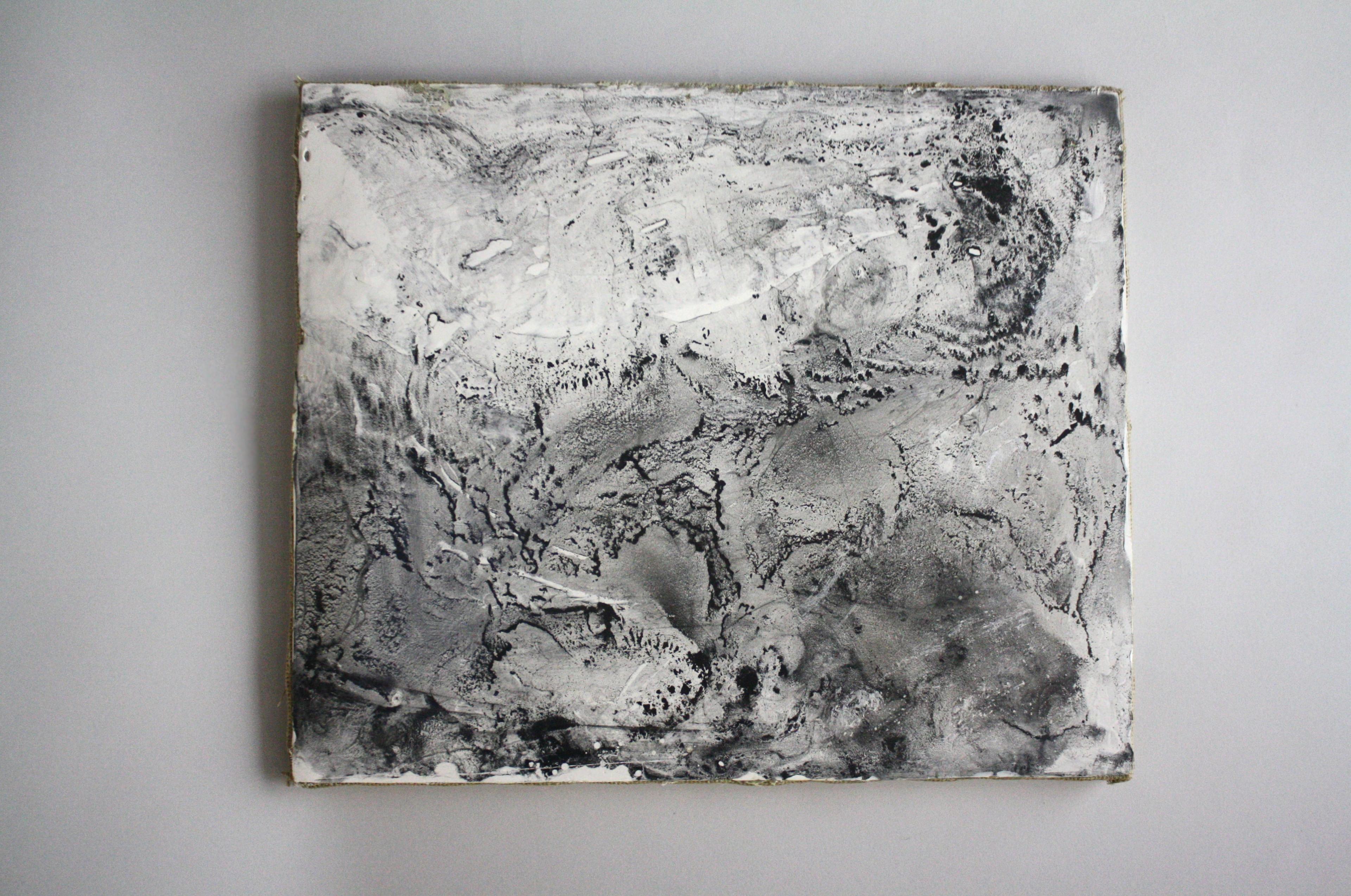
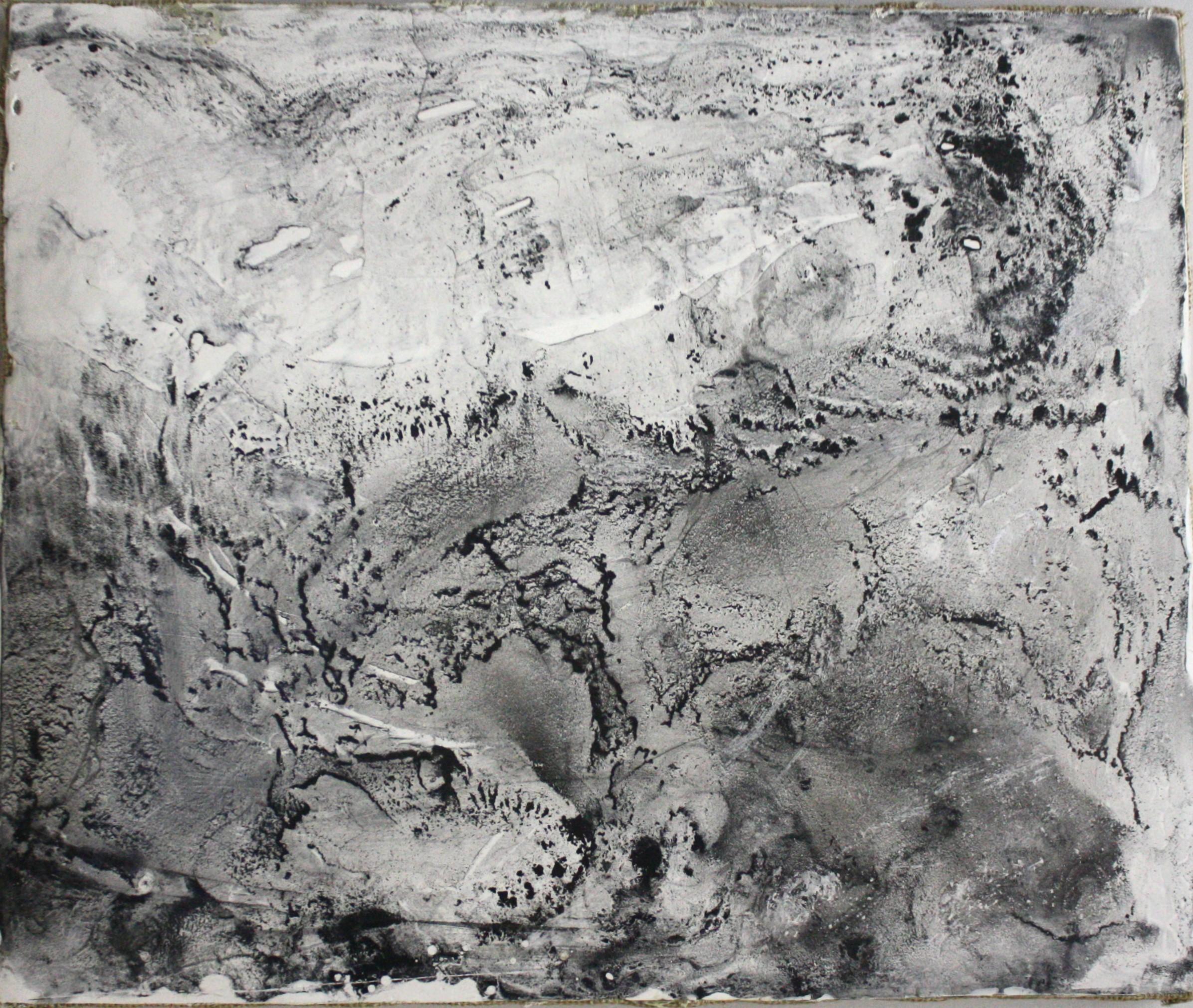
Zolla (“clump of earth”, Italian) is part of an ongoing body of work that treats painting as a geological process, and Opening suggests a shift or rupture, a surface being pulled apart, or a passage being formed. It was made using a technique I’ve developed over the past few years.
I collect soil and crushed stone from specific sites (in this case, from Tottenham, North London) and pour them with water onto a horizontal surface. A layer of rabbit skin glue and gesso is then applied over the sediment, followed by canvas. Once dry, the entire structure is flipped, revealing an image created by the settling of particles. It's a painting, but made the other way around.
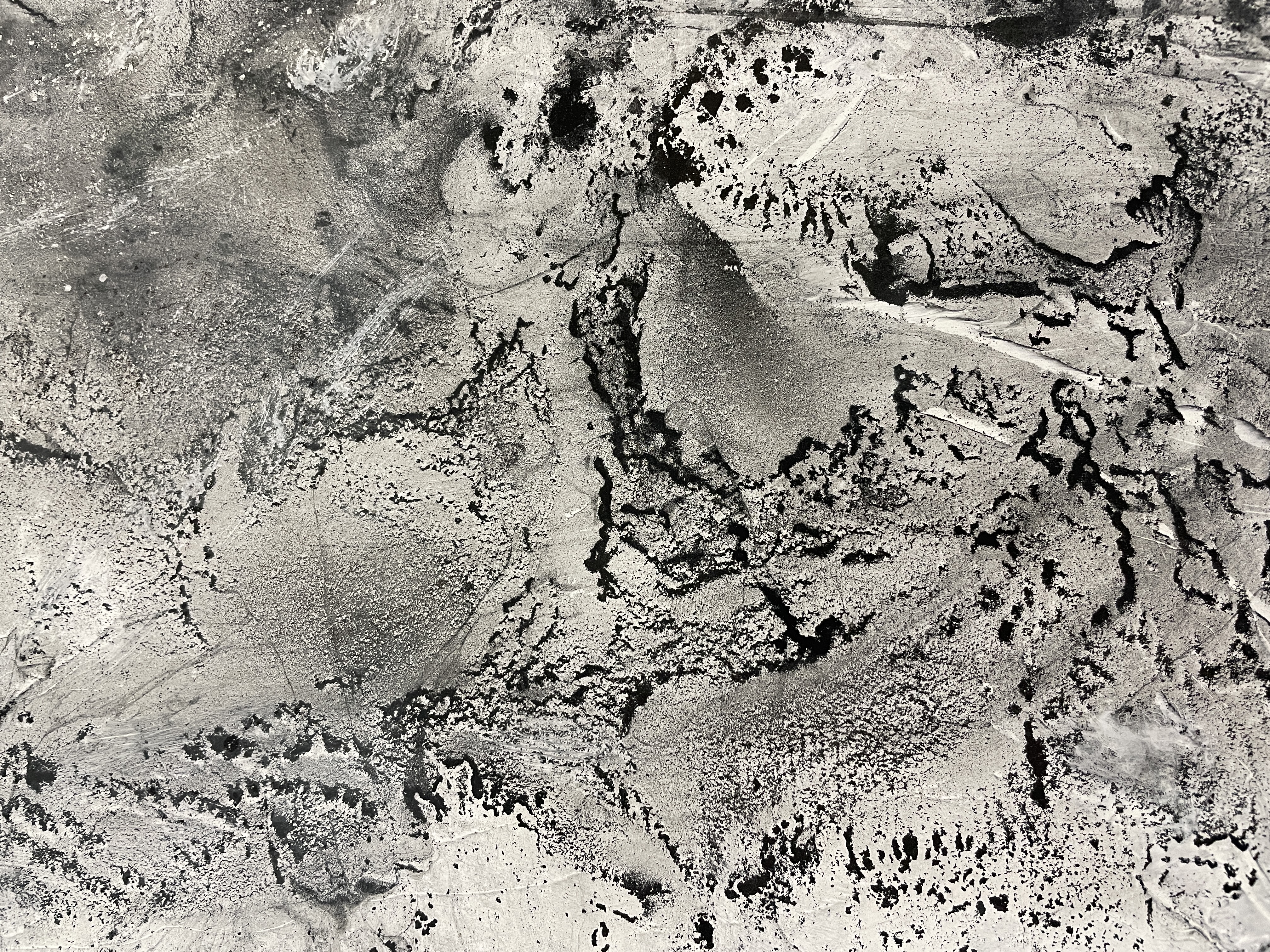
The resulting textures resemble aerial landscapes, seabeds, or tectonic maps. Not directly illustrated, but formed through sedimentation, weight, and surface tension. In this way, the work reflects ongoing research into the philosophy of nature, and how forms emerge when material processes are allowed partial autonomy.
The technique recalls the principles of traditional fresco and tempera painting, especially as practised in the Florentine Renaissance, but turns them inside-out. Instead of building form from line and composition, the image is extracted from below.
Zolla Landscape is both a painting and a record of time, pressure, and environment. It carries the trace of a specific place and moment, while pointing toward larger geological and cosmological systems of formation.