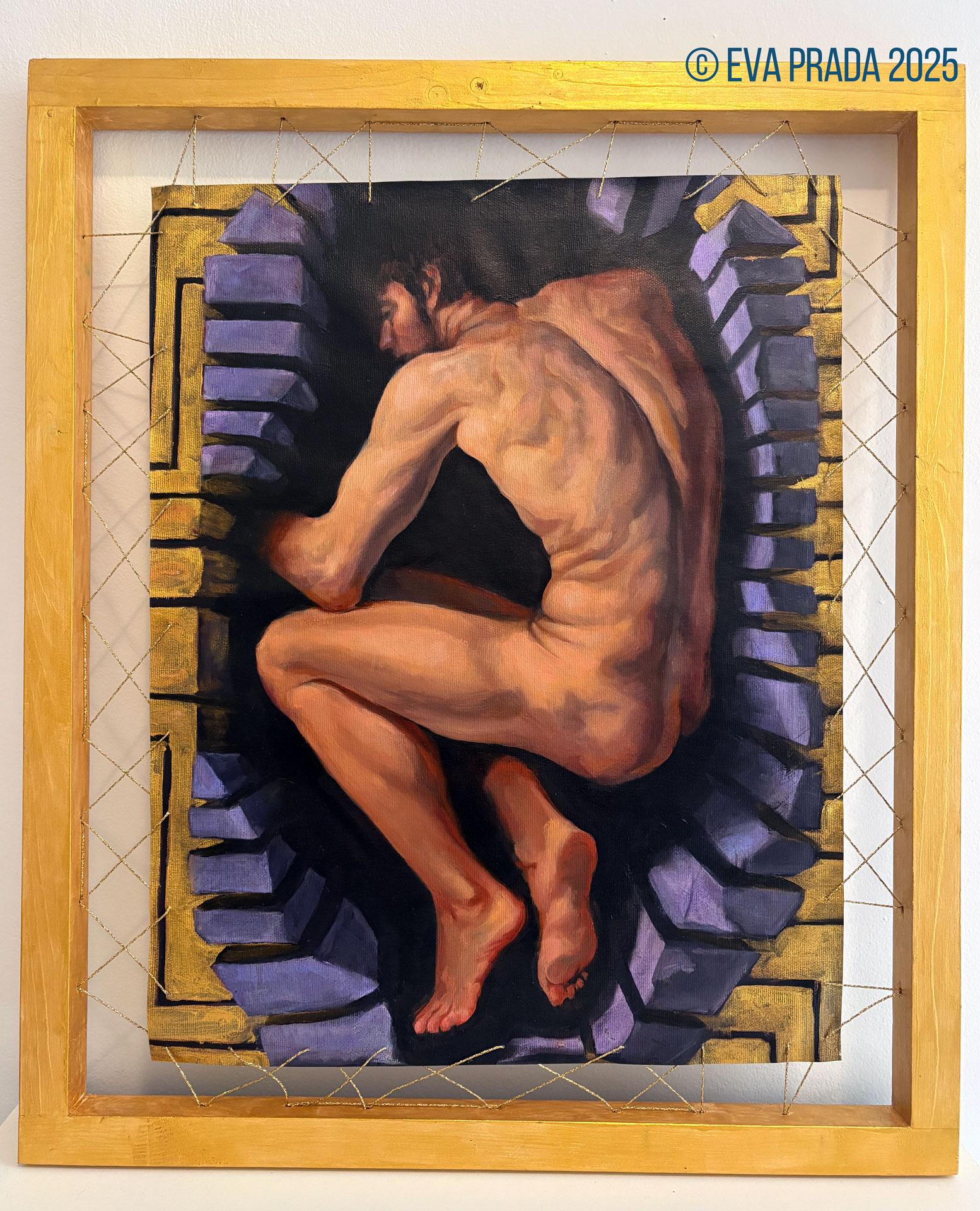
In Qubit, Eva Prada explores the fragility of human consciousness in an age where the limits of the body are increasingly tested by abstract, post-biological systems.
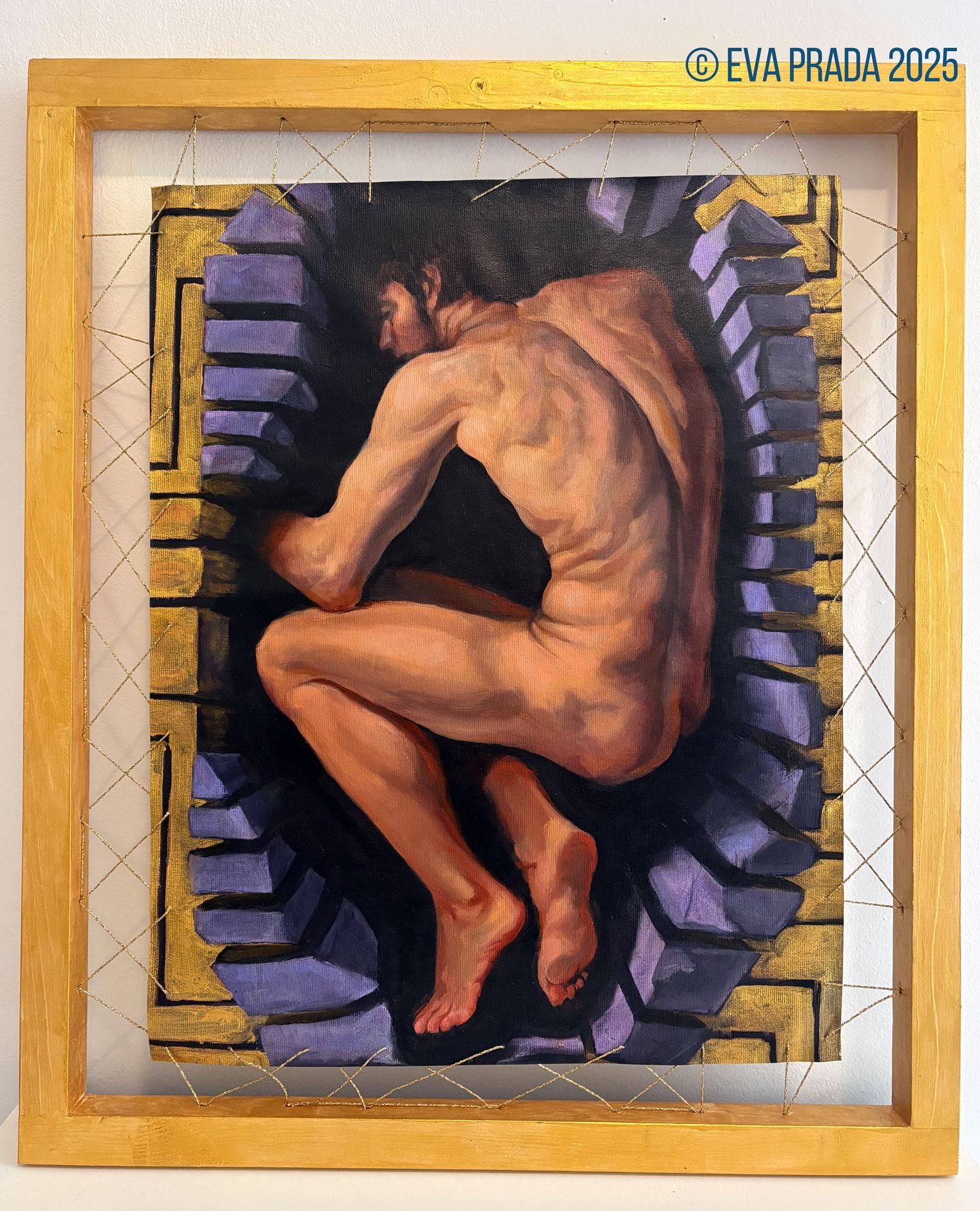
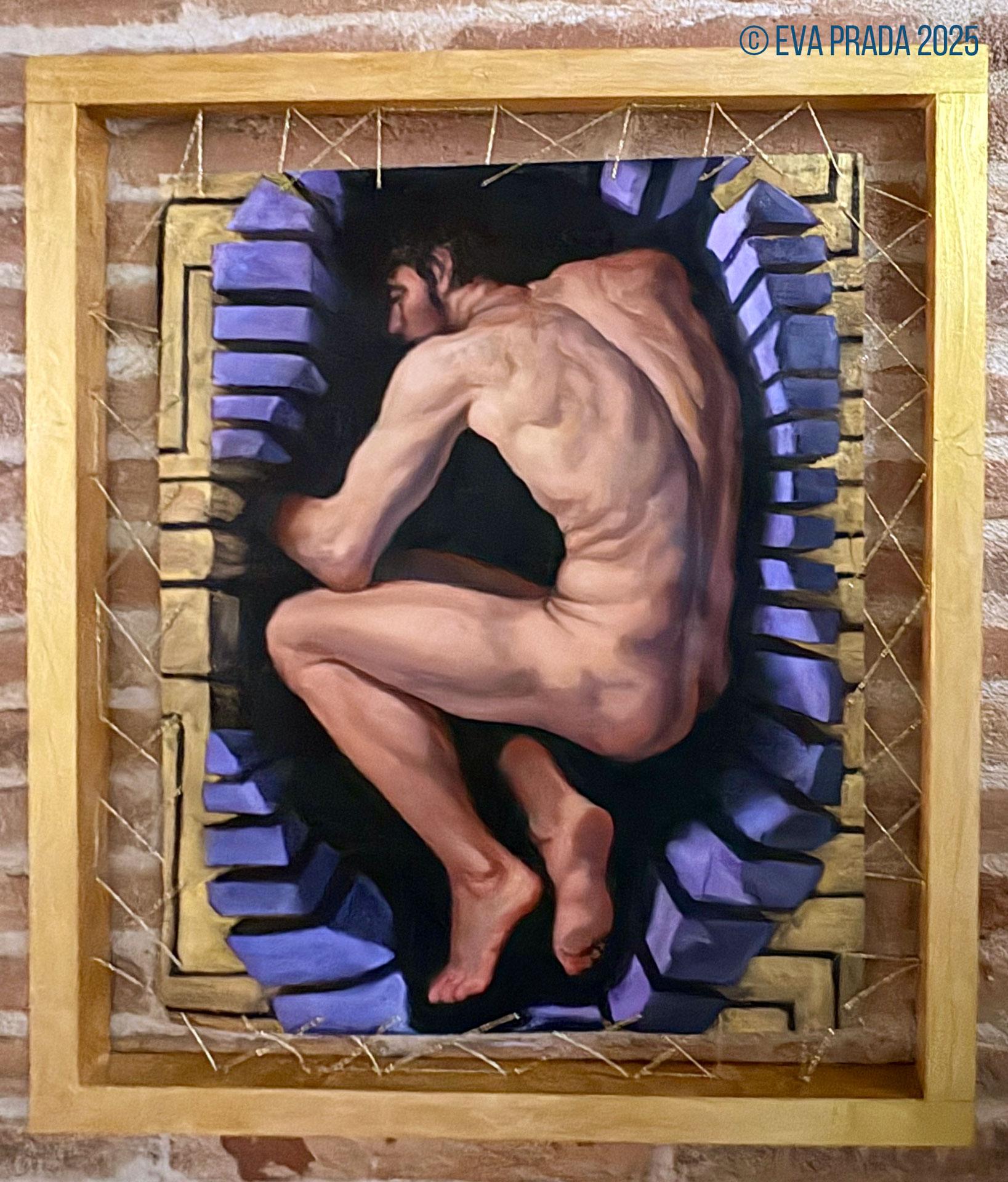
Suspended within a golden wooden frame—echoing the protective architecture surrounding quantum computers—a male figure floats in a state of tension and surrender. His limbs appear weightless, his position fetal, suggesting vulnerability and transformation. The frame does not touch the canvas: instead, the painting hovers, held by fine golden threads, creating a spatial metaphor for containment without contact.
Inspired by the notion of quantum superposition, Prada imagines how consciousness might feel if it could exist in two places at once. The body is rendered with anatomical precision, yet placed in a void where gravity, space, and identity become unstable.
Qubit is a poetic reflection on liminality, both physical and existential. It invites us to reconsider embodiment in a world where technology no longer just surrounds us—it shapes the very conditions of our being.