The figure of Penelope, eternal symbol of patience, devotion, and silent strength, returns here not through Homer’s words but through... Read More
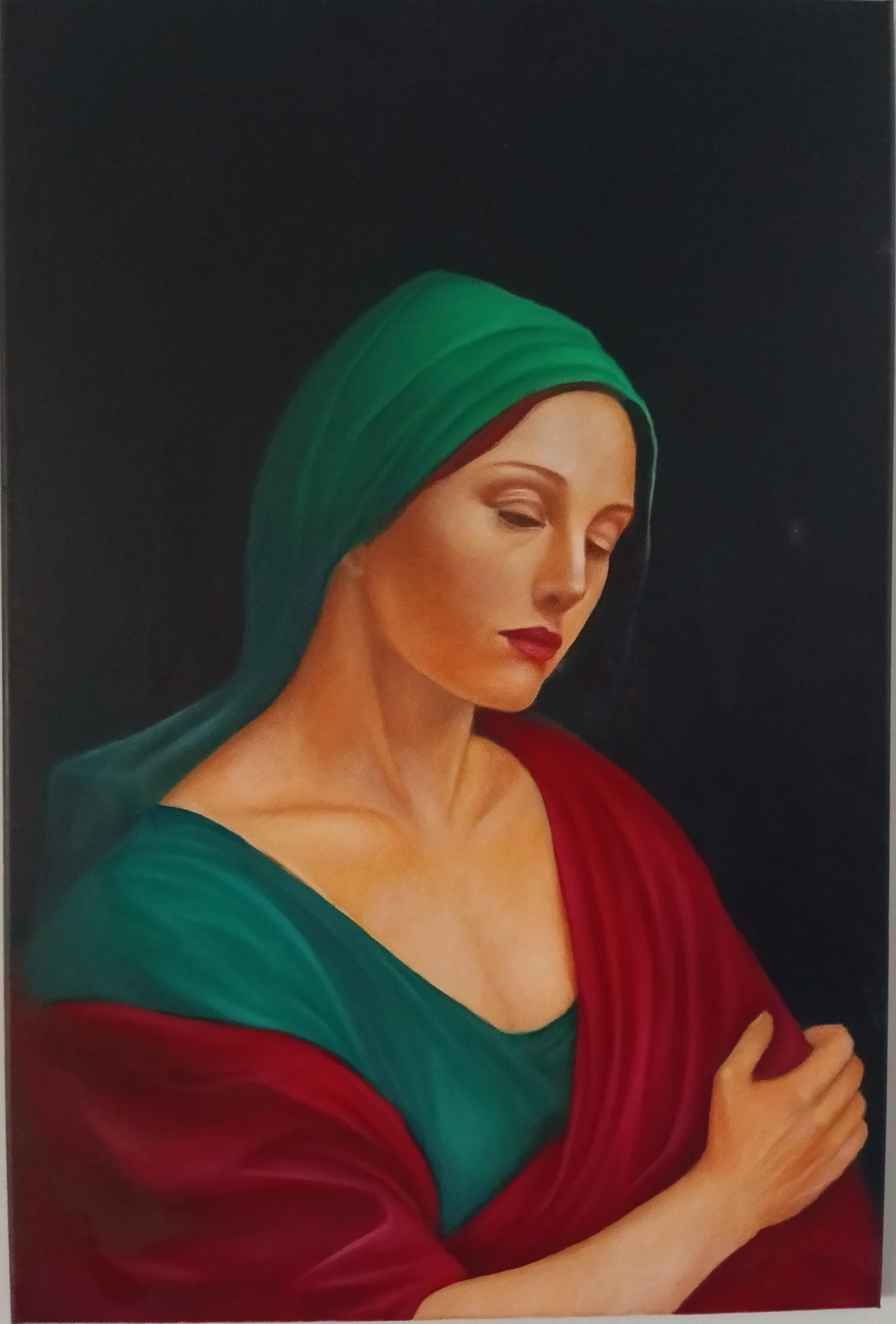
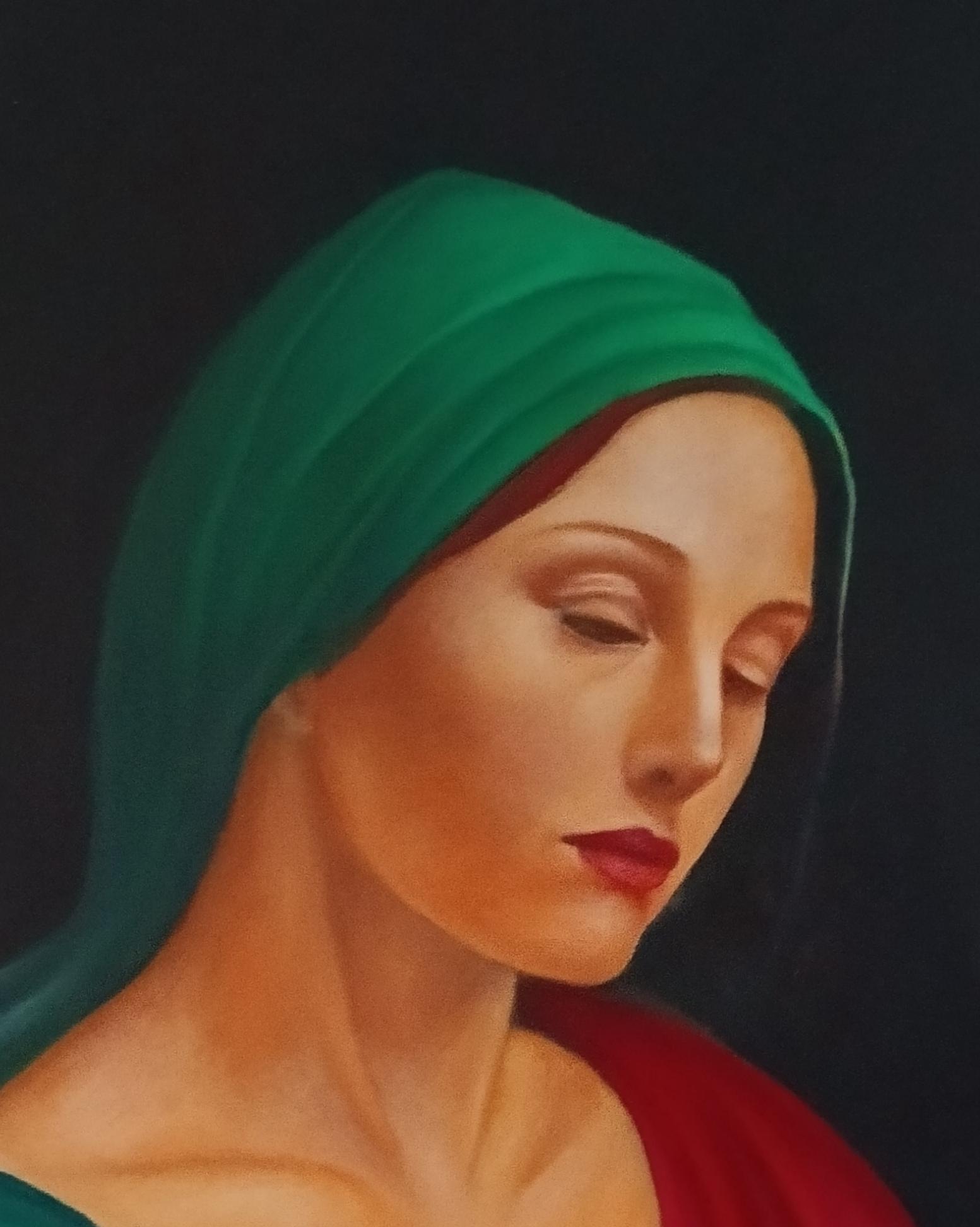
The figure of Penelope, eternal symbol of patience, devotion, and silent strength, returns here not through Homer’s words but through the silence and color of a gaze. This Penelope distances herself from the traditional narrative of “the woman who waits” and transforms into a timeless embodiment of inner resilience and conscious choice. Her head bows gently, in a posture of introspection — not of weakness. Her eyes are half-closed, as if engaged in deep thought. The light caressing her face brings out the purity of her presence: a woman who remembers, who knows, but who is no longer bound by longing.
The colors — rich green and earthy red — evoke her roots: the Greek land, the sea, the blood and struggle. The green veil, like a crown, and the red drapery embracing her body, lend an air of calm sanctity, almost Byzantine, yet deeply personal and strikingly modern.In the gesture of her hand, resting gently on herself, lies a symbol of self-protection and quiet sovereignty. She does not appeal to anyone — she neither yearns nor pleads. Her power is silent, yet complete.
This Penelope does not weave to deceive time. She weaves herself — with color, silence, and choice. She no longer waits for Odysseus. Perhaps now, he is the one searching for her