Descrizione (recensione Galleria via Margutta Roma)
Il
percorso vitale e artistico di Anna Pia Parente la porta a scegliere
l'acquerello come mezzo di espressione, tecnica che non ammette esitazioni,
dove ogni gesto è definitivo, capace di trasmettere trasparenze impalpabili e
profondità insondabili. Non si può tornare indietro, non si può correggere, ma
solo accogliere ciò che l'acqua e il pigmento hanno deciso di rivelare.
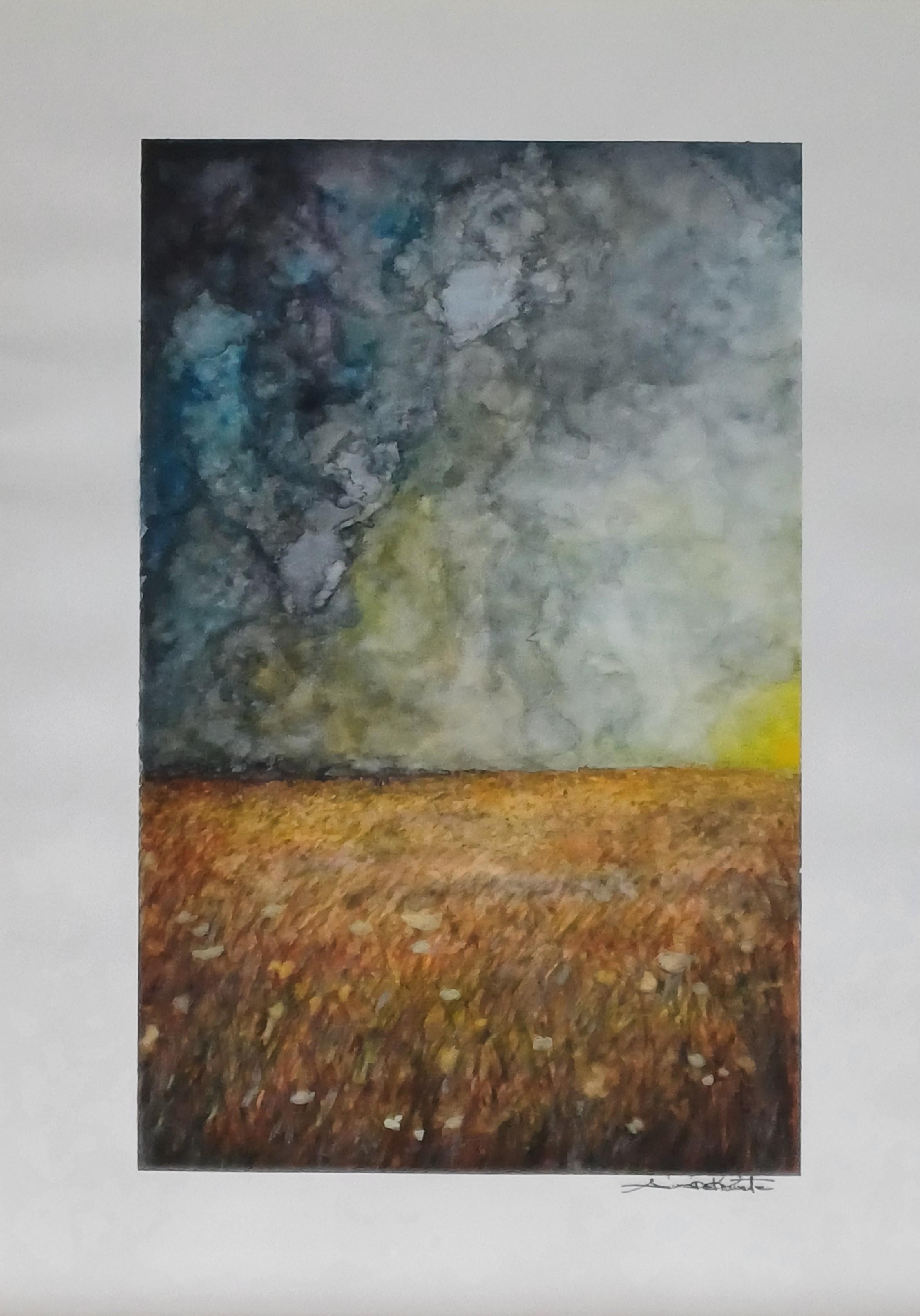
In Paesaggio, l'acquerello diventa una "filosofia di
vita", un modo di guardare il mondo e di attraversarlo. Il paesaggio non è
solo una rappresentazione estetica ma un riflesso interiore, uno specchio
dell'anima in cui la realtà visibile si intreccia con quella invisibile. Cielo
e terra, luce e ombra, riflessi e dissolvenze raccontano un mondo interiore in
cui l'elemento naturale si trasforma in esperienza emotiva. Come scrive
Henri-Frédéric Amiel: Un paesaggio è uno stato dell'anima, e chi legge
nell'uno e nell'altra è meravigliato di trovare la similitudine di ogni
particolare. Ed è proprio in questa fusione tra ambiente e sentimento che
risiede la forza dell'arte di Anna Pia: ogni sfumatura e riflesso è un
frammento di un discorso silenzioso tra la pittrice e il mondo, tra il suo
sguardo e la materia viva della natura. Il paesaggio, immerso in un'atmosfera
surreale, non è una semplice veduta, ma un luogo dell'anima, una dimensione
sospesa tra il reale e il sognato.
Description
(reviewed by Galleria via Margutta Roma)
Anna Pia
Parente's vital and artistic path leads her to choose watercolor as her means
of expression, a technique that does not allow for hesitation, where every
gesture is definitive, capable of conveying impalpable transparencies and
unfathomable depths. There is no going back, no correcting, only welcoming what
water and pigment have decided to reveal. In Landscape, watercolor becomes a
“philosophy of life,” a way of looking at the world and traversing it.
Landscape is not just an aesthetic representation but an inner reflection, a
mirror of the soul in which visible reality is intertwined with invisible
reality. Sky and earth, light and shadow, reflections and fading tell of an
inner world in which the natural element is transformed into emotional experience.
As Henri-Frédéric Amiel writes: A landscape is a state of the soul, and one
who reads in one and the other is amazed to find the similarity of every detail.
And it is precisely in this fusion of environment and feeling that lies the
strength of Anna Pia's art: every nuance and reflection is a fragment of a
silent discourse between the painter and the world, between her gaze and the
living matter of nature. The landscape, immersed in a surreal atmosphere, is
not a simple view, but a place of the soul, a dimension suspended between the
real and the dreamed.