This work stages a poetics of exhaustion, intimacy, and refusal. Set against a background of erosion—peeling walls, unstable grounds—it captures... Read More
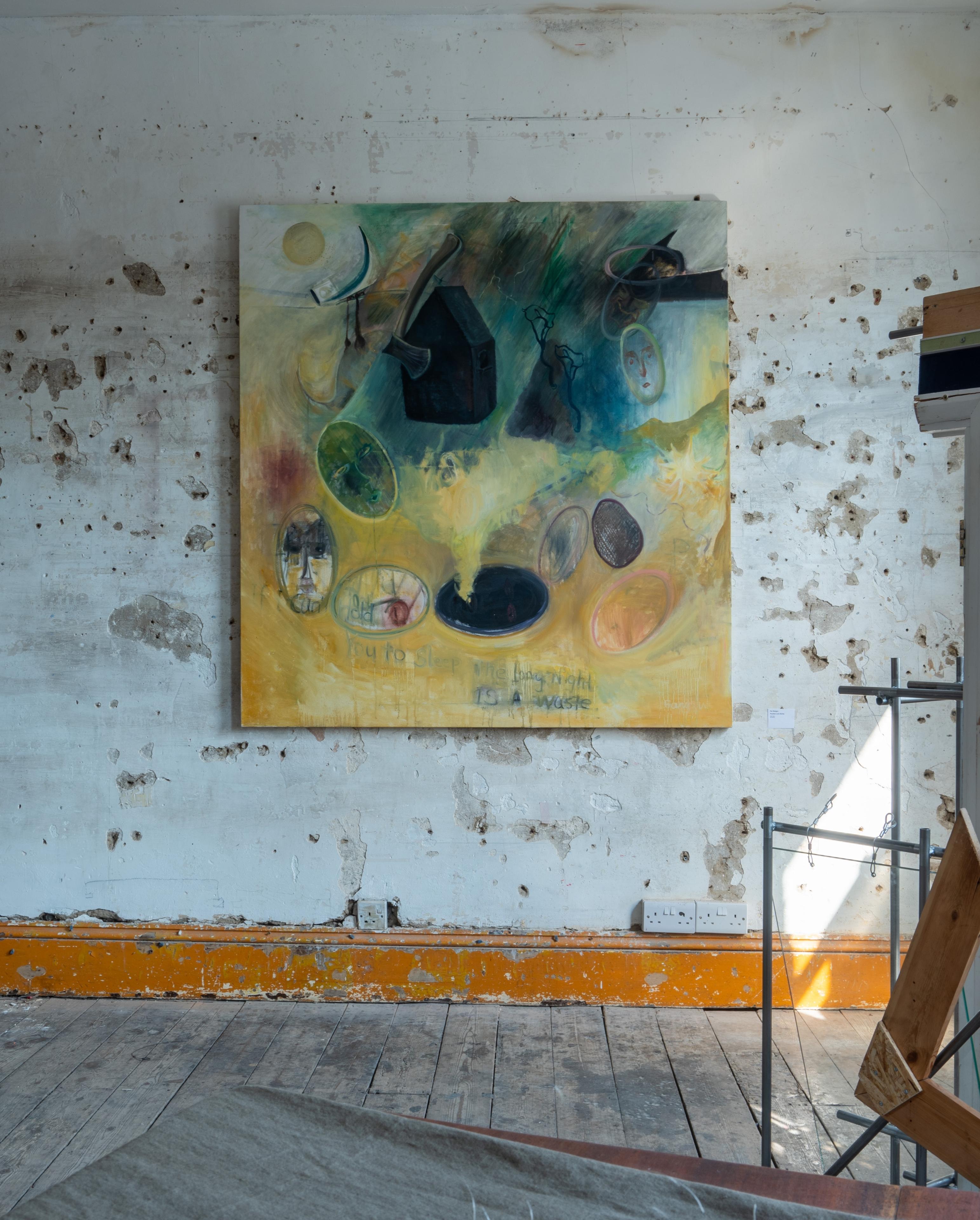
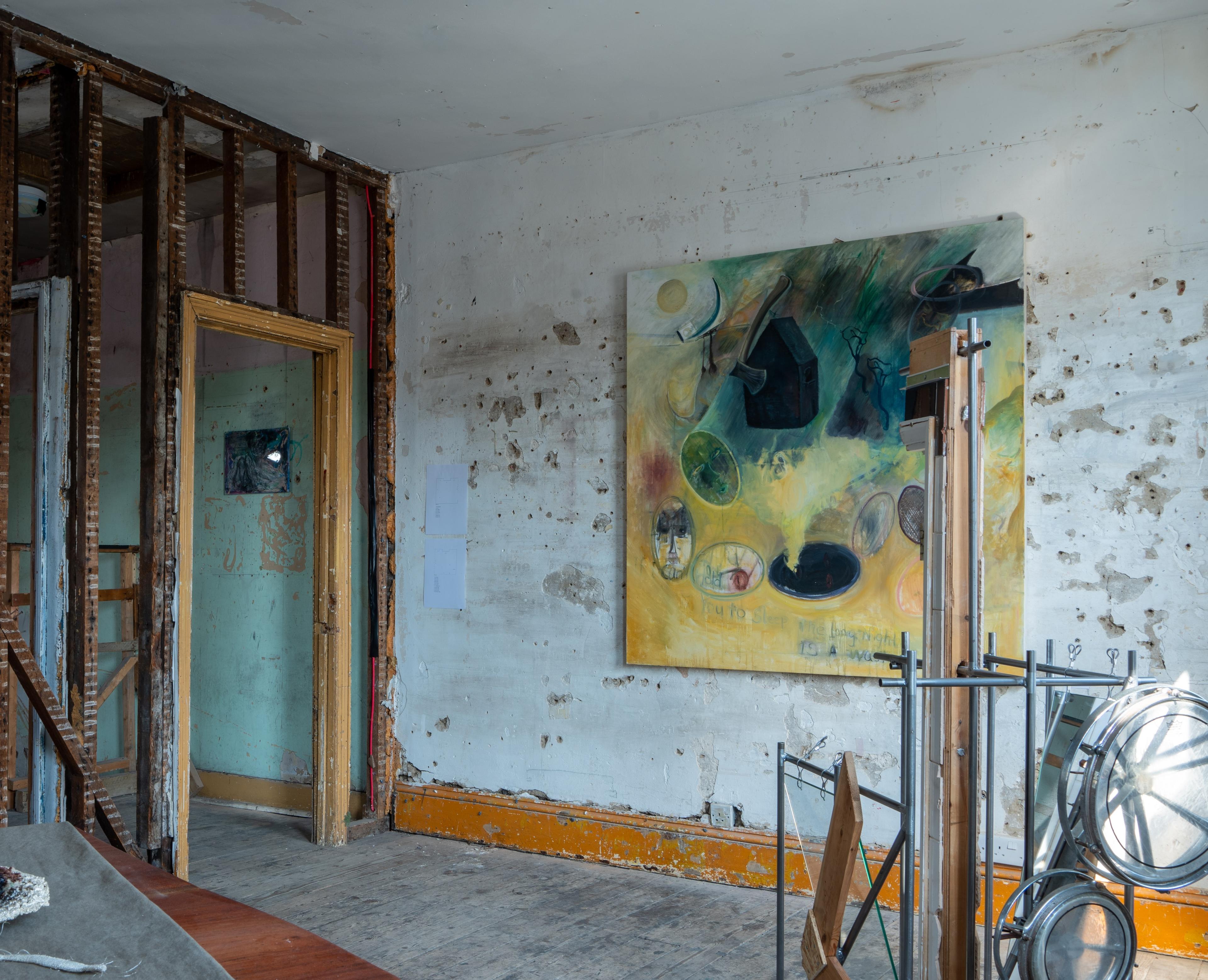
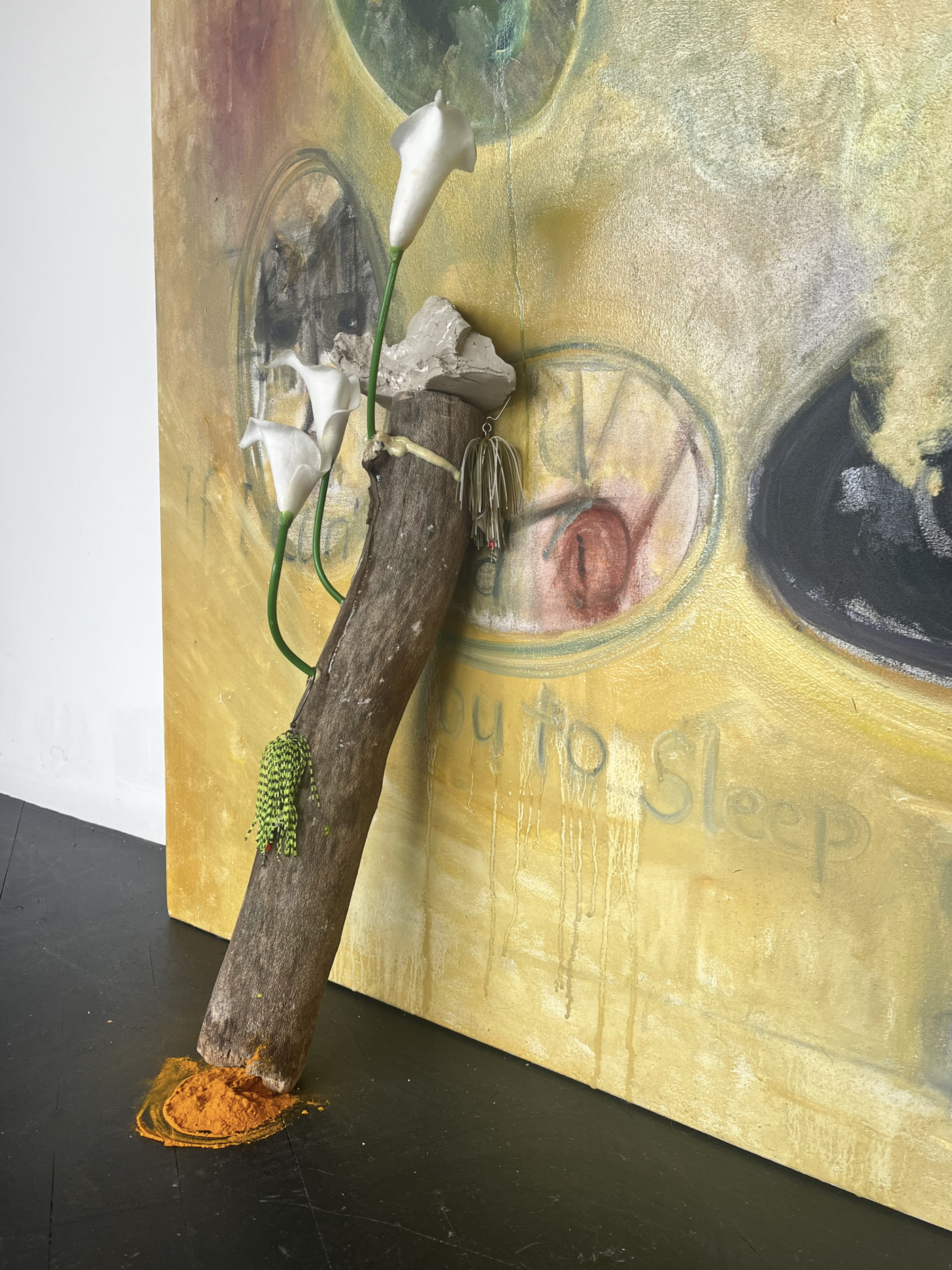
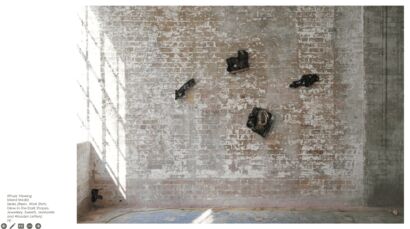
This work stages a poetics of exhaustion, intimacy, and refusal. Set against a background of erosion—peeling walls, unstable grounds—it captures the psychological landscape of being held apart, of care deferred. The phrase “If I can’t hold you to sleep, the long night is a waste” echoes not just personal longing, but also what Franco “Bifo” Berardi calls “the privatization of desire”—where love, touch, and sleep are no longer commons, but fragmented under the pressures of productivity and surveillance.
In this piece, dream logic leaks into a collapsing domestic scene: spectral faces, tools without clear use, loops and voids that refuse resolution. The black house hovers between sanctuary and prison. Inspired by Lauren Berlant’s theory of “cruel optimism,” the painting reflects how the things we long for—rest, intimacy, belonging—are often shaped by the very structures that deny them.
Sleep, in this context, is not just biological—it becomes a contested site. To sleep beside someone is to reclaim time from capital, to resist fragmentation, to insist on relationality in a world that profits from isolation. If the night is long, it is because the world refuses to stop; and to hold someone to sleep is to carve out a temporary refusal—to waste time together, deliberately.