During the experience of lockdown in the U.S., I created a series of mixed-media canvases initially inspired by the sudden simultaneity of all spaces at home and our total dependence on digital connectivity. This series evolved in response to the rising tide of news anxiety. Over time, it became a visceral reflection of the overwhelming flood of disaster and war headlines—a psychological landscape shaped by digital saturation, dread, and disconnection. During that period of deep isolation, yoga became my grounding practice—a way to reconnect with my body and acknowledge my existence. But beyond a physical tool, yoga became a visual and conceptual language in my work. I began using specific yoga poses not just to reflect my daily practice, but to convey their emotional and philosophical meanings: surrender, balance amid instability, acceptance and release and so on.
The inability to process the flood of news and information we face daily, the constant exposure—especially to manipulated or conflicting truths—leads to passivity or surface-level engagement. A "like" becomes a placeholder for care, and eventually for indifference.
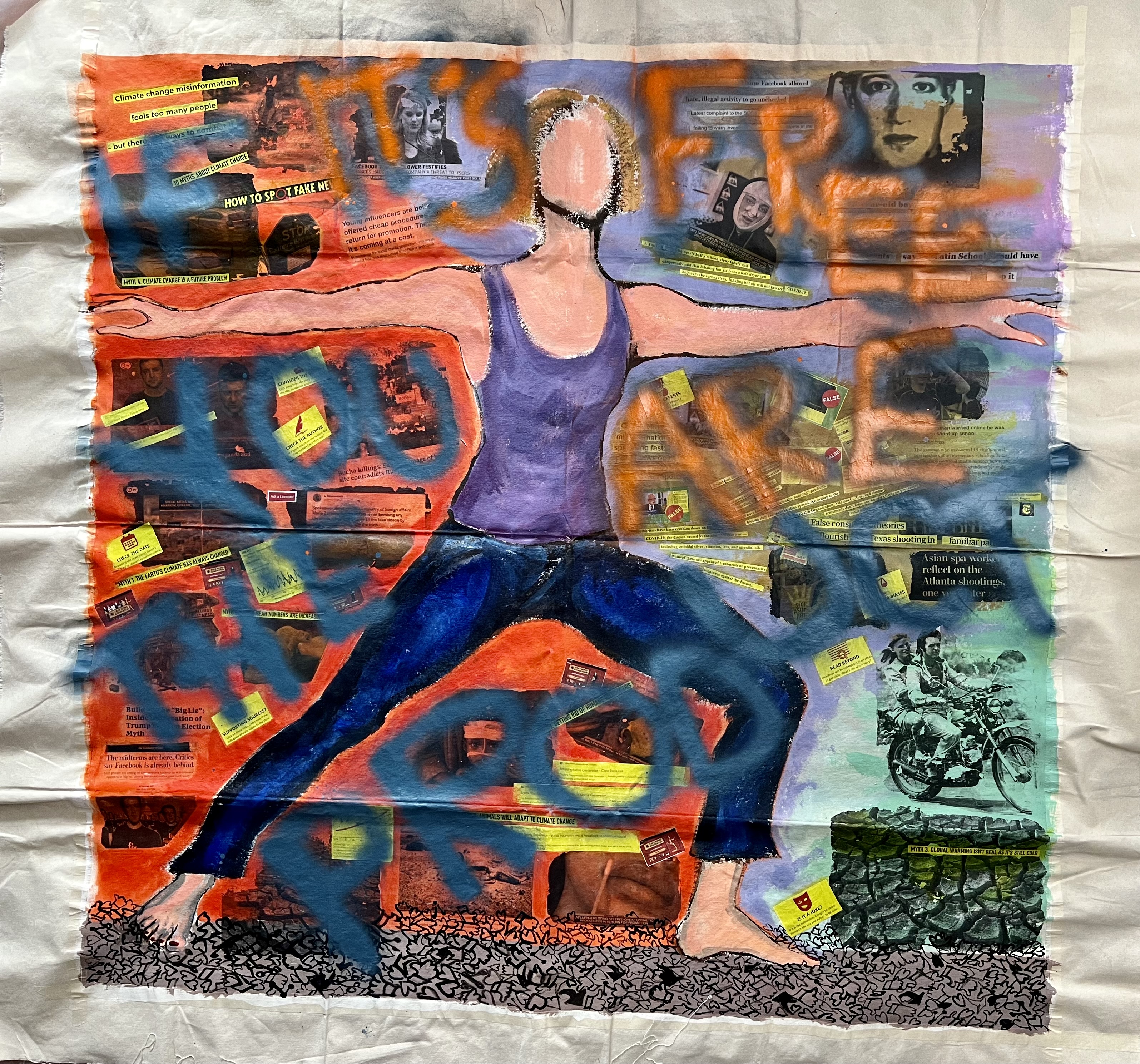
Fake News Warrior is a call to action—a visual protest against misinformation, digital manipulation, and the passive consumption of content. At the center stands a figure in Warrior Pose, a yoga position that embodies strength, courage, and balance. Here, it becomes a symbol of resistance: grounded, alert, and unwavering in the face of distortion.
The backdrop is layered with fake news headlines, sensationalized stories, and real investigative reports exposing how social media is used to manipulate and mislead. Among these are images of young influencers—victims of absurd trends who, knowingly or not, pass on harm to others through their platforms.
Beneath the figure, a carpet of “likes” and emojis is scattered like confetti—a sharp metaphor for how digital approval replaces genuine engagement. Symbols of connection become empty, reflexive gestures.
Scrawled across the surface in graffiti-like text is the warning: “If it’s free, you are the product.” This phrase breaks through the visual noise like an alarm, confronting the viewer with the uncomfortable reality of the commodification of attention.
An old photo of Linda and Paul McCartney on a motorcycle appears like a quiet suggestion—an invitation to disconnect, to step out of the curated world of screens and re-enter the unpredictable, physical world with boldness and clarity.