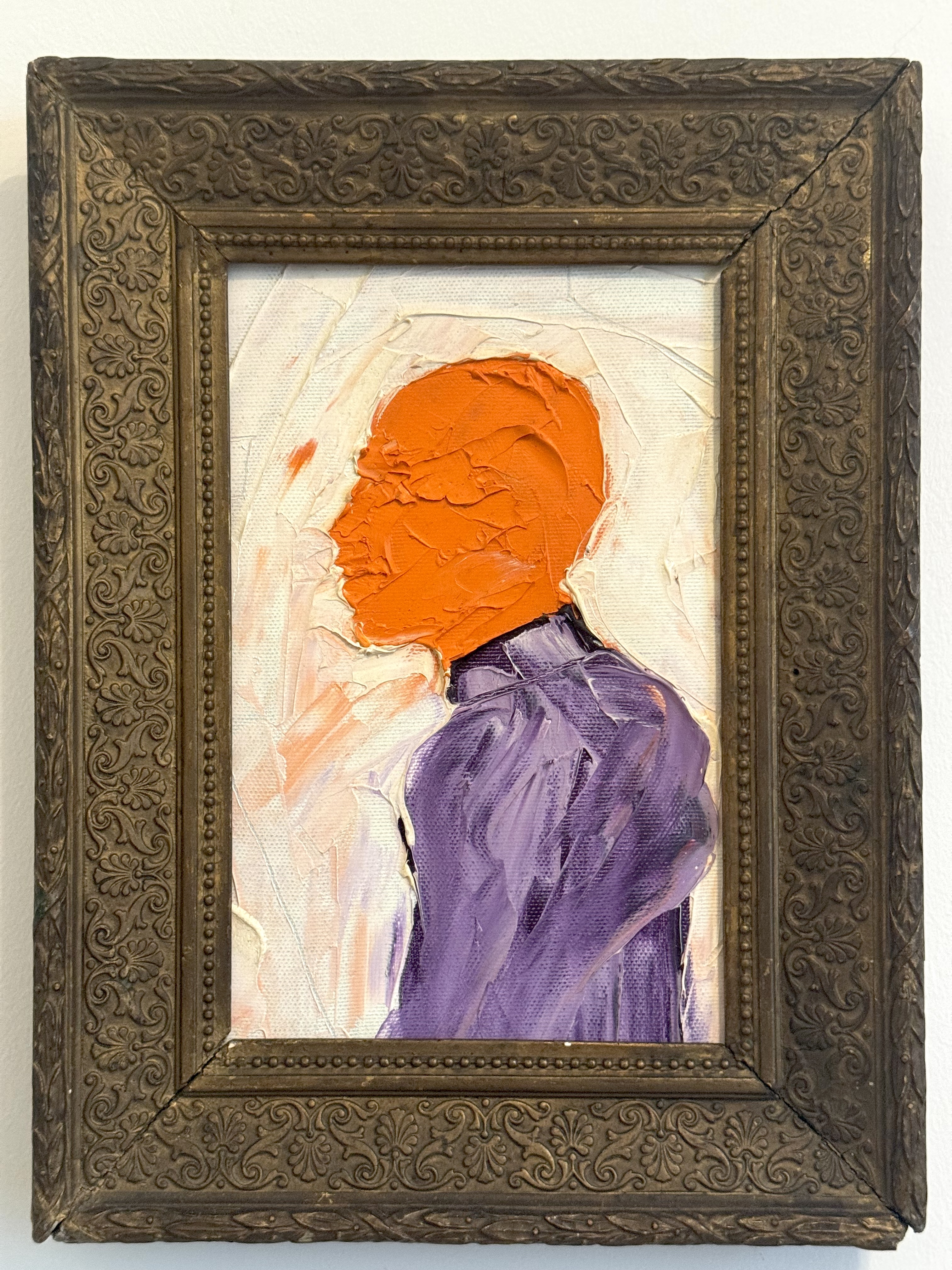
The work originates from a reflection on portraiture as a material presence rather than a descriptive representation.
The artist’s initial interest lies in images where the face emerges either through pure form or through pure color, reducing narrative and psychological elements to a minimum. In this case, it is primarily form that guides the construction of the image: color appears in an instinctive and almost accidental way, generated from materials already present in the studio and used without prior planning.
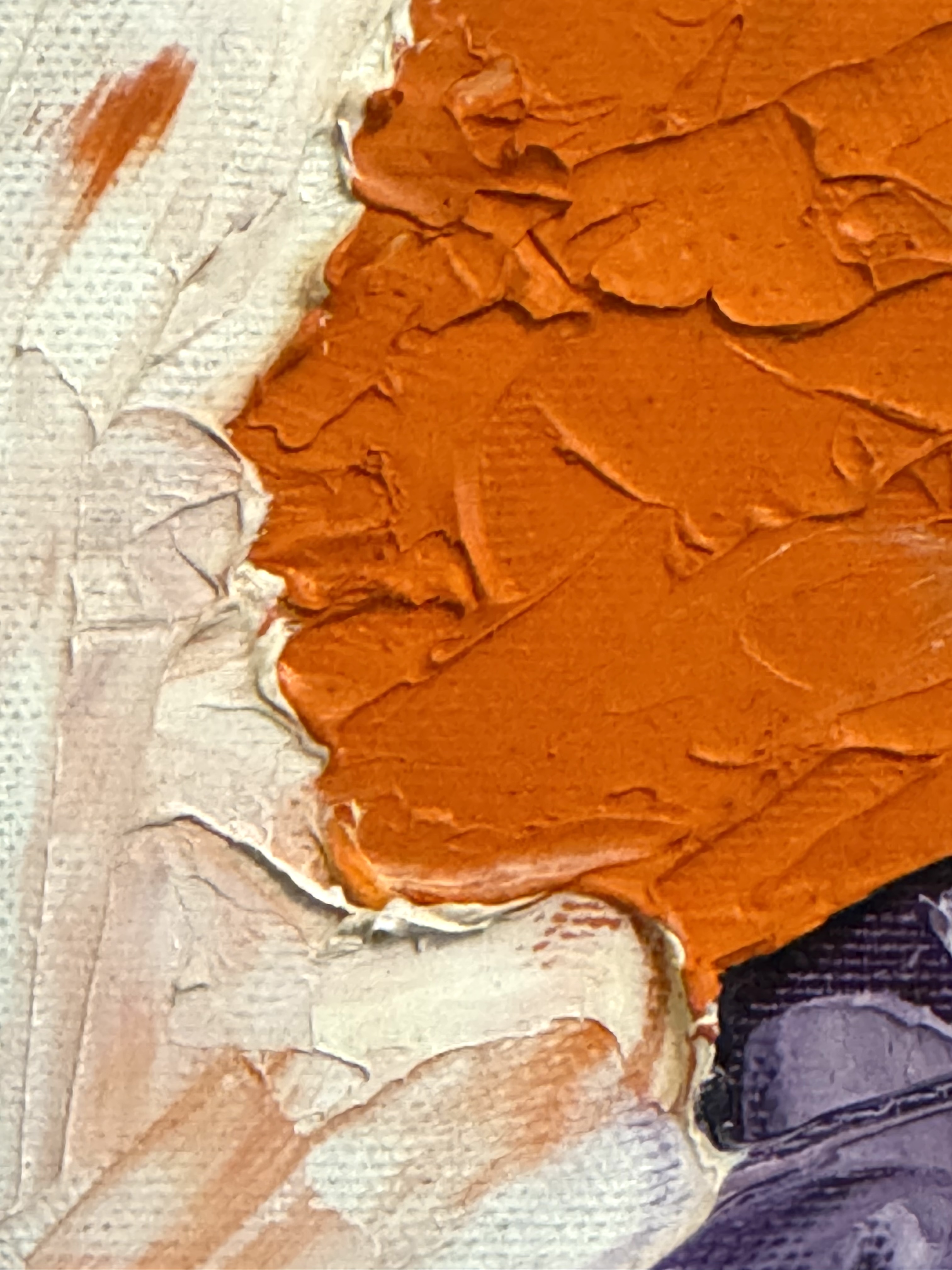
The white background plays a central role in the composition. More than a neutral space, it becomes a luminous field that isolates the figure and transforms it into a silhouette, evoking a suspended, almost incomplete presence. The pictorial material itself reinforces this tension: the face is built through a dense and compact application of paint, while the rest of the image remains more open, fragmented, and unstable.
The shape of the face derives from a trace obtained through cyanotype, a photographic printing process based on exposure to sunlight. This initial imprint is later reinterpreted through painting, while still preserving the quality of an impressed and transferred image. The lower part of the body, by contrast, is entirely invented, creating a visible tension between recognizability and imaginary construction.
Although it is a self-portrait, the work does not stem from an autobiographical intention. The subject itself is almost incidental and could have been anyone. What interests the artist instead is the threshold between identity and abstraction: the fact that, despite the extreme simplification and absence of realistic detail, the face remains immediately recognizable.
Even seemingly marginal elements, such as the violet turtleneck sweater (“dolcevita” in Italian, echoing the title of the work), become part of the personal memory embedded within the work, transforming the portrait into a presence that is at once concrete and indefinite, everyday and iconic.