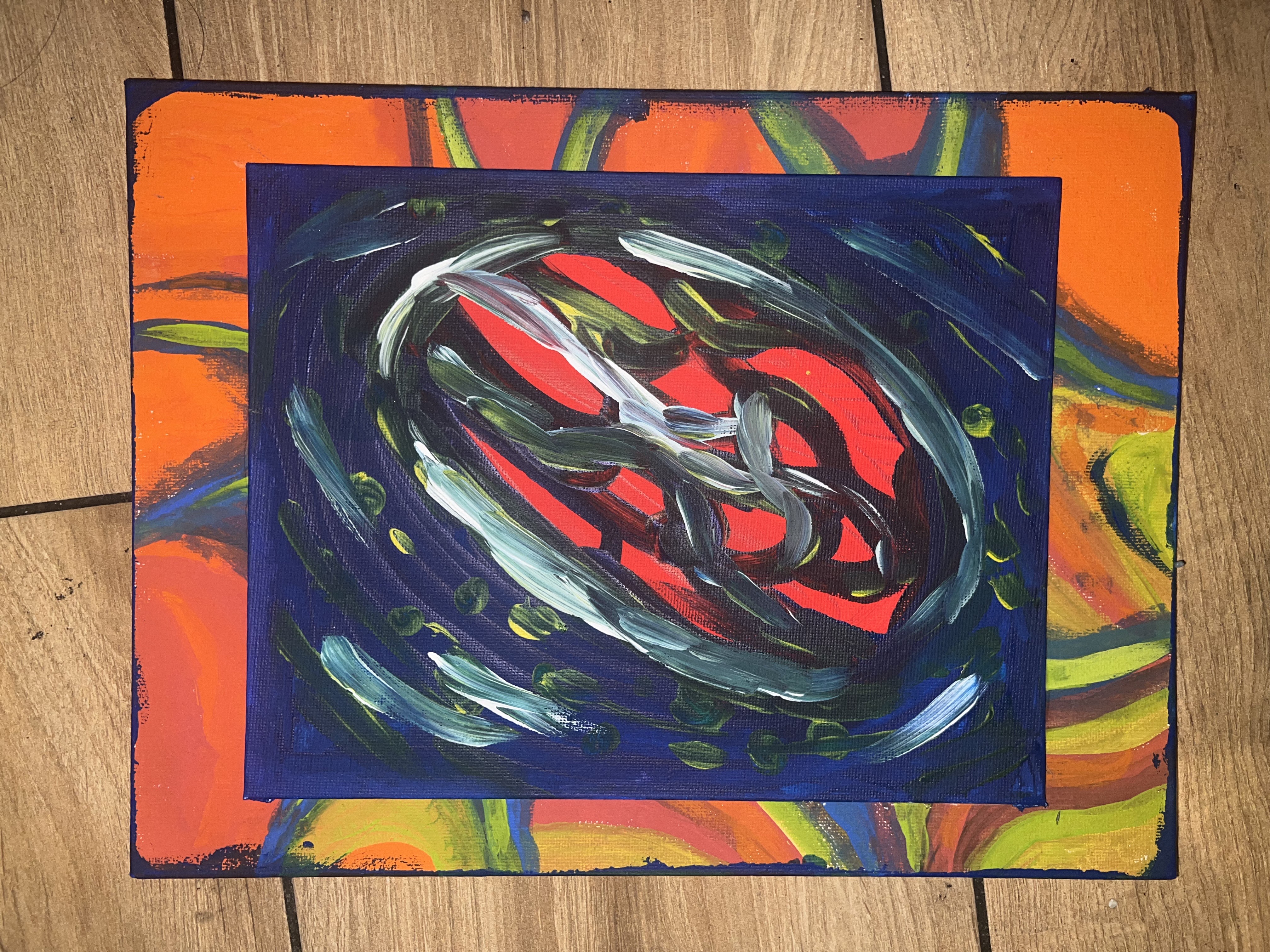
I was thinking about the origins of society in my country, Guatemala—about how cacao was not merely a crop, but a pulse that shaped time, exchange, and belief. Long before borders and currencies, cacao functioned as language: a medium of value, ritual, and power. It passed from hand to hand like a quiet agreement between earth and people, binding communities through labor, ceremony, and shared meaning.
In the drawing, cacao appears as both seed and constellation. Its pods echo human organs—hearts, lungs—suggesting that society itself grew from its interior. The land is not background but body; rivers resemble veins, and the cacao trees stand like witnesses, rooted in memory.
Cacao becomes a symbol of continuity: how nourishment becomes economy, how ritual becomes structure, how a society learns to see itself through what it cultivates.