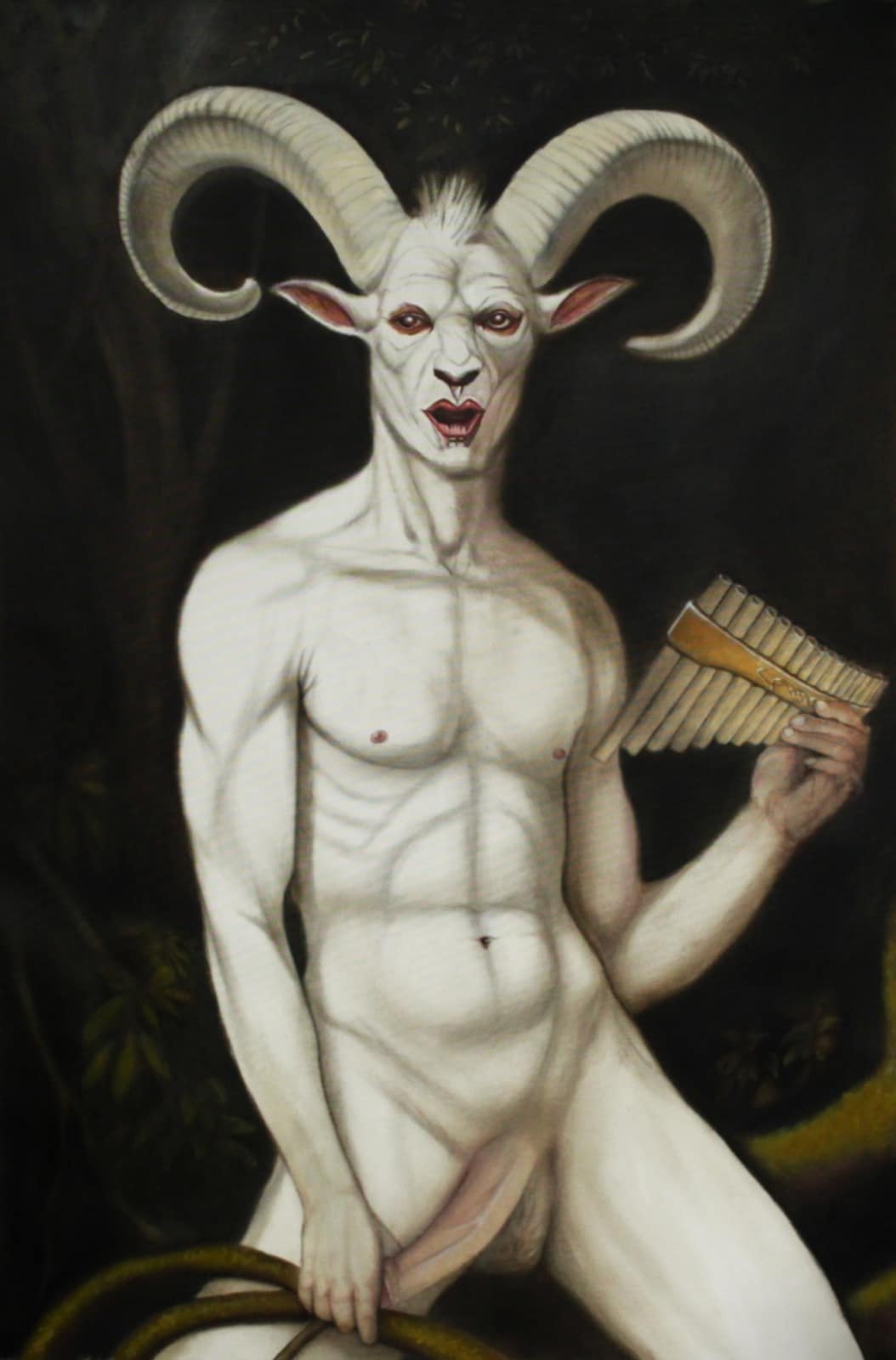
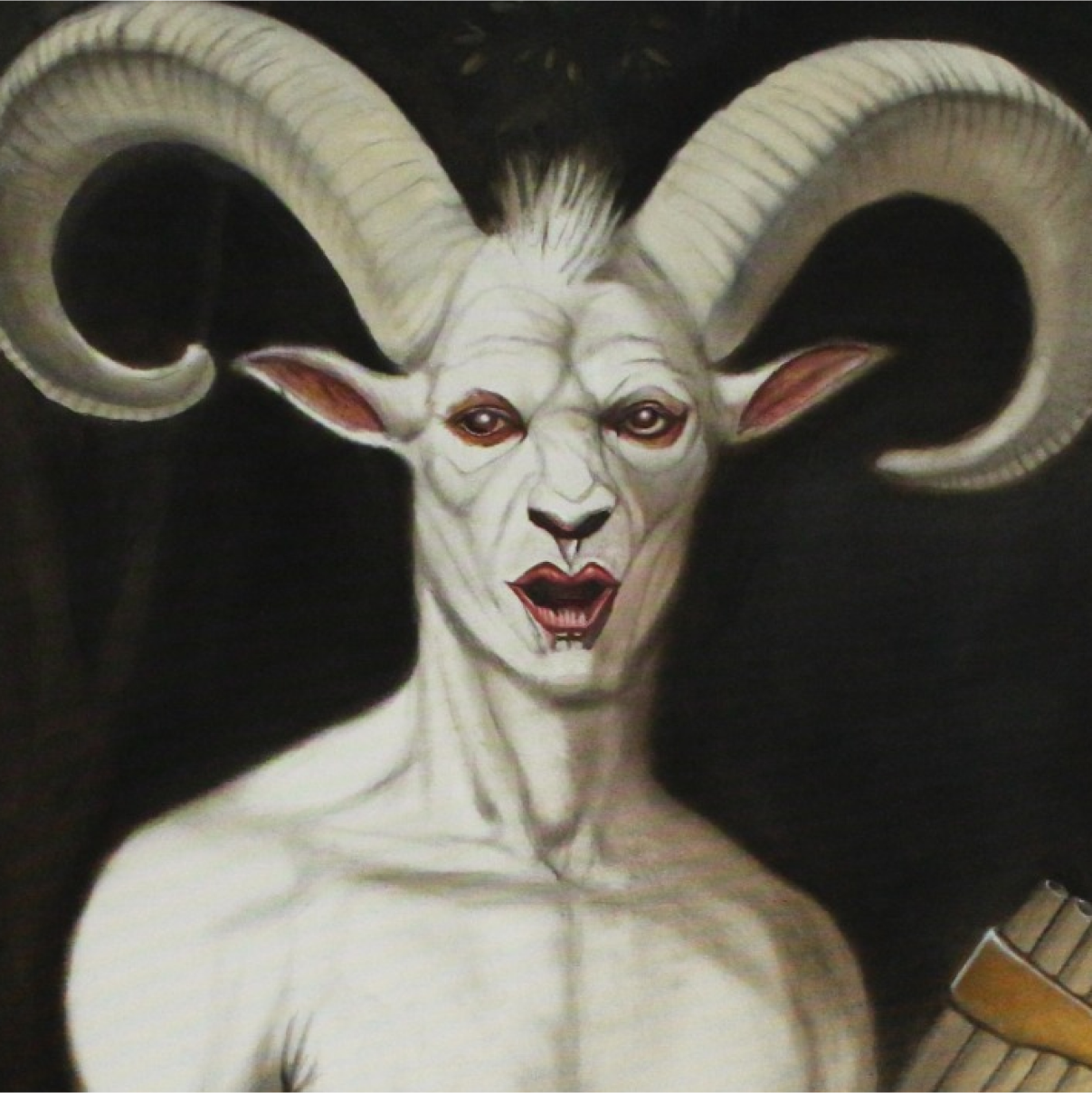
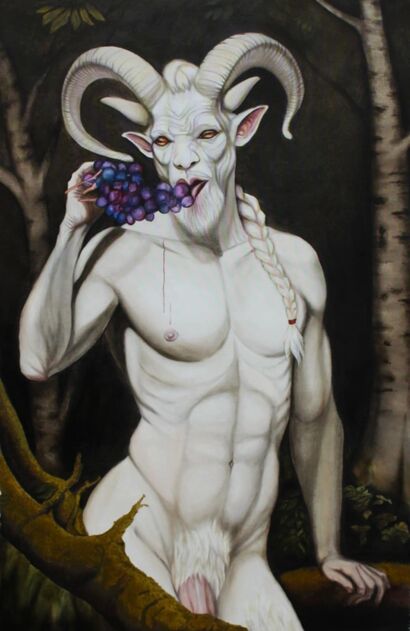
A Satyr with his Flute is a work that belongs to the broader series of paintings titled SATYROMANIA, in which the artist focuses on dissecting the mythological figure of the satyr, exploring its deeper, more controversial, and symbolic aspects. Half-man and half-goat, the satyr in Greek and Roman mythology was a wild and instinctual creature, often associated with Dionysus and the cult of fertility, wine, and sensual pleasure.
One of the central elements of its iconography is the relationship with nymphs, divine female figures linked to forests, waters, and untamed nature. The nymphs, in their essence, represented the beauty and sensuality of nature, and the satyrs, with their lustful nature, were frequently depicted chasing, seducing, or possessing them. This interaction was both an expression of nature's vital and fecund energy and a symbol of the contrast between untamed instinct and elusive desire. In ancient art, many depictions show erotic scenes between satyrs and nymphs, sometimes with a playful and sensual charge, other times with more aggressive and grotesque undertones. Greek sculpture and Attic vases, in particular, abound with images in which the satyr, often shown with an exaggeratedly large and erect phallus, embodies the unbridled force of male desire.
Over time, with the advent of Christianity, the figure of the satyr underwent a radical transformation. Its association with eroticism and the Dionysian cult, seen as expressions of lust and the corruption of the senses, turned it into a demonic symbol. Its iconography was assimilated into that of the devil: the hairy body, cloven hooves, horns, and raucous laughter became satanic attributes. At the same time, the goat—already a sacred animal to Dionysus and Pan—was demonized, transforming into an emblem of sin and perversion. The medieval Baphomet, with its androgynous and goat-like appearance, perfectly embodies this shift in the goat’s symbolism, from a representation of fertility to an icon of absolute Evil.
In A Satyr with his Flute, the satyr is depicted with a pan flute, an instrument traditionally associated with both his figure and that of the god Pan. The flute, besides evoking the hypnotic call of wild and instinctual music, also takes on a phallic connotation, emphasizing the connection between music, desire, and sexual potency. This element perfectly aligns with the artist’s poetics, which in his works approaches themes of eroticism, paganism, and blasphemy with a disenchanted and provocative gaze, rediscovering and reinterpreting ancient symbolism through a contemporary pictorial language.