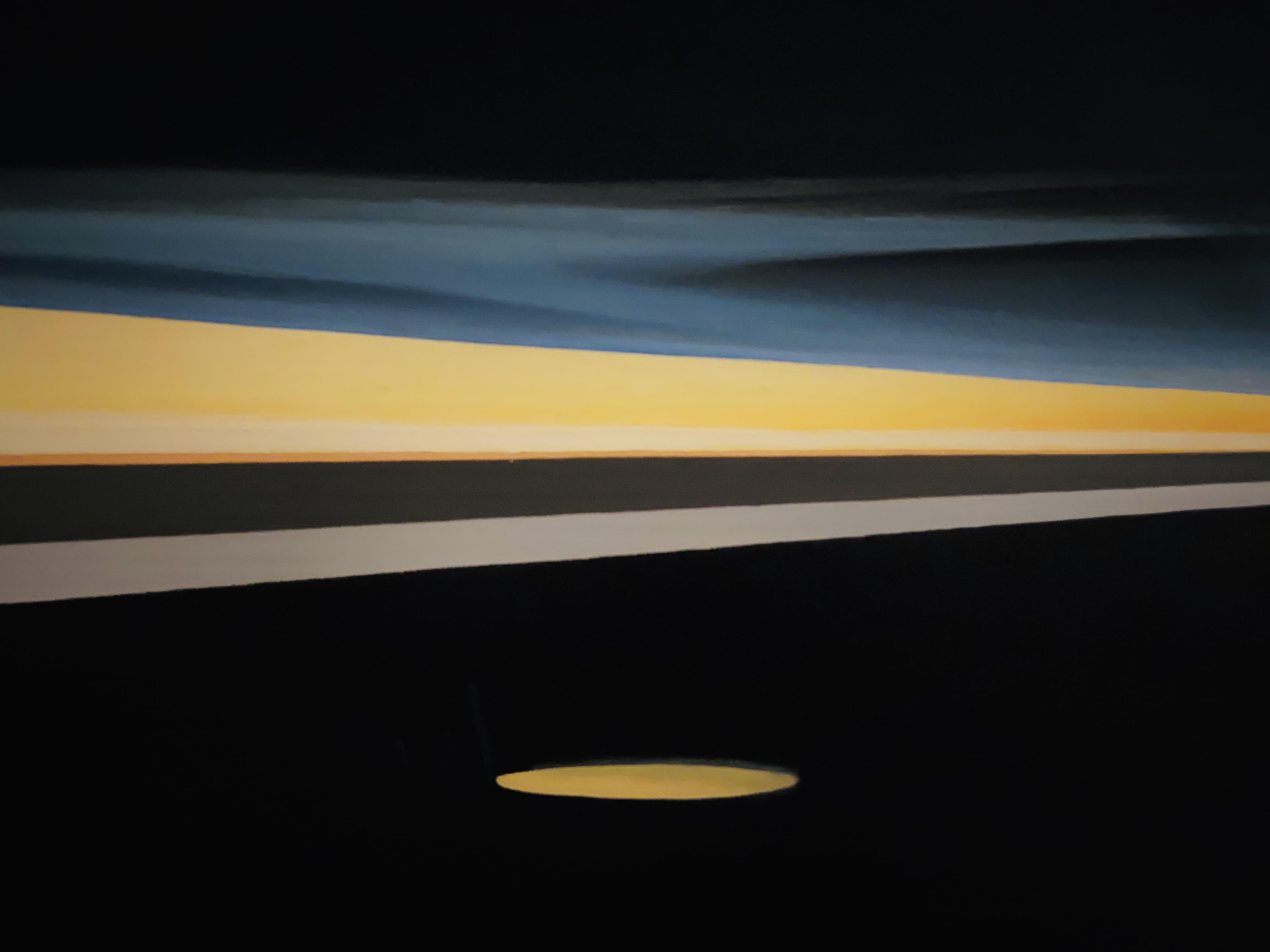
A Path to Afterlife: Dawn at the Beach is rooted in a real moment at Cape Cod, on the boundary between Rhode Island and Massachusetts, just before sunrise in December 2020. In the stillness of the early morning, around 5:40 a.m., the first orange light broke through dense clouds, softening the horizon and marking the quiet transition from night into day.
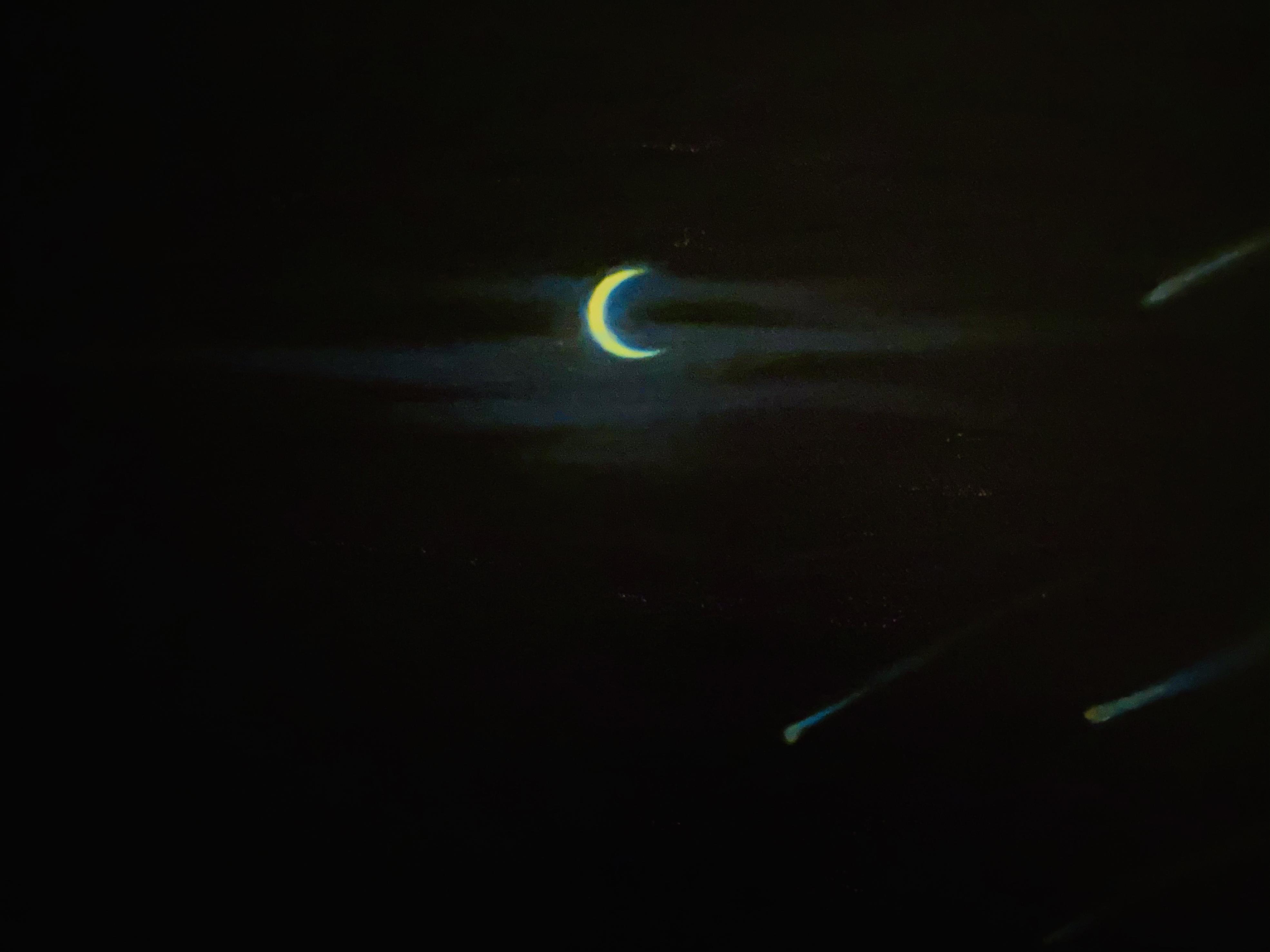
In the foreground, a shallow pool formed after a storm reflects the changing sky, capturing a fleeting moment of light and time. Nearby, steam rises from a chimney on the cliff and dissolves into the air, while traces of moonlight and fading stars remain visible. Together, these elements—water, air, earth, and fire—create a delicate balance between change and continuity.
At the center, a triangular form anchors the composition, symbolizing the threshold of life’s final passage, where endings open into the unknown. Within it, the Book of Light appears not as an answer, but as a passage that connects our everyday experiences with memory, life with death, and the present with what lies beyond our perception. It dissolves the boundaries between now and then, between life and death, and between space and time, inviting each viewer to discover their own meaning rather than offering a single interpretation.
Below the cliff, the simplified silhouette of a vehicle grounds the painting in a personal memory of that morning, while a distant lighthouse quietly marks the horizon as a symbol of orientation and hope.
The painting moves between documentation and imagination. It begins as a record of a specific place and moment, yet gradually unfolds into a meditation on thresholds—between presence and absence, memory and imagination, the visible and the unseen. Landscape becomes a metaphor for the human condition, suggesting that even the most ordinary moments can reveal a quiet passage toward continuity, connection, and love.