
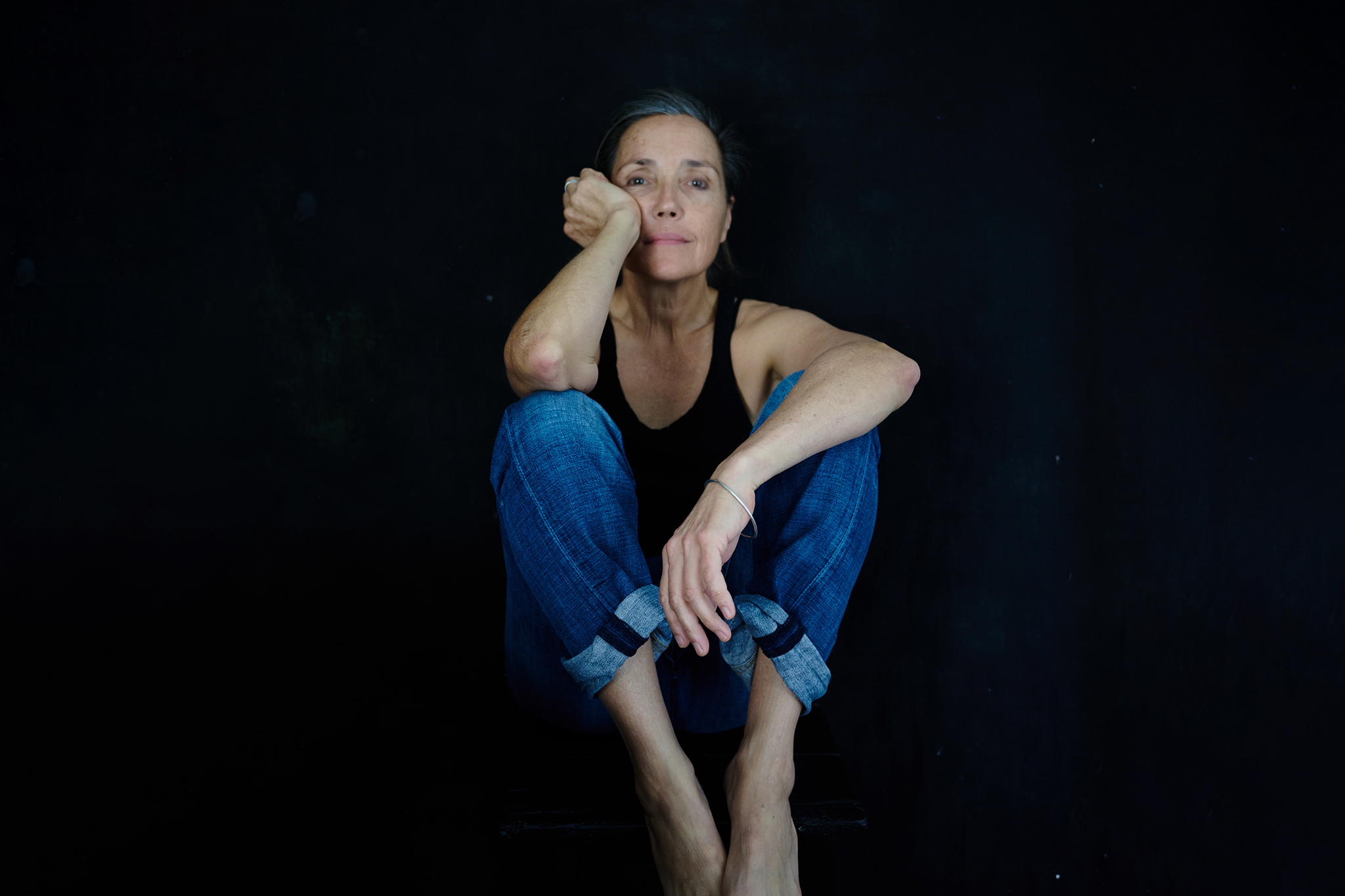
01 Apr Interviewing Caitlin Reilly | The artwork’s feeling
Born in Australia into a family of musicians, her artistic career began almost immediately. Studying the piano and then becoming interested in the visual arts led the artist to explore various fields, including painting itself.
Her art consists of painting what she feels, without exploiting art for social commentary or pure aesthetics. What matters to Caitlin is giving a soul, a true “life,” to the objects she paints. Her works are held in permanent collections in Australia, Europe, America, and China. Let’s find out more about one of the finalists for the Arte Laguna Prize 2025.
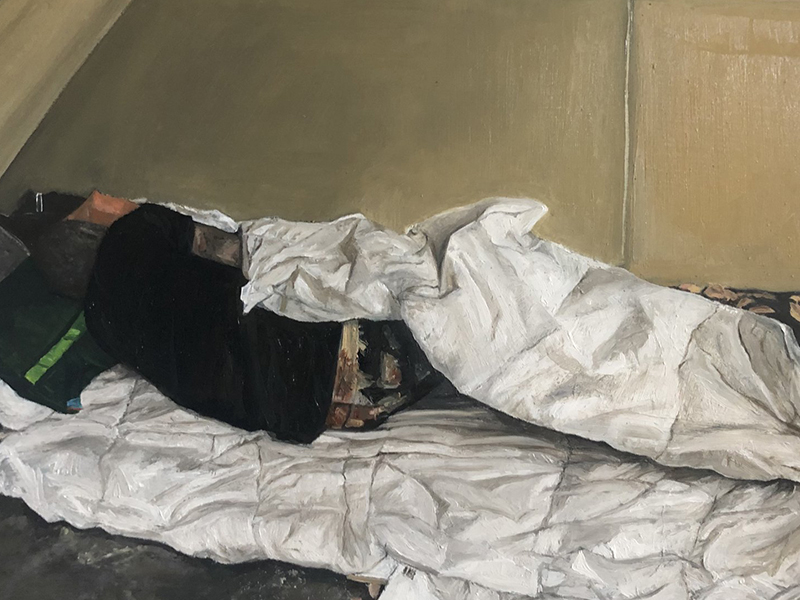
Taking Cover, 2024
Oil painting on wood
Hi Caitlin! It was nice to meet you today. My first question would be related with the beginning of your career: you told us that your family background sparked your passion for the piano, which then led you to complete an artistic education. Would you like to tell us about the steps that guided you along this path?
My creative life began with music. The piano was a constant presence in my family home, and from an early age I understood expression through sound before I understood it through words or images. That sensitivity to rhythm, tone, and emotional nuance has stayed with me.
Over time, this evolved into a visual language. I pursued a formal artistic education, but more importantly, I followed an instinct to translate feeling into form. Moving from music into painting didn’t feel like a departure, but a continuation. While music forms a foundation in my practice through its immediate, intangible emotional impact, my painting is distinctly physical and driven by subject matter, genre, tone, and application, and resolved only when the feeling is clear and undeniable.
The phrase that struck us most during the interview was that “your works are responses you give to the world around you.” Among your works—including the one selected for the Arte Laguna Prize—there are many elements that come from the environment you currently live in. Would you like to delve deeper into the strategies and how you feel when you present these works to the public?
My work emerges as a response to the environment I live within. My painting practice is deeply autobiographical, shaped by my lived experience of place. In the Northern Rivers, there is a striking contrast between those who live here permanently and the region’s identity as a highly sought-after, picture-perfect destination. Beneath the surface of its pristine coastline, there are very real disparities—between wealth and precarity, between visibility and what is often overlooked.
Painting becomes a way for me to process and make sense of this complexity. It is both a personal response and a form of quiet witnessing. The act itself is also deeply cathartic—there is a timelessness in the process that offers a kind of grounding, allowing feeling to surface, settle, and be held within the work.
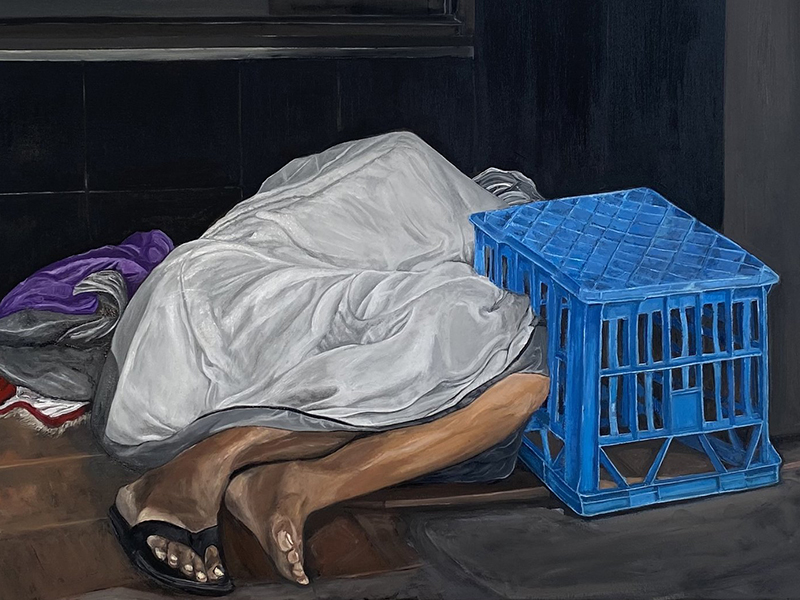
Protection, 2025
Oil painting on canvas
Let’s talk about the Arte Laguna Prize: you were one of the artists selected in Painting, and your work “Protection” will be exhibited at the Arsenale Nord in Venice from November 6 to 29, 2026. Congratulations! How did it feel to actually be announced as a finalist?
Being selected as a finalist for the Arte Laguna Prize was both surreal and deeply affirming. There was an immediate sense of disbelief, followed by an overwhelming feeling of excitement and gratitude. To exhibit at the Arsenale Nord in Venice feels incredibly significant. It represents not just a single moment, but years of sustained, often quiet dedication. It feels like an opening, both personally and professionally into a broader international dialogue.
Would you like to delve deeper into the themes and techniques behind your work “Protection”?
Protection is part of an ongoing inquiry into home, belonging, and the fragile nature of place. It is grounded in my experience of Byron Bay, where postcard imagery exists alongside a visible and growing reality of homelessness. The work focuses on the quiet, often unseen presence of those sleeping rough.
It emerged through lived observation, where the contrast between comfort and exclusion is unavoidable. Beneath the surface of beauty, there are deeper tensions that are easily overlooked. This work holds that duality, while also reflecting a personal unease—an awareness of how precarious the idea of home can become, even for those who appear secure. Painting allows me to remain with the subject, to slow down and sit within its emotional weight. There is a stillness in the process that makes space for sorrow, dignity, and resilience to coexist.
While rooted in a specific place, Protection extends beyond it. It connects to broader questions around housing insecurity and human dignity. The work does not seek to explain or resolve, but to bear witness—to look closely, and to affirm the humanity within each subject.
At its core, the painting asks: who is protected, and who is left outside?
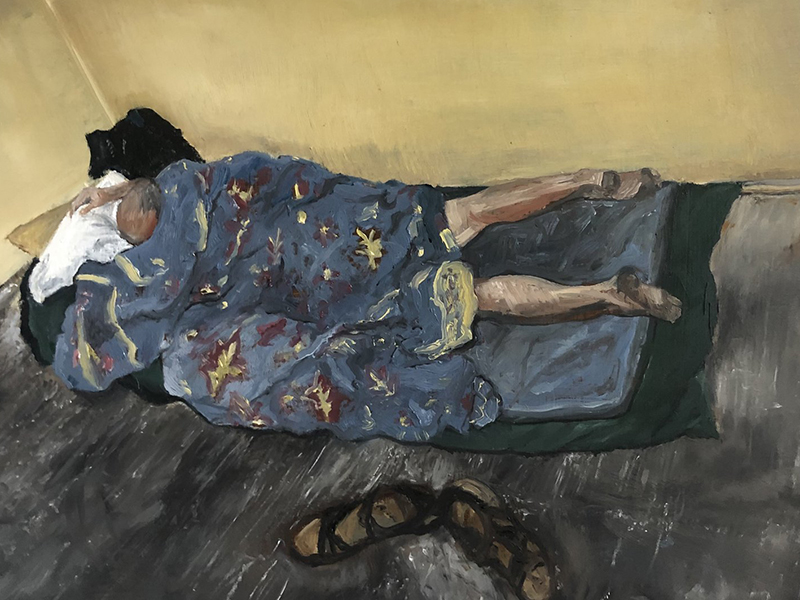
No fixed address, 2025
Oil and mixed media on wood
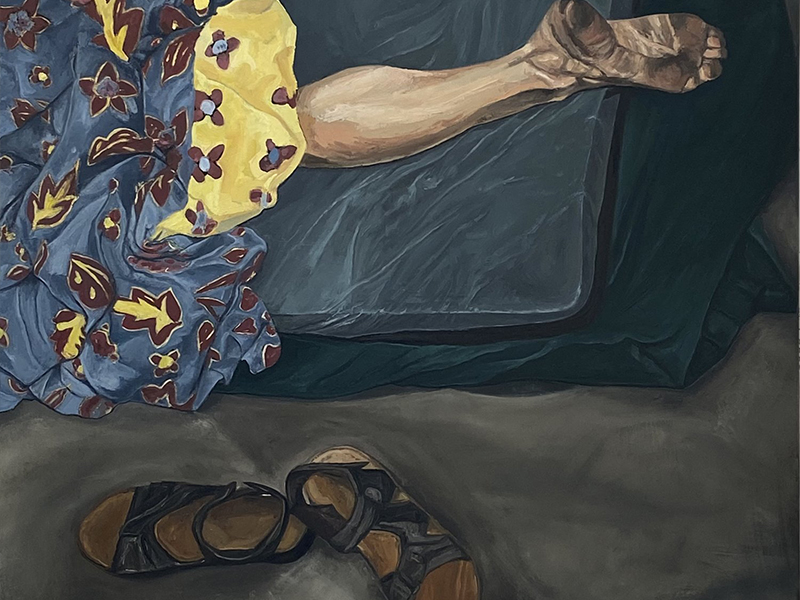
You say your artistic goal isn’t to convey a message of protest, and nothing remains purely aesthetic. Instead, your painting is an internal reflection on every brushstroke, giving each element its own soul. Can we elaborate on this?
I don’t approach painting as protest, nor as something purely aesthetic. For me, it is a form of internal reflection.
While the subject matter I engage with can carry clear political implications—particularly around homelessness and the failures of social support systems—my intention is not to instruct or direct how others should feel. Instead, my focus is on remaining sensitive and present. I’m aware of how easy it is to become desensitised to the visible struggles within our communities, and painting becomes a way for me to resist that—to continue to feel, rather than turn away.
Each brushstroke becomes a response—an act of listening as much as making. I work slowly, allowing each element to hold its own presence, so that meaning can emerge rather than be imposed. The process is also a way of navigating my own sense of overwhelm. It offers a space where I can stay connected to what I’m witnessing, while transforming that response into something tangible. In doing so, I hope to create work that invites quiet reflection, rather than prescribing meaning—holding space for others to encounter it in their own way.
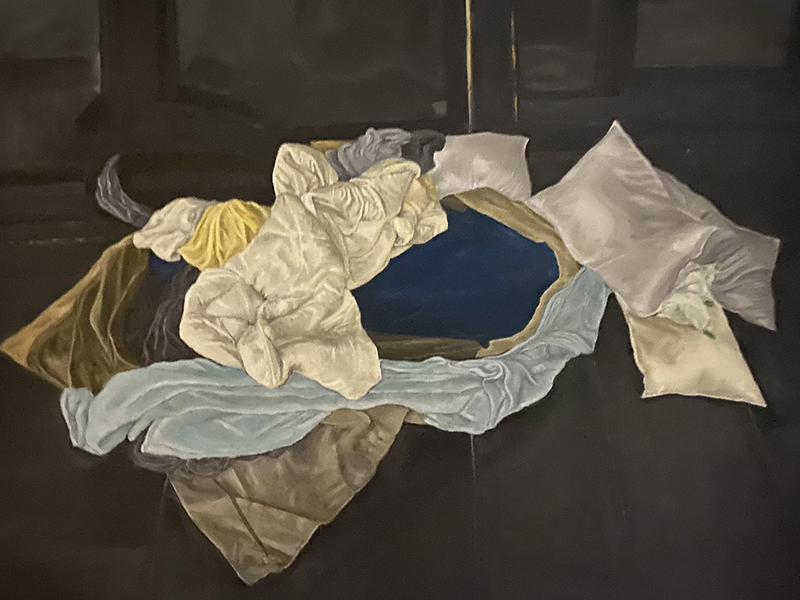
Empty Beds, 2025
Oil painting on canva
From your biography, we learn that you’ve participated in numerous artistic residencies around the world, including The Swatch Art Peace Hotel (Shanghai, 2014), and more recently, you even traveled to India for an experience. What added values have you found in your residencies? Is there anything that has truly left you with a cultural legacy that has subsequently influenced your work?
Residencies have played a significant role in shaping my practice. Experiences such as the Swatch Art Peace Hotel in Shanghai, and more recently time spent in India, have offered both immersion and perspective. Being in unfamiliar environments sharpens perception. It encourages a deeper level of observation and openness. Each place leaves an imprint sometimes visible, often more subtle, expanding my understanding of material, process, and the role of art within different cultural contexts.
It was really a pleasure to speak with you and get to delve into your thoughts! I hope that you enjoyed the time with Arte Laguna and we’re looking forward to se the artwork in Venice. Would you like to end the interview with a final consideration?
Being part of this year’s Arte Laguna Prize feels like standing at a threshold. There is a strong sense of momentum, but also deep gratitude.
What feels most meaningful is the opportunity for connection and bringing my work into conversation with an international audience, within a place as historically and culturally resonant as Venice. It feels both grounding and expansive.
Rather than an arrival, it feels like the beginning of a new chapter.