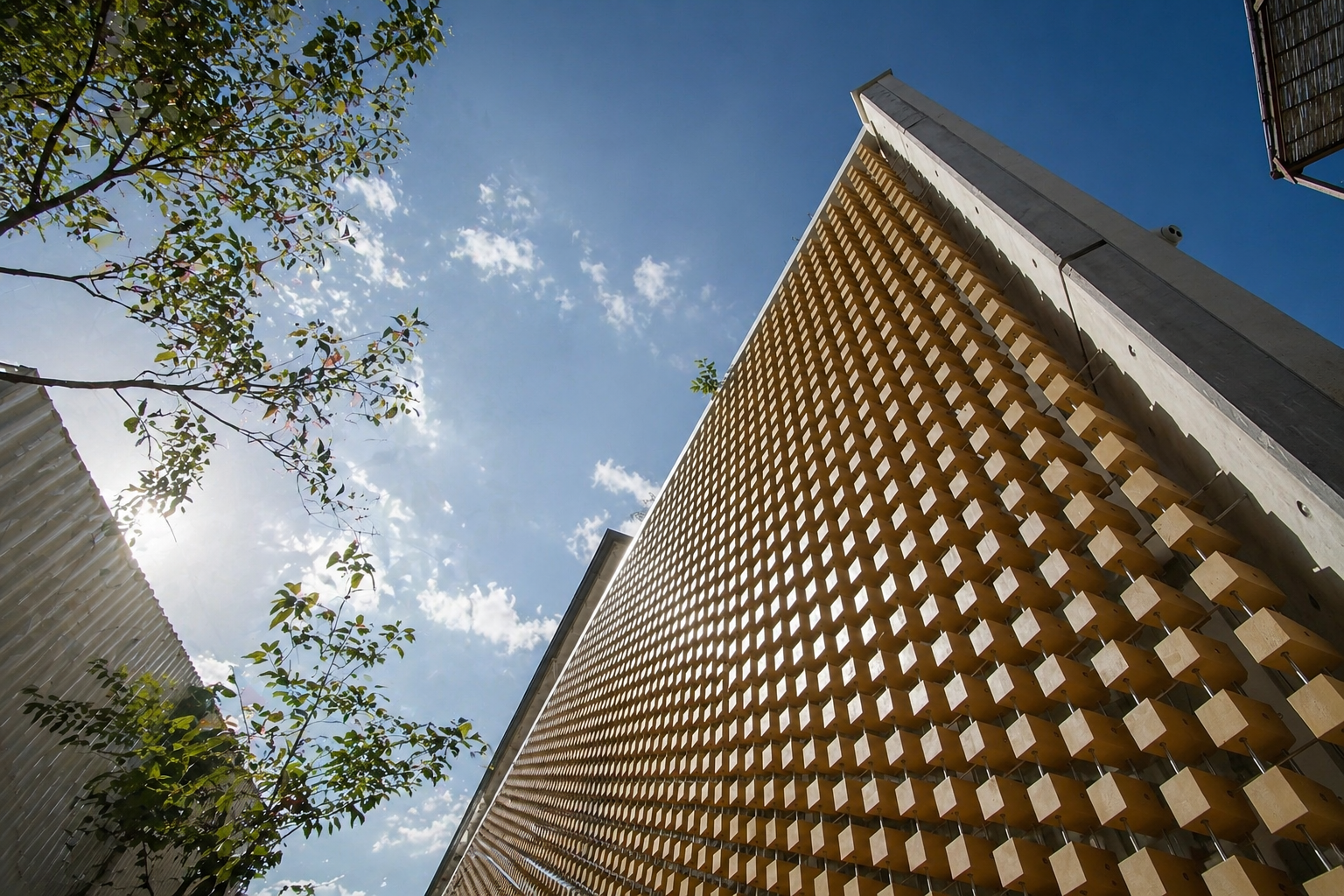
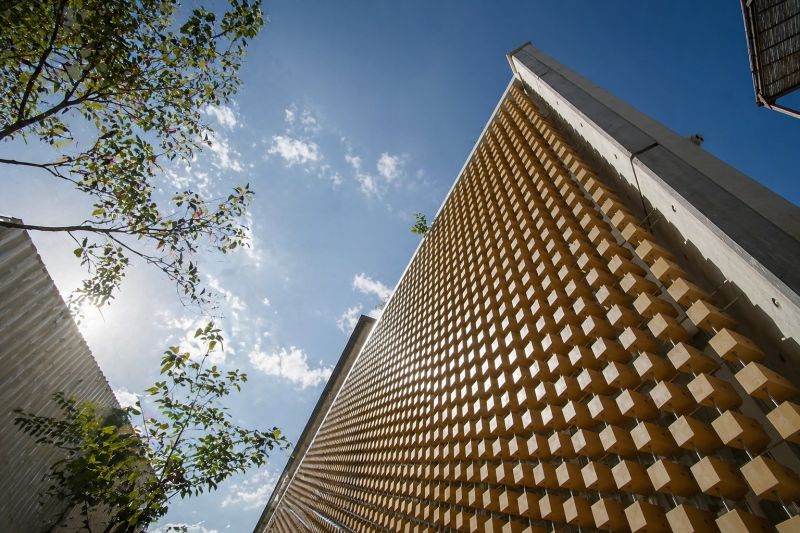
The Japanese concepts of Wa and Ma form a lens through which this work takes shape. Wa speaks of harmony, the order that emerges from within apparent chaos, creating balance and unity. Ma conveys the importance of interval and emptiness, the pause, the void, the silence that holds as much meaning as the objects themselves. Together, they suggest that both order and emptiness are inseparable in shaping experience. In this project, the wooden cubes embody Wa through their precise, disciplined grid, while Ma arises in the shifting spaces of light and shadow, the intervals between the solids, and the organic spontaneity of their angled cuts.
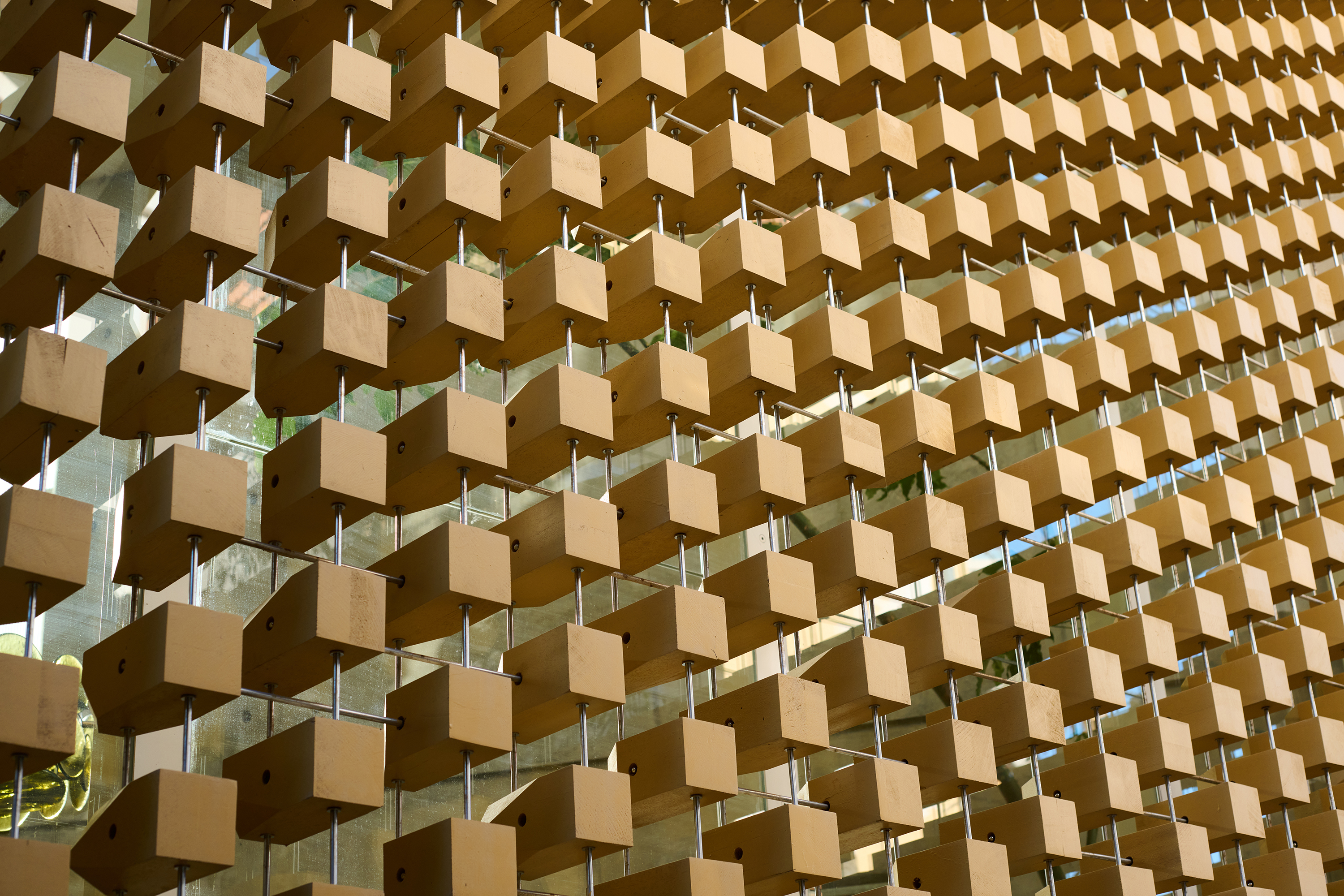
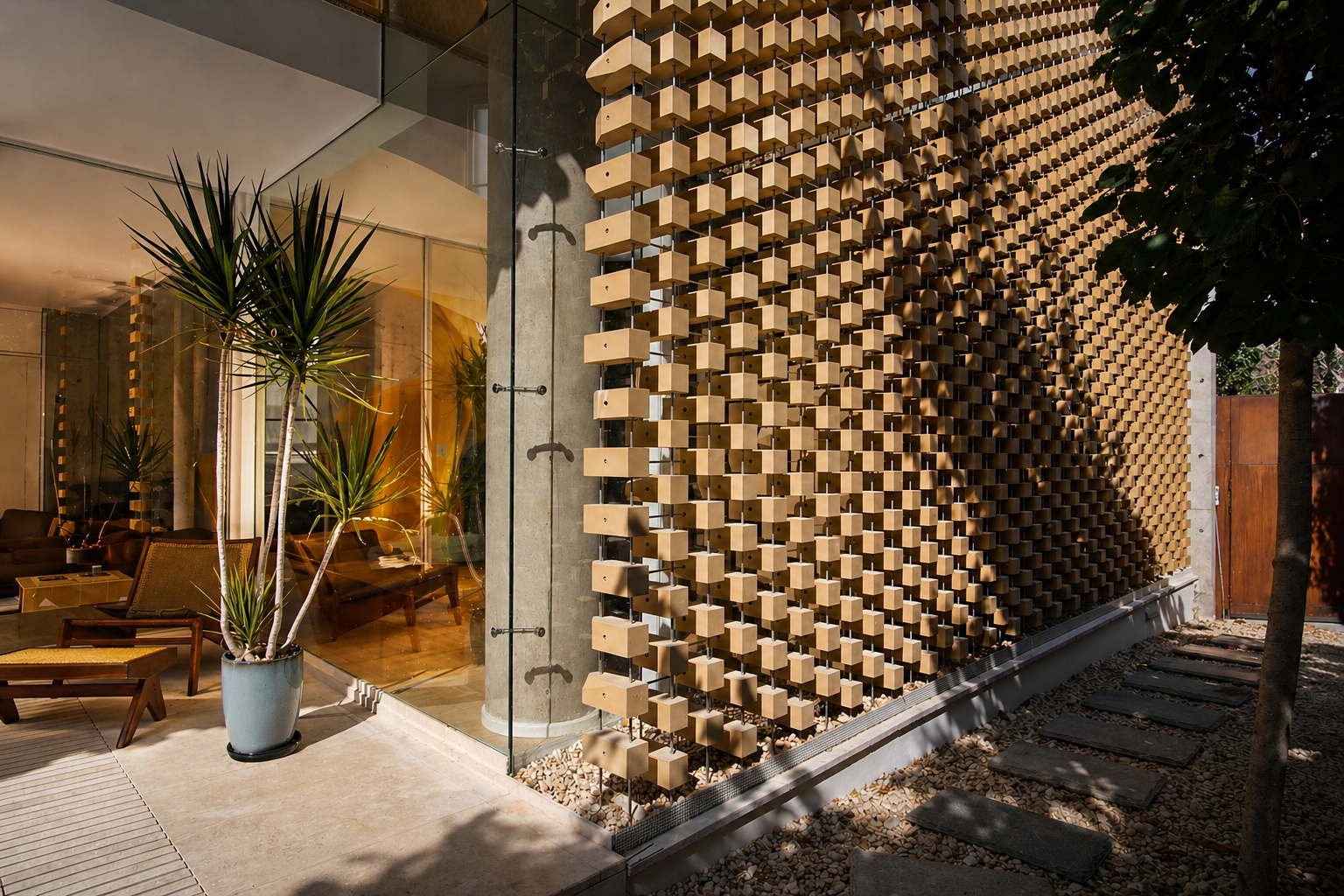
Wa & Ma is conceived as an architectural skin where material, structure, and perception converge. A field of wooden cubes forms a screen that oscillates between solidity and transparency, creating a delicate dialogue of light and shadow, inside and outside. At times, it appears as a monolithic plane; at others, it dissolves into shifting patterns of filtered light, animating the façade with a dynamic, ever-changing presence. The vertical alignment and concealed stainless steel tensioning evoke an effortless suspension, allowing the structure to hover with quiet strength.
On the inner side, the cubes conclude in random cuts at twenty distinct angles and directions, introducing an organic, almost improvised gesture that contrasts with the disciplined geometry of the grid. This tension between precision and spontaneity produces a layered spatial and visual experience. The choice of wood reflects a search for fluid continuity between interior and exterior, where natural materiality extends an atmosphere of intimacy, warmth, and connection.