Melanie Stein The Nucleus: Light, Structure, and Mediterranean SpaceFor Melanie Stein, painting is much more than visual representation—it is a philosophical exploration of the seemingly invisible. In her work, she intensively examines the tension between humanity and nature, their laws...
Read MoreMelanie Stein
The Nucleus: Light, Structure, and Mediterranean Space
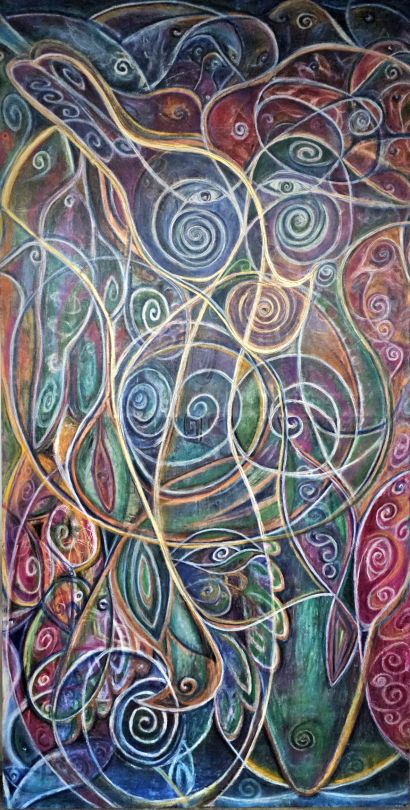
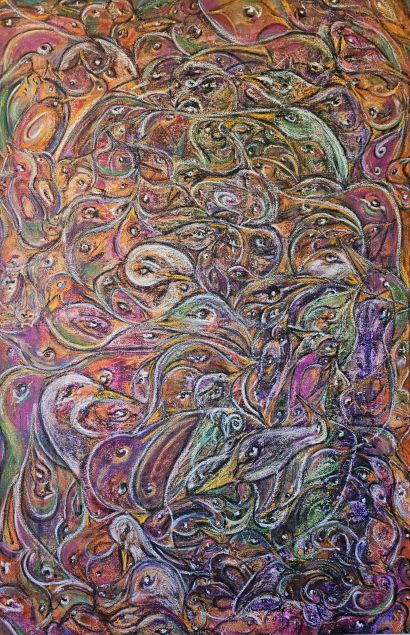
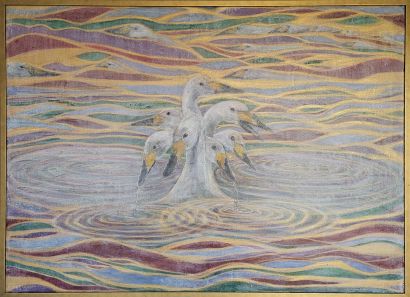
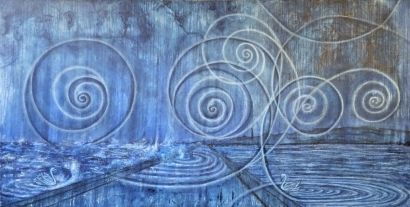
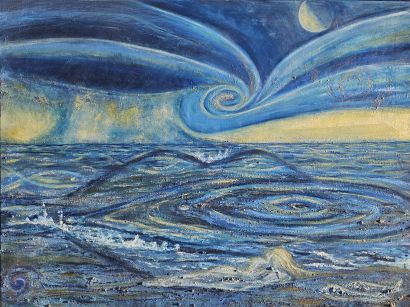
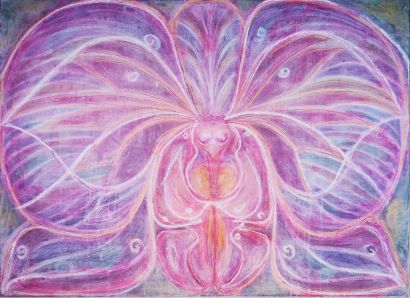
For Melanie Stein, painting is much more than visual representation—it is a philosophical exploration of the seemingly invisible. In her work, she intensively examines the tension between humanity and nature, their laws and "non-laws," and the pursuit of infinity. The core of her creation lies in the symbiosis of mathematical principles and the wild, untamed freedom of nature. Deeply rooted in the Mediterranean, she draws strength for her works from the archaic energy and the unique light of this region. For Stein, art is "the highest form of hope"—a response to the world’s complexity and a search for lost qualities. Her art serves as a mirror of her experiences and a reflection of the human soul in all its facets: from the deepest abysses to the highest forms of love and hope.
Career and Vision
Born in Saalfeld (Thuringia), Melanie Stein’s understanding of form, proportion, and space was significantly shaped by her studies of architecture and art at the renowned Bauhaus-University Weimar. Following her degree, she worked for several years in architectural offices, sharpening her eye for structure, symmetry, and balance—elements that remain the framework of her artistic work today. Since 2015, she has made Istria her home, where she now dedicates herself almost exclusively to fine art.
The Process: Control and Chance
Influenced by her architectural background, Stein’s practice is a constant search for harmony. However, she does not seek rigid order, but rather the "control of chance." In a physical, almost ritualistic process where music acts as an essential metronome, she deconstructs boundaries to find a new, inner beauty. Working primarily with oils, found objects, and pure natural pigments, her deep appreciation for Istria is reflected in her titles, which are consistently kept in the Istro-Venetian dialect. Her love for France also manifests in her choice of colors and earths. Her technique creates layers of color, texture, and ultimately, emotion and time.