Sophie LULINE lives and works in France, near Chambéry and Aix-les-Bains, nestled between the lake and the mountains.
As a child, Sophie was contemplative and loved drawing and modelling. After studying law, Sophie worked for 15 years as an architect’s assistant. But her manual and artistic skills never left her. To find a balance, she continued to study drawing and painting on evening courses at the École des Beaux-Arts in Lyon, then in Tarbes, where she discovered ceramics.
Throughout these years, whilst raising her two children and collaborating on architectural projects, she realised that if she was to fulfil her potential, it would be through working with clay. It was in 2011, following various encounters, that she realised the path she needed to take. Encouraged by her partner Nicolas, she set up her own ceramics studio.
Since 2015, Sophie has taken part in group and solo exhibitions to showcase her work.
She participates in the Maison et Objet fair (Paris, France)
Her pieces will be on display at the Sèvres Biennale (May 2026)
Collections born of a dialogue with Nature.
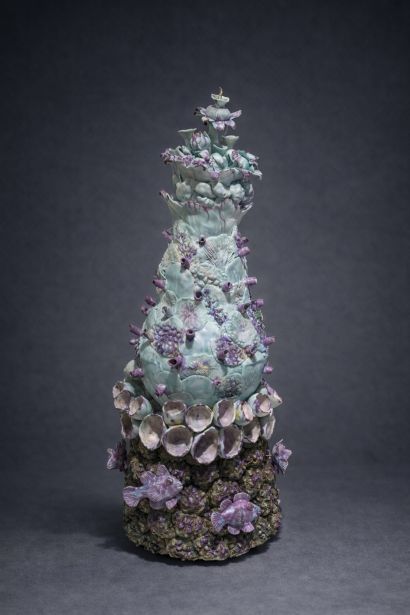
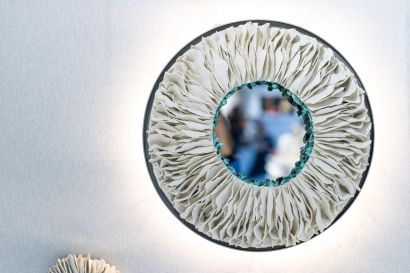
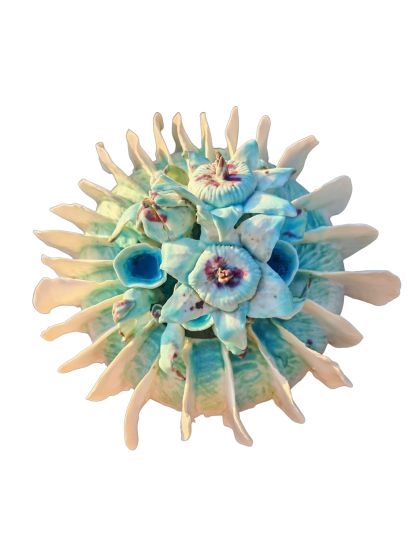
Made of earth, water and fire, Sophie Luline’s sculptures explore our relationship with the living world. They evoke an ancient, almost instinctive connection that we have gradually forgotten but which remains deeply ingrained within us.
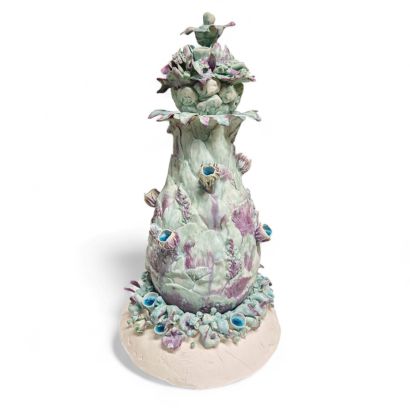
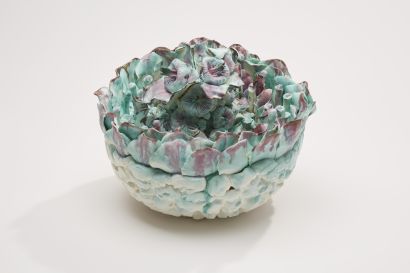
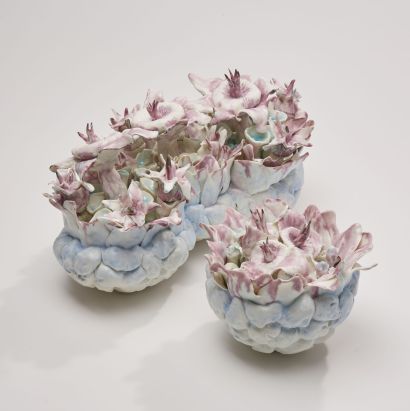
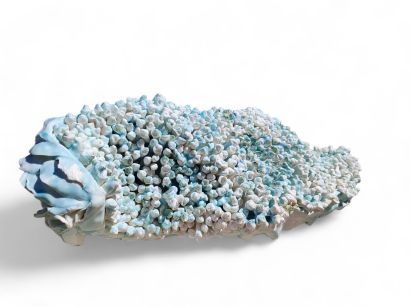
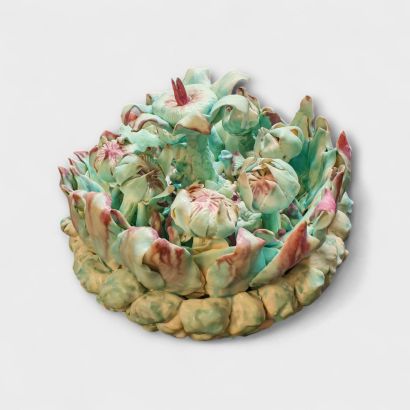
Her world oscillates between the figurative and the imaginary. The forms evoke flowers, corals, marine or plant organisms, yet they also seem to belong to a dreamlike realm, where the boundary between reality and dreams blurs.
Aquatic and plant forms meet, intermingle and transform. They compose hybrid, almost living landscapes in which humans can recognise themselves and project their own experiences.
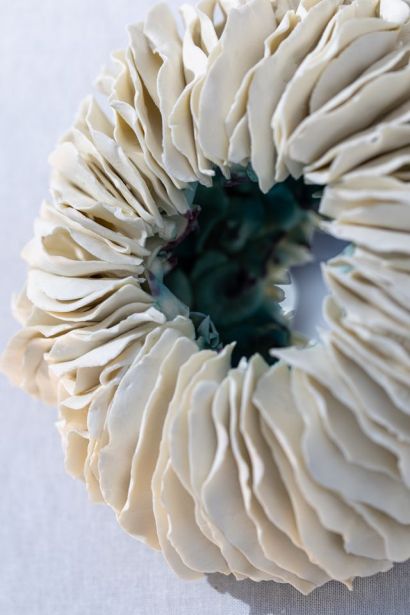
Some works may appear baroque due to the abundance of forms, the proliferation of details and the blossoming of volumes. Yet the gesture that creates them seeks simplicity.
Sophie Luline works with very few tools — a rolling pin, a knife, a modelling tool — leaving the hand to take centre stage. The trace of the gesture remains in the material, like an imprint of the living.
This gestural approach allows for great spontaneity. The forms seem to emerge, grow and open up naturally, as if the material itself were participating in their creation.
Her sculptures thus become blossoms: fragments of an organic world, both familiar and imaginary.