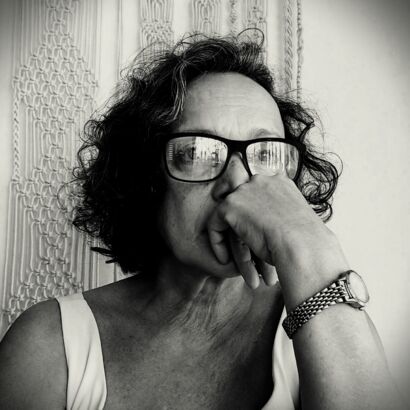
Brazilian;
born in São Paulo; graduated in Fine Arts in São Paulo in the 1980s, with a
qualification in teaching visual arts. In the early 1990s, she specialized in
Clinical Psychopedagogy in Madrid, influenced by the study of Jungian
archetypes and the work of Nise da Silveira, as well as art therapy conducted
by Sara Païn and Gladys Jarreau.
Back in São
Paulo, she founded the 30th Century Art Studio, honoring Mayakovsky's poem
"Love," where she developed ceramics studies, taught drawing and art
history, and conducted mixed media workshops for young people with cognitive
disabilities. During this period, she gave birth to her first child, Henrique.
In Brazil,
a country with limited investment in the Arts, she found teaching to be an
opportunity to continue her personal research in art, work as a facilitator in
creative processes, and generate income for her son's education. Thus, between
1996 and 2000, she worked as a visual arts teacher in elementary education in
São Paulo. From 2000 to 2001, she was an art teacher in the riverside community
of Monte Dourado, located in the Amazonian part of the State of Pará. Upon
returning to São Paulo, she completed her master’s degree in Education, Art,
and Cultural History.
In 2001,
she gave birth to her second son, Eduardo. In 2003, she moved to Rio de
Janeiro, continuing her work teaching visual arts in basic education. In 2009,
she completed her PhD in the field of visual arts education and passed the
public examination for a position as a professor of Visual Arts Didactics at
the Federal University of Rio de Janeiro, where she continues to work to this
day.
She has
been participating in art collectives and creative development groups.
Currently, she investigates art as a visual, plastic, bodily, and performative
experience, both as an artist and as a teacher. The result of art is just one
aspect of a continuous artistic process of creation and recreation of life
itself. As Nietzsche tells us, it is about an art that will liberate our
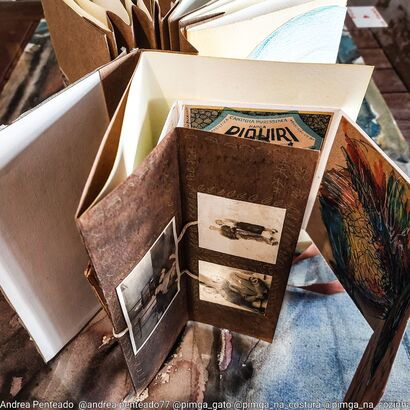
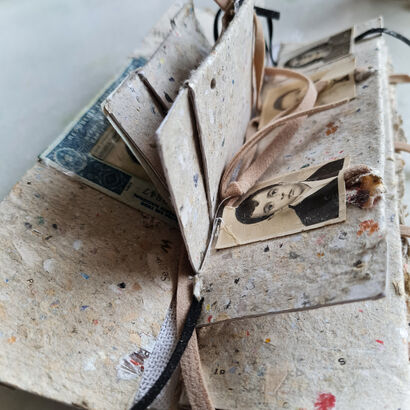
experience from the morality of the masses. From this perspective, she has
researched ways in which memory archives can be used to narrate stories of
violence against the body and against women and girls who are subjugated,
disrespected, and abused. This involves the use of images and oracular systems,
as well as the production of magical-ritualistic and symbolic visibility.