Daniel Paul was born in Prague, then Czechoslovakia, in 1984. He studied sculpture at the Academy of Arts, Architecture and Design in Prague (UMPRUM), graduating in 2012.Alongside his independent artistic practice, Paul spent part of his professional life working in...
Read More
Daniel Paul was born in Prague, then Czechoslovakia, in 1984. He studied sculpture at the Academy of Arts, Architecture and Design in Prague (UMPRUM), graduating in 2012.
Alongside his independent artistic practice, Paul spent part of his professional life working in film and entertainment, where he gained experience with specialised fabrication, digital sculpting, mould making and animatronics. Rather than remaining separate from his studio work, these methods gradually became part of the way he approaches sculpture.
His practice has changed considerably over time. Early works often grew from natural forms and were made for public or site-specific settings. Later projects increasingly introduced synthetic materials, digital processes and the human body. In recent years, the figure has become the central element of his work.
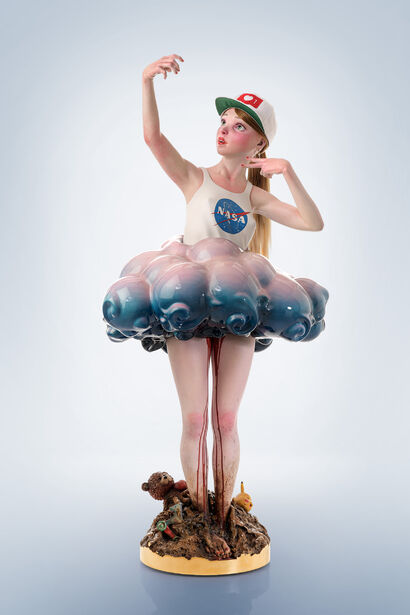
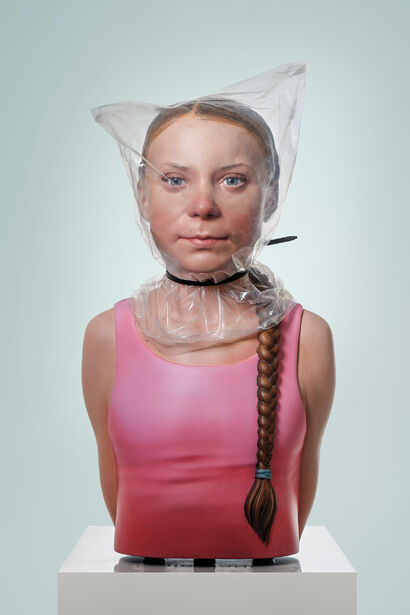
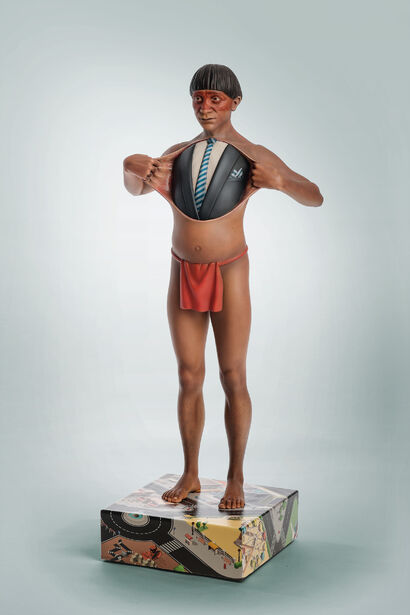
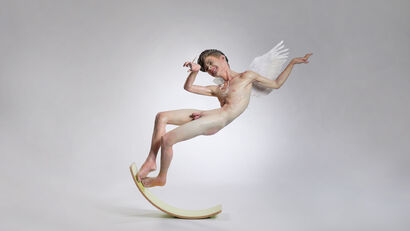
Paul combines the physical credibility of realism with a sculptural language informed by classical and historical figurative traditions. At the same time, his working process moves freely between traditional modelling, digital sculpting, 3D technologies, painting and mixed materials. The relationship between figure, object and support is treated as part of the work rather than simply as a means of presentation.
Narrative remains important, although Paul rarely uses it to lead the viewer towards a single conclusion. His sculptures often begin with a recognisable situation, gesture or cultural reference and gradually make its meaning less certain. Attraction may coexist with discomfort, care with control, or dignity with absurdity. What appears clear from one position can change as the work is viewed from another.
This spatial aspect is essential to his practice. Paul conceives sculpture as something that unfolds through movement around it. Details that initially appear secondary, including the relationship of a hand to an object, the construction of a plinth or a change in material, can alter the reading of the whole.
“I don’t want my work to tell people what is true. I’d rather it made them question what they think they know.”
Paul lives and works in Prague. His practice includes figurative sculpture, public and site-specific projects, and works developed for both gallery and public-space contexts.
Website: danielpaul.cz
Instagram: @danielpaul.cz