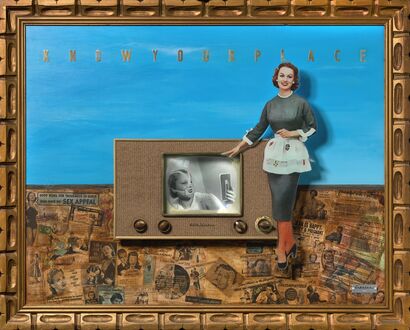
I grew up garbage picking in the alleys of Detroit in the 1970s and developed a preoccupation with the fate of discarded things. Things that are beautifully designed and well-made feel like they’re worth keeping, even repurposing. In my late... Read More
I grew up garbage picking in the alleys of
Detroit in the 1970s and developed a preoccupation with the fate of discarded
things. Things that are beautifully
designed and well-made feel like they’re worth keeping, even repurposing. In my late teens, a dozen 1950s portable TV sets at
the curb came home with me. I had no idea what I was going to do with them but
I knew they weren’t meant for the landfill. My early 20s were spent
visiting antique stores buying kitschy vintage Life Magazines. There I discovered Westinghouse model Betty
Furness. Not long after, I was gutting all those portables and turning them
into wine racks (sold to Burt Reynolds).
One day I bought a 1940s TV cabinet from a garage sale and decided to
turn it into a dresser by switching out the tube for a set of drawers. I used Ms. Furness’ likeness on the screen
(for which Ms. Furness wrote me her flattering blessing). I knew I had created something interesting and
wanted to explore it further. In my late 20s I expanded my appliance
acquisitions into commercial dryer doors and taught myself cabinet making using
How To manuals. Soon after I was
employed at a product placement agency and in the late 90s I started my own agency
and spent the next twenty years using the medium of television to increase
awareness of my clients’ products. In
2018 I closed my business and decided to revisit my stored collection of
vintage TVs. One big change in those 20 years was technology. I discovered an online archive of newspapers that
opened up endless high-resolution advertisements and introduced me to events
from the 1940s to 1960s to capitalize on as subject matter. Since the big wooden console televisions that were once the
centerpieces of 1940-60 family life were taking up too much space in my workspace
I sheared the stylishly designed fronts off of the sets and mounted them on
wood. This began a new iteration of my
work creating new opportunities to explore the darker side of the “good old days.”