
26 Nov Interviewing Giorgio Mugnai | Finalist of Arte Laguna Prize 2025
Giorgio Mugnai is an Italian, Barcelona-based photographer with a deep passion for capturing urban landscapes, architectural wonders, and cultural narratives. His work explores the interplay of light, structure, and human experience, revealing the hidden beauty in everyday environments. Through a meticulous approach to composition and perspective, Giorgio transforms architecture into visual poetry. His projects, such as Beneath the Surface, The Clouds Above Your Head, and Concrete, showcase his ability to highlight the essence of geometric forms and urban atmospheres. Whether through monumental structures or fleeting moments in cityscapes, his photography tells stories that transcend time and space.
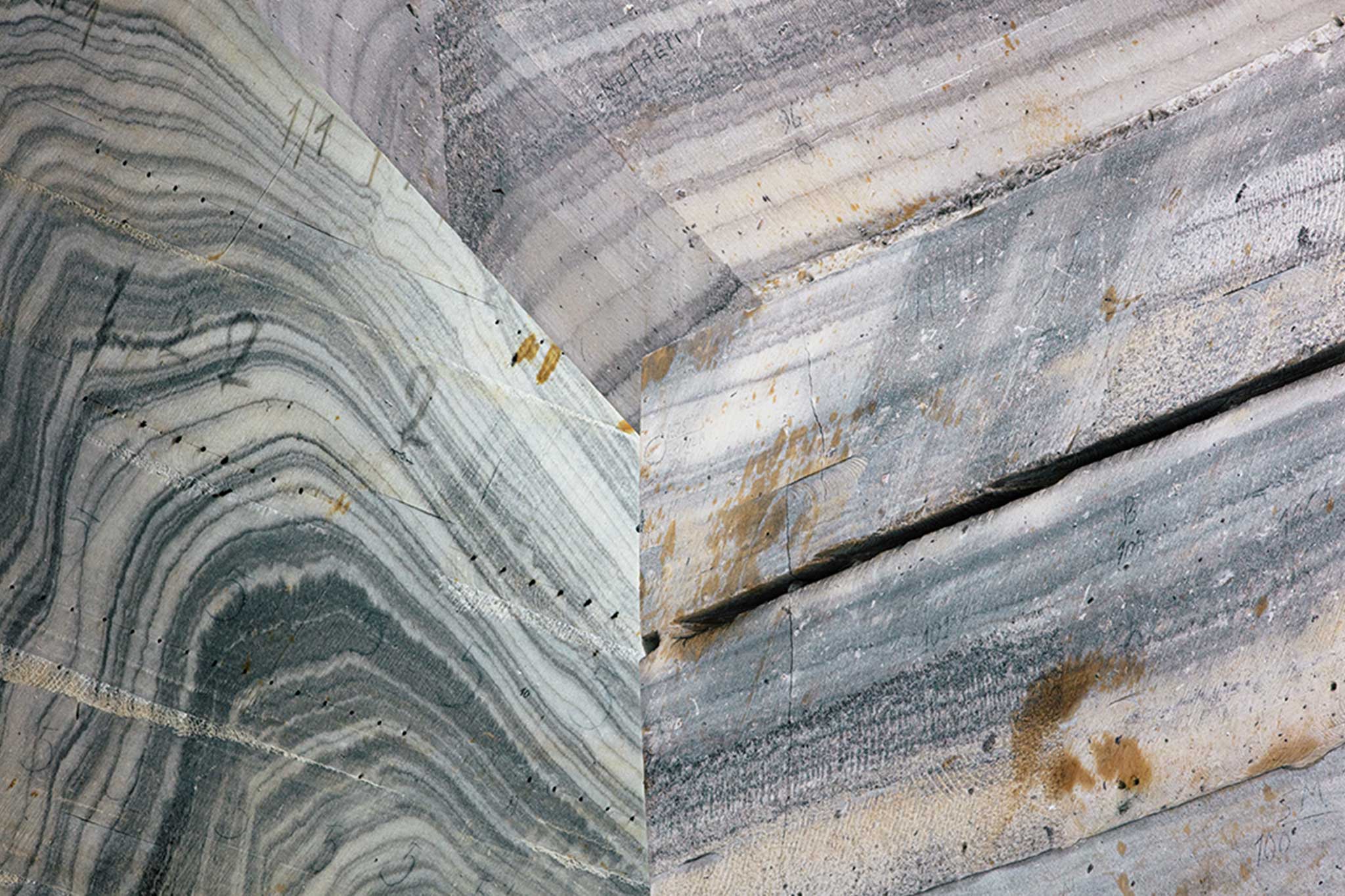
Architecture For No One, 2025
Digital Photography
First of all, congratulations on being selected as a finalist for the 20th edition of the Arte Laguna Prize. Your work is currently on display at the Arsenale Nord in Venice—how do you feel about that?
Being selected as a finalist for the twentieth edition of Arte Laguna Prize is certainly a great source of satisfaction. Exhibiting at the Arsenale Nord in Venice is a significant experience, not least because it offers the chance to share one’s work with an international audience and engage with artists from very diverse backgrounds.
It is always interesting to see how people interpret a piece of work. Sometimes, they notice aspects that you hadn’t even considered while creating it. I believe this, too, is part of the beauty of exhibiting: a work that originates from a personal idea can take on new meanings through the eyes of others.
Your biography offers a detailed description of your photographic project, revealing an interest in urban geometry alongside an attention to cultural traditions. Where does your need to explore these themes come from?
I am interested in architecture, geometry, and the way humans transform spaces—but also in everything that is imperfect, irregular, or out of place. I do not necessarily seek out beauty in the traditional sense. Often, I find an unusual detail, an unexpected situation, or something that would normally go unnoticed to be far more compelling.
Having my camera with me while traveling guides me along a path that is frequently solitary and introspective. It is a silent companion that helps me to observe, reflect, and become aware of the present moment I am experiencing.
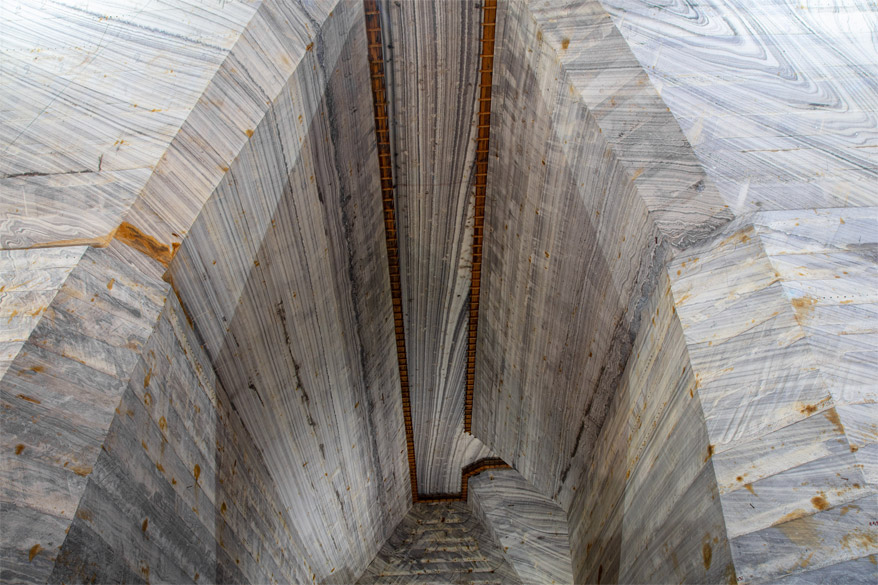
Architecture For No One, 2025
Digital Photography
You are an Italian photographer currently based in Barcelona. Did you move there for work, personal reasons, or other factors? Do you find that there are differences between photographing in Italy and in Spain from a professional standpoint?
Barcelona is my current base, but my interest in exploration is not tied to any one specific territory. I enjoy engaging with different cultural contexts, and I consider this international dimension an important part of my journey.
Rome has certainly influenced the way I see and interpret forms, spaces, and architecture. I believe this experience has helped shape my aesthetic sensibility and the way I observe my surroundings. However, I don’t believe one country is inherently more interesting to photograph than another.
Every territory offers different possibilities; more importantly, our way of observing shifts when we step away from the context we know best.
Distance from one’s daily reality often makes it possible to recognize aspects that previously went unnoticed. It is precisely this process of engagement that I find so valuable.
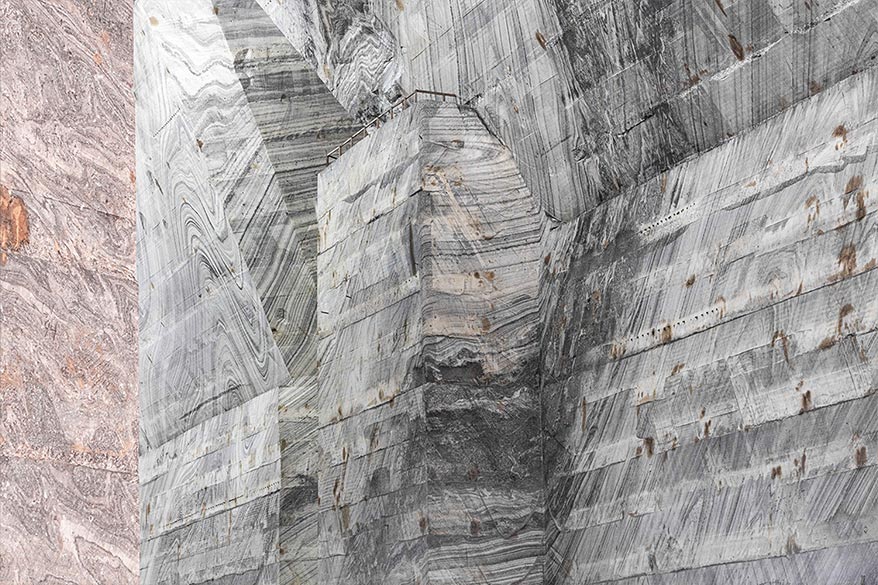
Architecture For No One, 2025
Digital Photography
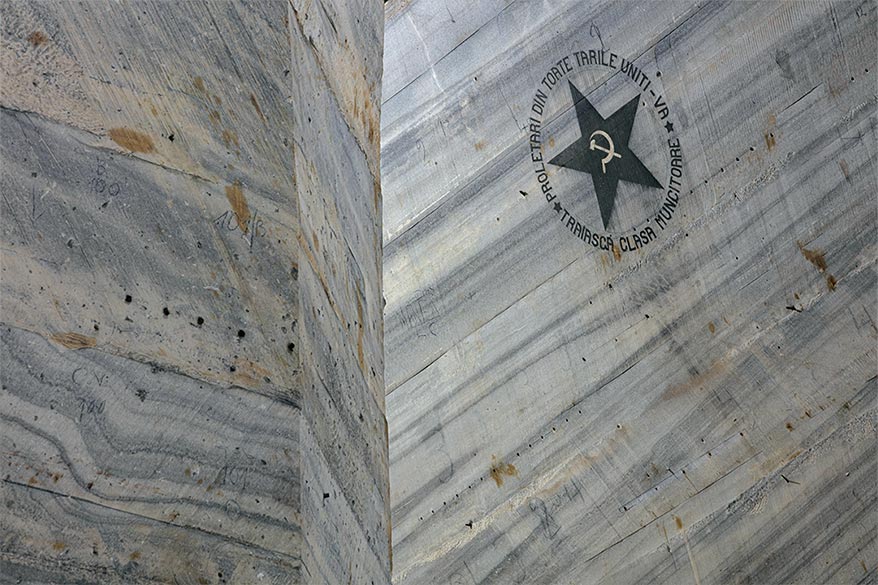
Architecture For No One, 2025
Digital Photography
Let’s talk for a moment about the work on display in Venice, “Architecture for No One.” It depicts an architectural space that was never intended to be used, focusing the gaze on the intersection of nature and human intervention. Tell us more!
ARCHITECTURE FOR NO ONE is a photographic series that emerged from the exploration of a disused underground salt mine. It encompasses a space of approximately 80,000 square meters, divided into various chambers with ceilings reaching heights of over 50 meters. The sheer scale is striking, making one feel like a tiny presence within an underground universe.
You find yourself in a space that has been excavated and transformed by human hands—yet it is so vast that all conventional sense of proportion is lost. Through this project, I aim to explore the relationship between humanity, nature, and time. The mine is the result of profound human intervention in the natural world; however, having lost its original function, it has evolved into a space with an identity of its own—one where time and the transformation of matter take on a new significance.
I am fascinated by the way human-made forms intertwine with those shaped by nature over thousands of years. It is a dialogue between two vastly different realms, where it is not always easy to discern where human intervention ends and natural processes begin.
Through these images, I seek to interpret this space—focusing on its forms, geometries, proportions, and surfaces—rather than merely documenting its appearance.
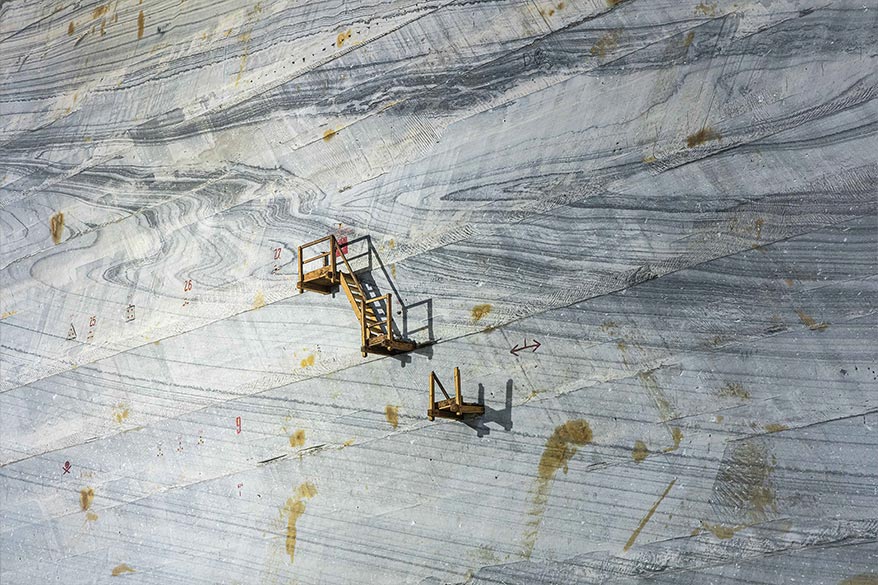
Architecture For No One, 2025
Digital Photography, print on dibond
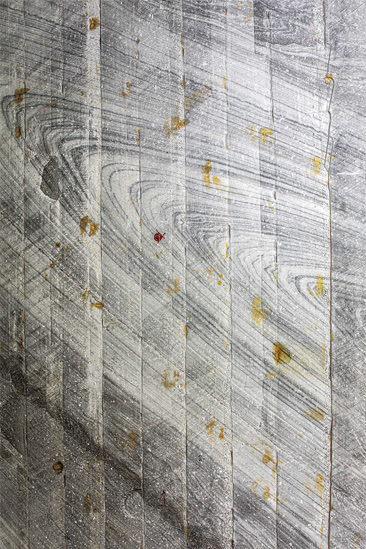
Architecture For No One, 2025
Digital Photography, print on dibond
In 2027, you will take on a significant role for the Arte Laguna Prize, becoming an official Ambassador. What is your objective for this project? How do you believe this role might foster your professional growth?
I am very pleased with this opportunity and see it as a chance to make a concrete contribution to an organization that offers visibility and prospects to artists from all over the world. I would like to help raise the international profile of the Arte Laguna Prize, fostering new relationships and collaborations with cultural and professional entities in various countries.
Furthermore, I believe that Arte Laguna can serve as a significant meeting point for artists, curators, gallerists, and other art-world professionals—a space to connect, exchange ideas, and share experiences. Such opportunities are not always easy to come by today, and I believe this is an important aspect worth fostering.
On a personal level, I view this role as an opportunity to discover new environments, expand my professional network, and engage with people from diverse backgrounds and experiences. I look forward to contributing to the growth of the project while, at the same time, continuing to grow myself through this experience.
Finally, do you have some future projects you would like to talk about?
At the moment, I am developing several ideas and lines of inquiry that I intend to explore further over the coming months.
One of these concerns the relationship between the human body and technology—specifically, the objects and devices used today to assist, correct, or modify the body. I am interested in examining not only their function but also their forms and visual impact.
Another area of focus involves the photographic material I gathered during my recent travels. I have collected a wide variety of images and situations, which I am currently working to organize into two or three distinct series—each with its own unique identity and trajectory.
These projects are still evolving, and I prefer to let them take shape gradually, rather than defining the final outcome too early.