
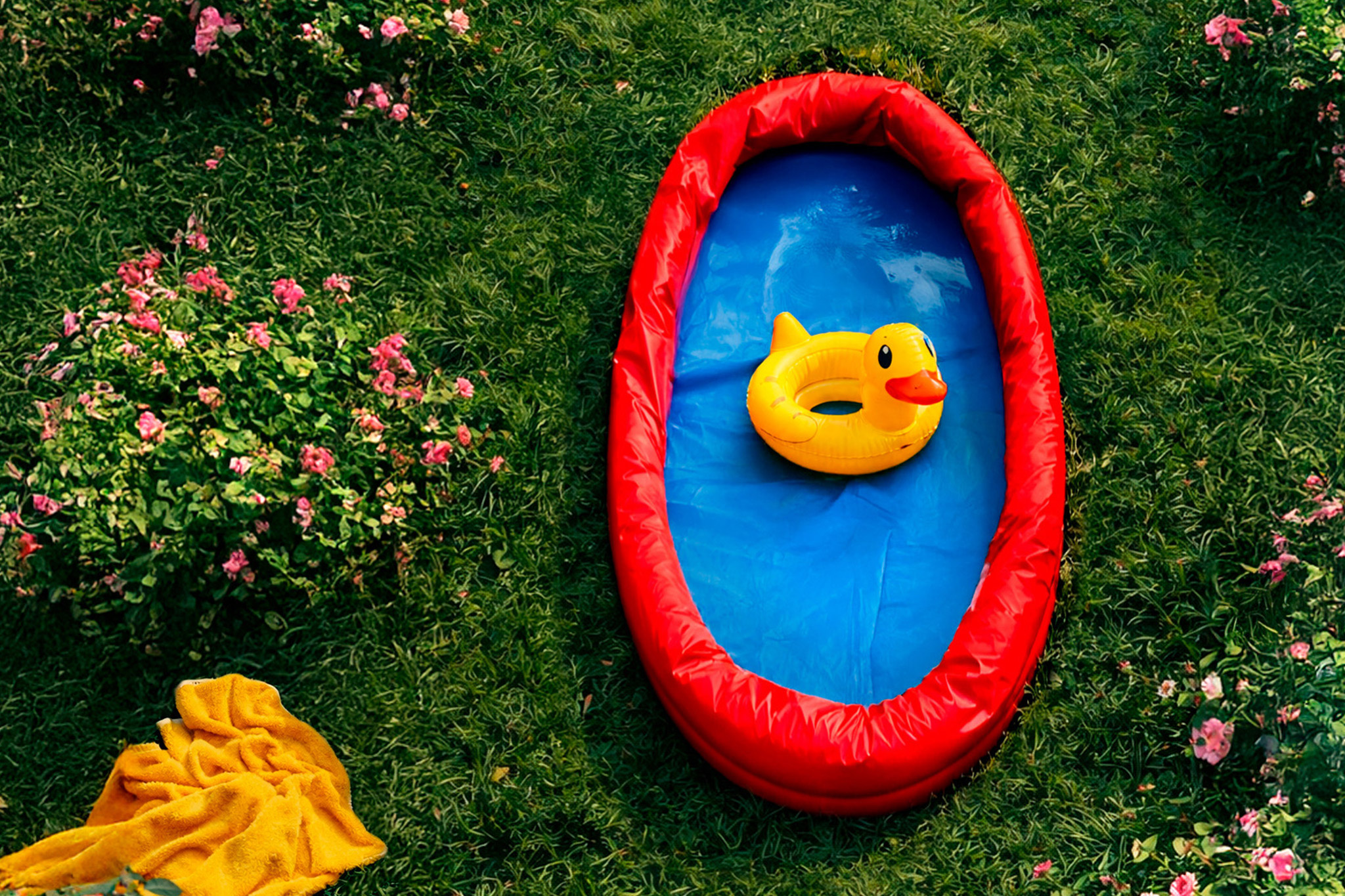
21 May Interviewing Alexandra 0xAlexeeva | The girl who cannot be stopped
In this publication and interview, the artist tells us about the life of a “girl who cannot be stopped”, who represents the subject or common thread throughout the works described below.
Let’s explore the artist’s poetry and immerse ourselves in her life story through the eyes of this unstoppable young girl.
As with all poems, let’s start at the beginning: where the artist first felt that art was her path.
Alexandra 0xAlexeeva is a contemporary artist, born in Moscow, Russia. She has preserved the child within herself, and this is what allows her to imagine and create.
THE GIRL WHO CANNOT BE STOPPED
It feels like it’s time for me to stop pretending to be an adult.
Let me tell you a story.
There is a girl.
She runs faster than the wind, even when there is no wind.
She just runs — and suddenly the world begins to move with her.
Not because the conditions are right.
But because she cannot wait.
If we talk about the beginning —
I spent many years working in commercial retouching.
Then I started studying photography
and met a person who became very important to me — Irakly Shanidze
He was the one who saw in me an artist with a big heart
and changed my life.
THE RECURRING THEME OF CHILDHOOD
When someone like her is locked inside a house,
she simply closes her eyes.
And suddenly — she is flying.
Above the houses.
Above the cities.
Above the clouds.
And no one knows where.
And no one can stop her.
I admire this power.
Imagination is the only space
that cannot be closed.
It is a gift given to everyone.
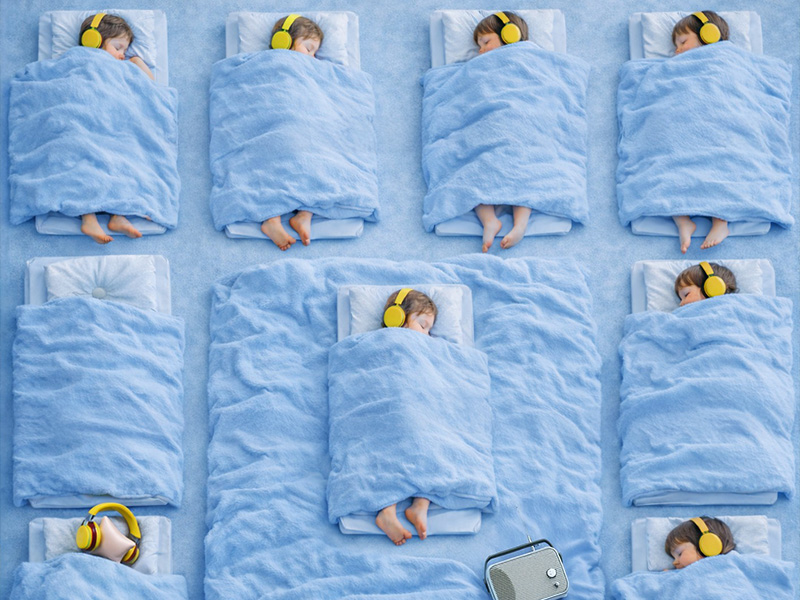
Untitled, 2026
Digital artwork
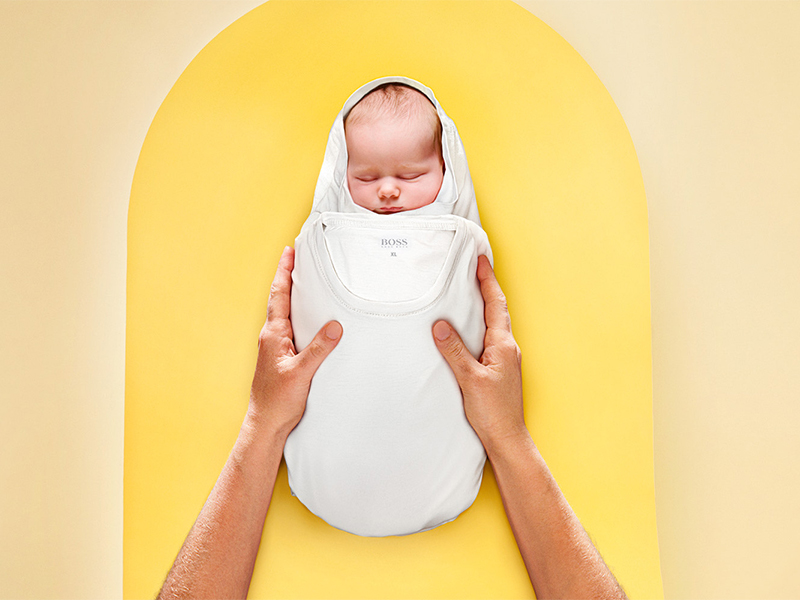
Untitled, 2026
Digital artwork
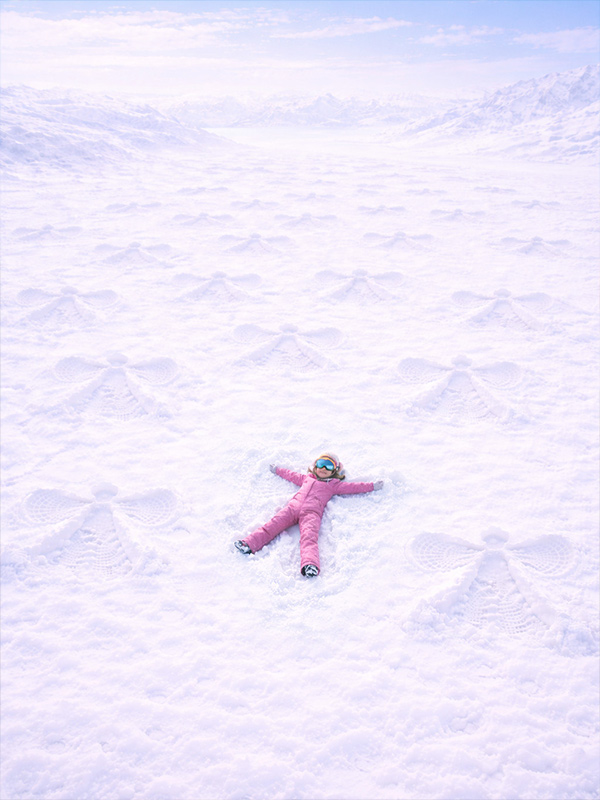
Untitled, 2026
Digital artwork
Digital tools are the media that best reflect you: dynamic, cutting-edge, and with a thousand possibilities. How do these types of tools help you create works and photographs that reflect your vision? What do they offer that traditional techniques don’t?
People ask me about tools like Photoshop, sometimes a camera, and of course, artificial intelligence. I have spent a lot of my life in Photoshop and learned how to create perfectly beautiful images, this is my profession. But I came to one simple understanding: what matters is not the technique and not how perfect everything is. What matters is what you want to say and how strongly you believe in it.
Talking about Exhibitions: you have recently exhibited your artwork “Sumobaby” (now called Untitled) in Shanghai (November 2025) and you have already exhibited your works in Venice with Arte Laguna Prize. First of all, congratulations! How have these experiences influenced your artistic career and personal approach?
Exhibitions, awards, recognition — they are signals, like small lights along the road. They do not create the path, but they tell you: keep going.
When I went to Shanghai, it felt like entering another dimension. I met many artists, many people who truly feel art, and I realized that I am not alone. After that, I felt more inner support and more courage to continue.
Finally, a question about your future plans is a must. Are there any? Do you have any exhibitions planned?
Adults like to talk about progress, smart speakers, smart homes, smart watches. It seems everything has become smart. So many people have spent their lives trying to make this world more comfortable, to make people happier. But did they succeed?
And now let’s return to the girl.
She has none of this.
But she has an entire universe.
And she creates it herself.
Without a budget.
Without technology.
Without permission.
And here a question appears:
What if she does not understand the world less —
but more?
When I take a child’s drawing and turn it into reality, something breaks. It stops being “cute” and it becomes a challenge. Because now it is not a fantasy, it is a fact.
Right now, we are creating an international project: we transform children’s drawings into real images and one day, we will build one of these cars in reality. Just imagine: the only museum of children’s imagination in the world — existing everywhere at once, a place where things are made.
Drawings become objects, imagination becomes space, mistakes become a system and maybe art is not an image, but the moment when you stop waiting for someone to allow you to move. What if children are not the future? What if they are already the ones in charge? And maybe the works people truly believe in always find their person.
This girl —
is how I feel this world.
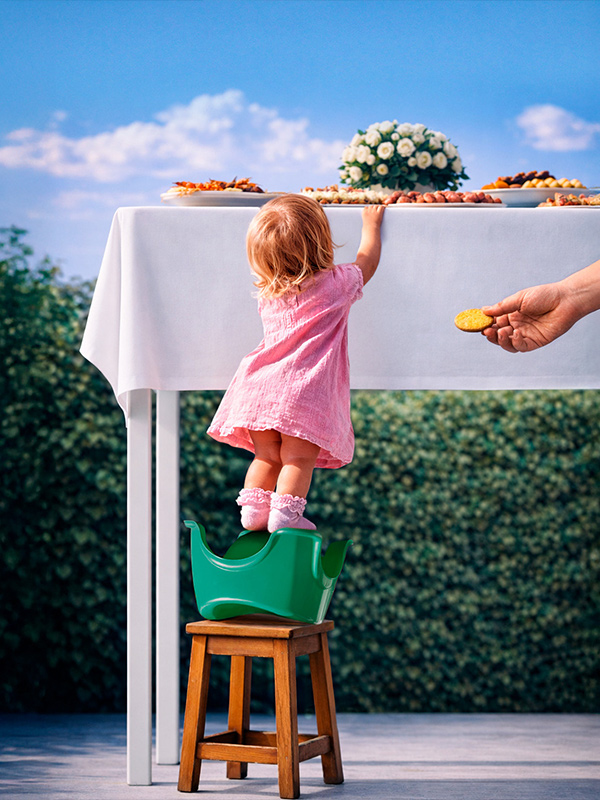
Untitled, 2026
Digital artwork
Alexandra 0xAlexeeva: Imagination as a Form of Reality – By Chiara Canali
Alexandra Alexeeva’s artistic research unfolds within an increasingly central territory in contemporary culture: the zone where imagination, digital construction, and emotional experience converge, redefining the very notion of reality. A finalist of the Arte Laguna Prize in 2021 and recently included in its international exhibition network with her participation in the Shanghai exhibition (2025), Alexeeva develops a practice that intertwines staged photography, advanced post-production, and artificial intelligence. Yet, the core of her work lies not in technology itself, but in a precise existential stance.
At the center of her poetics is childhood, understood not as an iconographic subject nor as a nostalgic regression, but as a cognitive structure and a mode of perceiving the world. As she states, “childhood is not a theme. It is a way of thinking”. Alexeeva identifies in childhood an alternative form of knowledge, capable of escaping the normative frameworks of adult rationality and reactivating an intuitive, immediate, and radically free dimension. In this sense, her research aligns with a lineage that runs through the twentieth century – from Paul Klee to Dubuffet – yet is here translated into a fully digital context, where the image is no longer a trace but a construction.
Her background, shaped by years of work in high-end retouching and commercial photography, is crucial to understanding the internal tension of her practice. Technical precision, control of light and surface, and the ability to bring an image to a state of absolute clarity form the foundation from which she gradually departs. If retouching represents the paradigm of visual perfection, her current research shifts toward meaning, privileging expressive intensity over formal completion. Within this process, artificial intelligence is not conceived as an autonomous agent but as an operational extension of imagination, a tool that frees time and redefines priorities: “AI shifts the focus […] from perfection to meaning” says the artist.
This paradigm shift finds one of its most accomplished expressions in the project The Dream Car, in which Alexeeva transforms children’s drawings, particularly those of her daughter, into hyper-realistic images. This seemingly simple gesture produces a significant semantic rupture: what was confined to the realm of imagination is transferred into the regime of reality. In this passage, the drawing loses its “cute” or marginal dimension and acquires a disturbing force, becoming a concrete proposition, an existential possibility. As the artist herself states, “it stops being ‘cute’. It becomes a challenge”.
Alexeeva’s work thus moves between two poles: on the one hand, the structure of reality, with its productive logics, visual codes, and expectations; on the other, an inner freedom that resists any form of normalization. The image becomes a site of negotiation between these two dimensions, a space where the irrational is not eliminated but recognized as a form of knowledge. In this sense, her practice can be understood as an attempt to reinscribe imagination within reality, not as an escape but as a transformative force.
A particularly significant aspect of her practice is the declared intention to construct not only images but broader structures: projects, spaces, imagined institutions. The idea of a “Museum of Children’s Imagination” represents a natural extension of her work: an environment in which imagination is no longer relegated to a preliminary phase but recognized as a primary generative force. This project resonates with contemporary tendencies that see art expanding beyond the object to become a distributed ecosystem, while maintaining a strong specificity in its emphasis on inner experience.
Ultimately, Alexandra Alexeeva’s work can be seen as a radical reflection on the possibility of remaining alive within contemporary systems. The image is not an end in itself, but a device of activation: it invites the viewer to confront an essential question, as the artist suggests: “Do you like your life?”. In this perspective, her practice distances itself both from spectacular aesthetics and from purely technological experimentation, asserting itself instead as an existential inquiry, in which the digital becomes the medium through which an authentic dimension of experience can be reactivated.
Alexeeva does not propose an escape into the imaginary, but rather its rehabilitation as a critical and transformative tool. In an era dominated by synthetically produced and algorithmically optimized images, her work restores centrality to what escapes control: intuition, play, error, desire. In other words, to what remains, stubbornly, human.