"Beautiful Minds" is a sculpture that symbolizes the profound impact of relationships, history, and trauma on the developing minds of children.
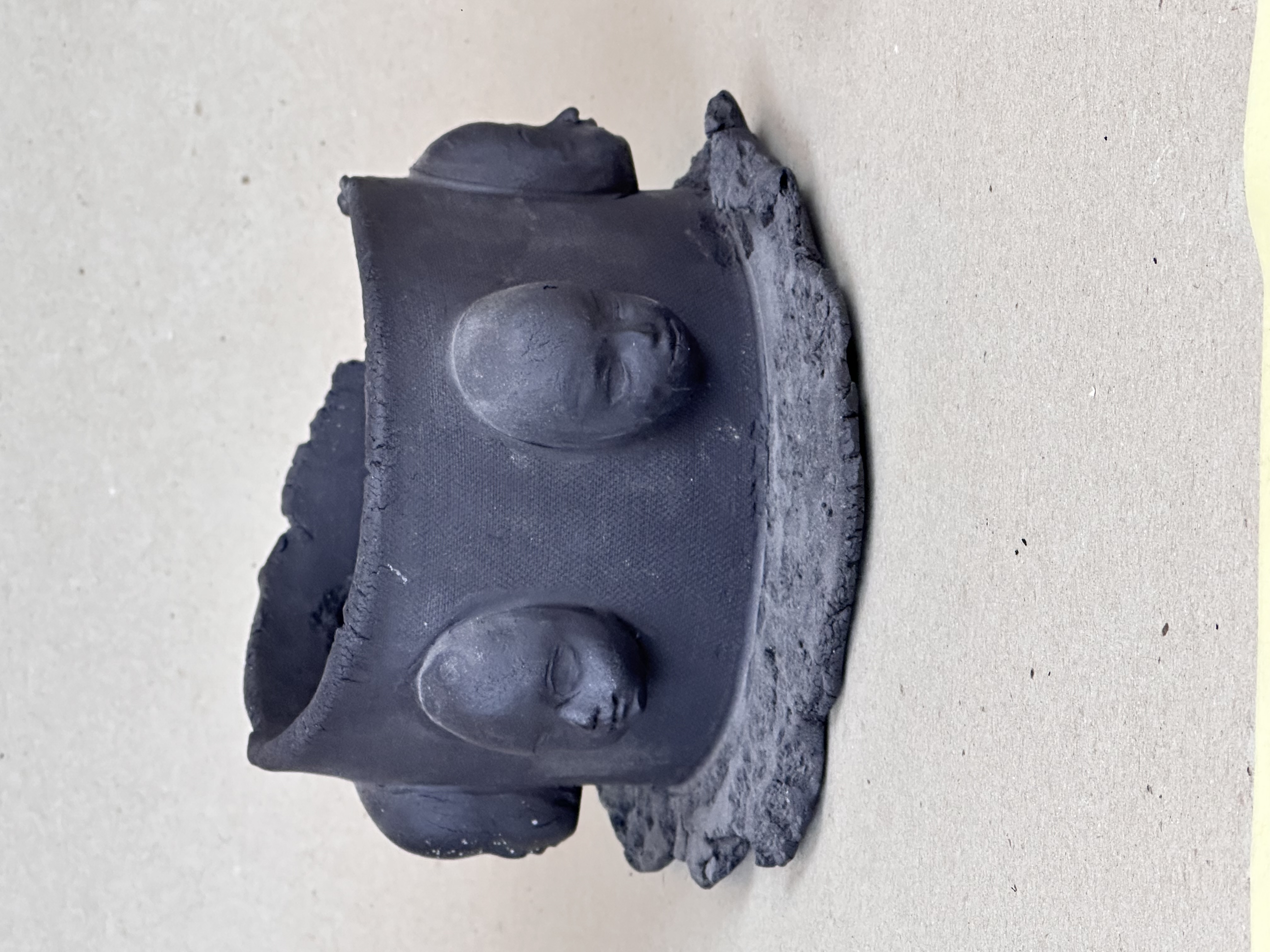
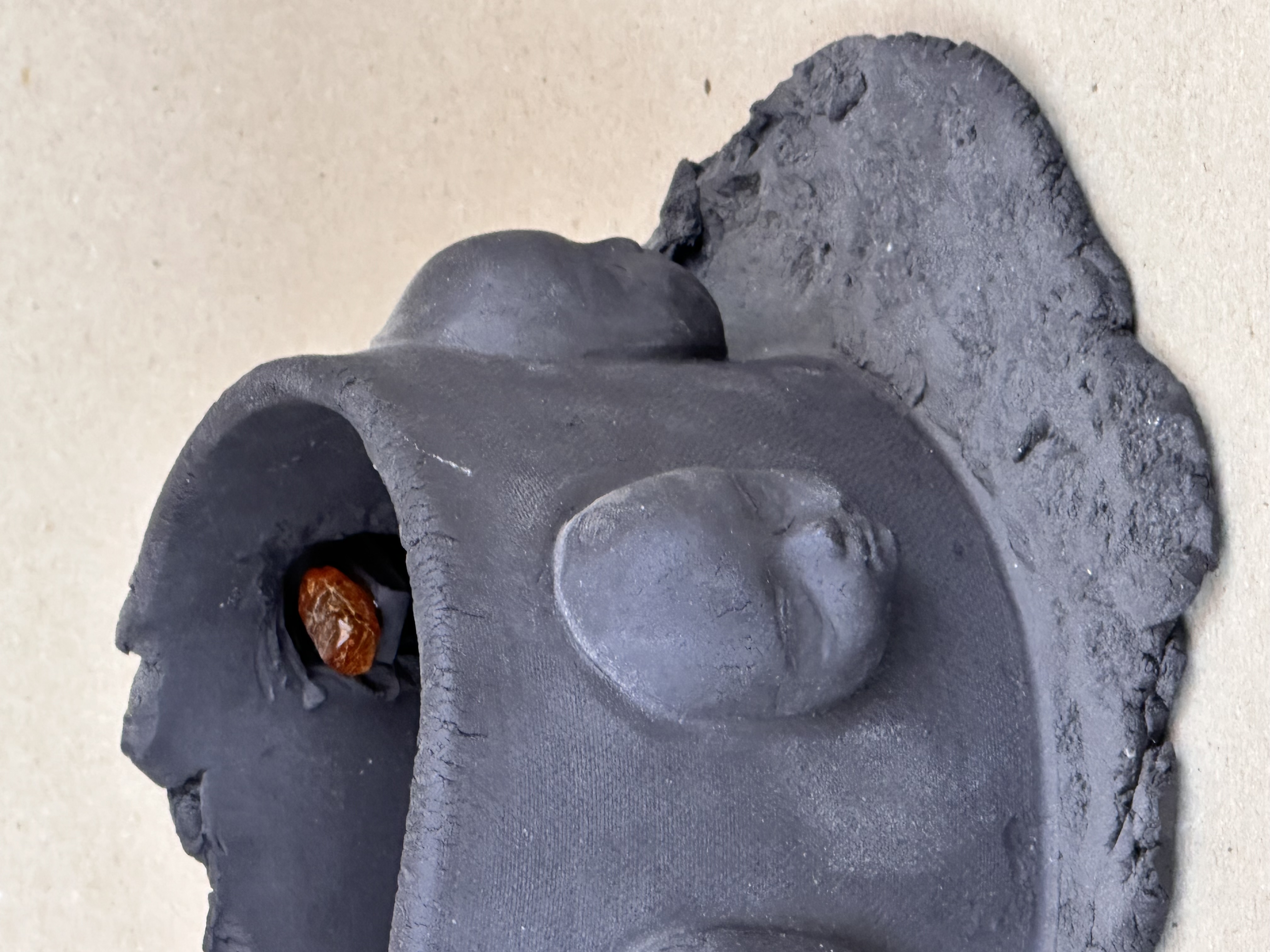
From the outside, the sculpture features delicate, almost ethereal faces of children, encircling the piece like silent witnesses—each one representing innocence, vulnerability, and the purity of a child’s inner world. These faces are calm yet haunting, frozen in time, reminding us of the emotional imprint early experiences leave on young minds.
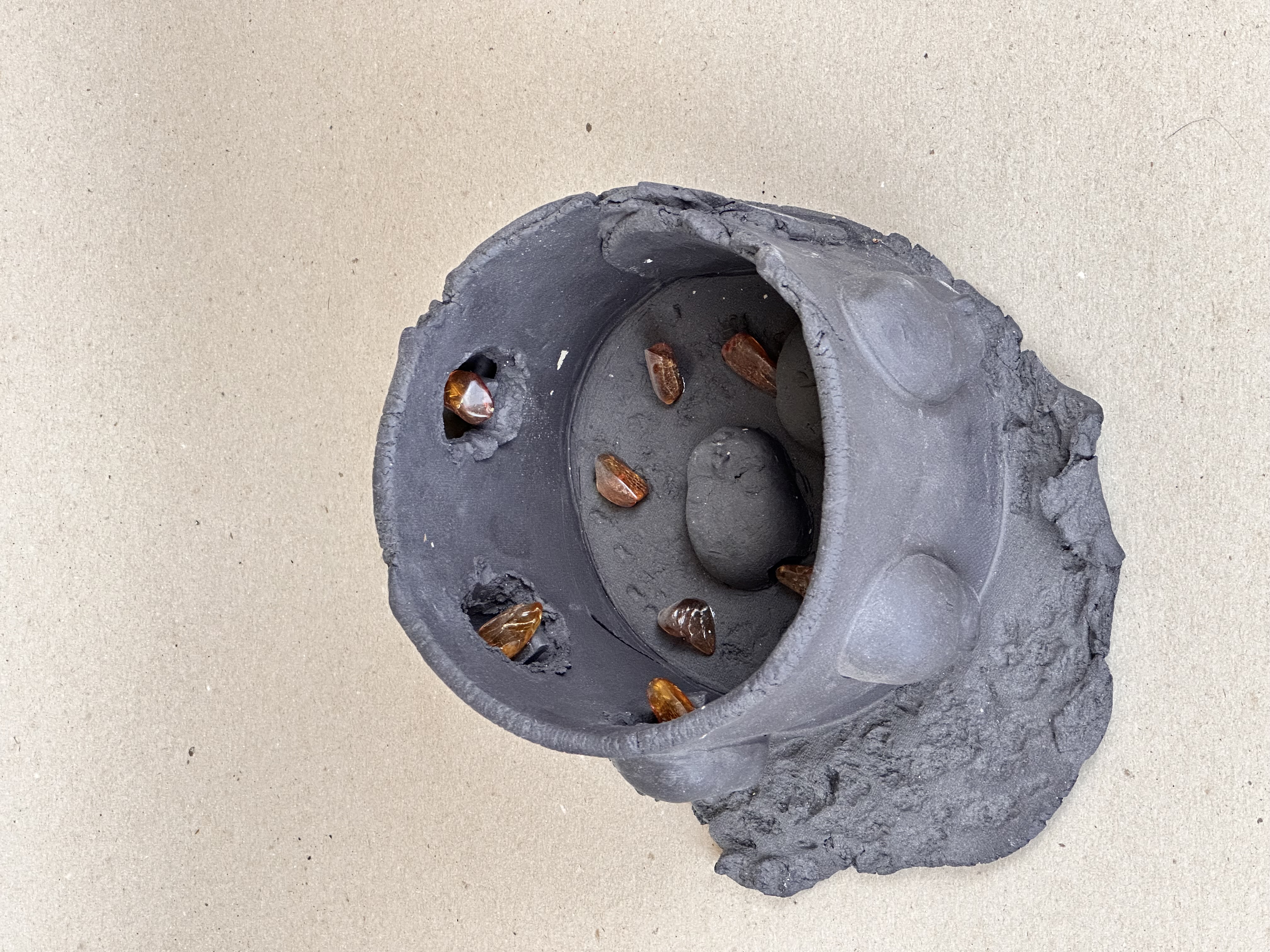
Inside the structure, we find pieces of amber embedded in dark lava-like material. The amber represents the mind of the child—fragile, precious, and full of potential. Amber, with its organic origin and ability to preserve ancient life, also symbolizes memory, history, and the weight of the past. Its warm glow stands in stark contrast to the cold, grey ceramic—highlighting the delicate balance between nurturing and harming a child’s mental and emotional world.
The lava surrounding the amber is rough and dark, symbolizing the pain, trauma, and destruction that can result from war, neglect, or broken relationships. This texture visually reinforces the idea that children’s minds, while adaptable and open to influence, are also vulnerable to irreversible damage.
Originally, the concept was to create a large-scale monument—a 7-meter-wide memorial—with the names of deceased children engraved along the inner walls. This imagined public installation was meant to be both a physical and emotional space for reflection and mourning.
However, even in its current, more intimate form, the piece speaks powerfully. It is not merely a work of art—it is a message and a call to responsibility. It asks us to consider the kind of world we are shaping for future generations. How do our actions, relationships, and societal choices mold the minds of children today? What legacy are we leaving behind?
“Beautiful Minds” ultimately serves as a reflection on the responsibility of adults—to nurture, protect, and care for children. It urges viewers to recognize the power of human connection—how it can either build or destroy. It invites us to reflect not only on the past but also on our role in shaping the future.
How we treat children today shapes the world of tomorrow. Their minds are our most precious legacy.