I once came across the idea that the dust in our homes is, to a large extent, made up of fragments of our own skin—tiny remnants of ourselves scattered across our living spaces. And so, as we clean, we do more than tidy up: we cast away small parts of who we are. Vacuum cleaner bags, then, become quiet urns, filled with traces of life, destined for the anonymous graveyard of mixed waste bins.
But dust holds more than just our skin. Curious to uncover the secret composition of the dust in my own home, I found a company that analyzes such samples. I sent them a small handful of my everyday sediment—and in return, received a breakdown of its hidden contents, grouped into clusters of microscopic matter. In this mingling of bodily fragments and environmental particles, the line between self and world becomes blurred.
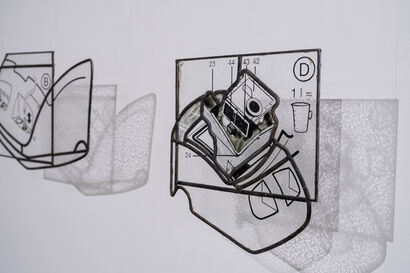
To give meaning to this humble, often overlooked ritual—now so often delegated to machines—I created porcelain replicas of vacuum cleaner bags. Each one is a quiet dedication, a fragile monument to a particular element found in the dust: a poetic gesture toward the traces we leave behind.