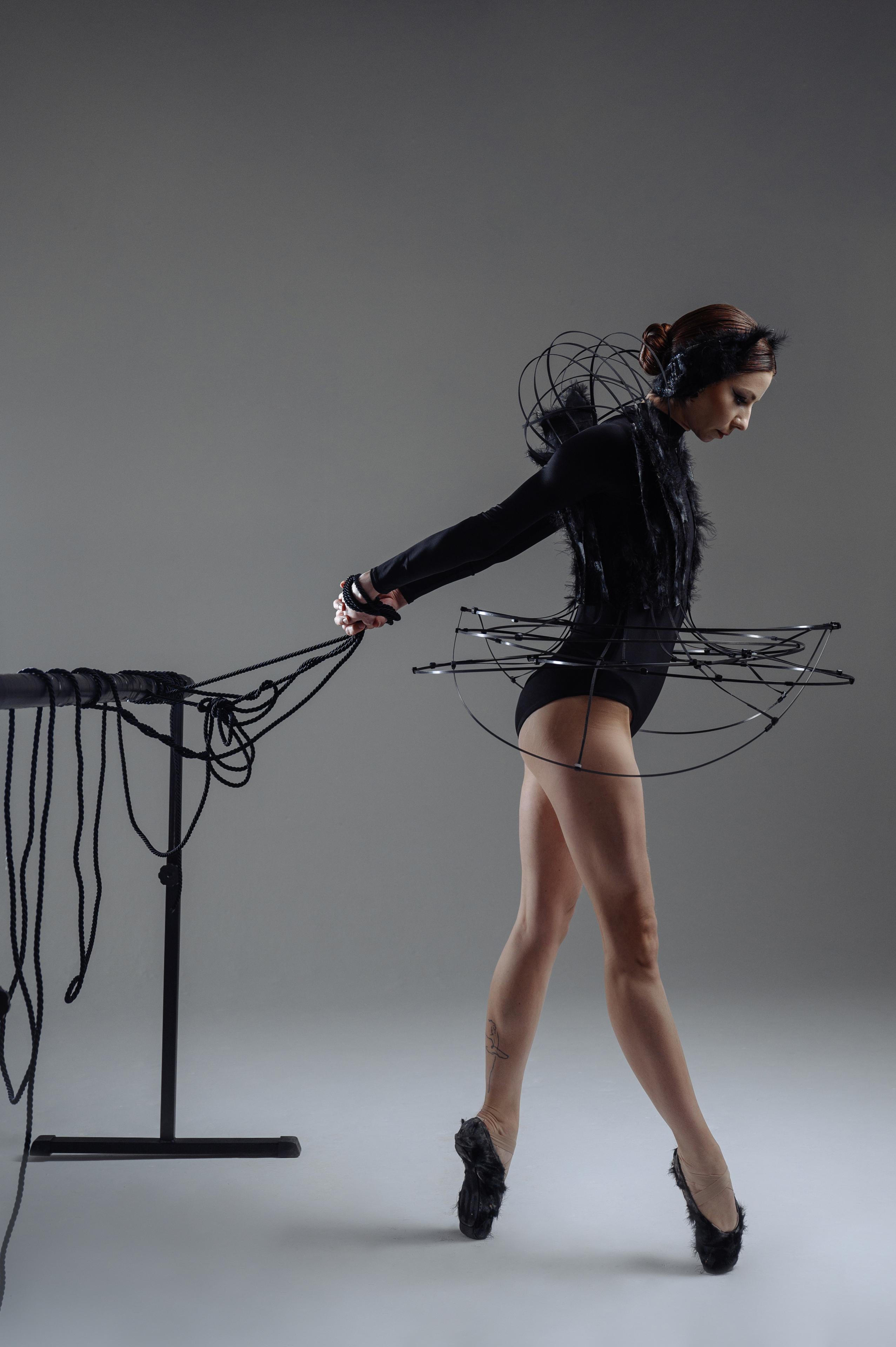
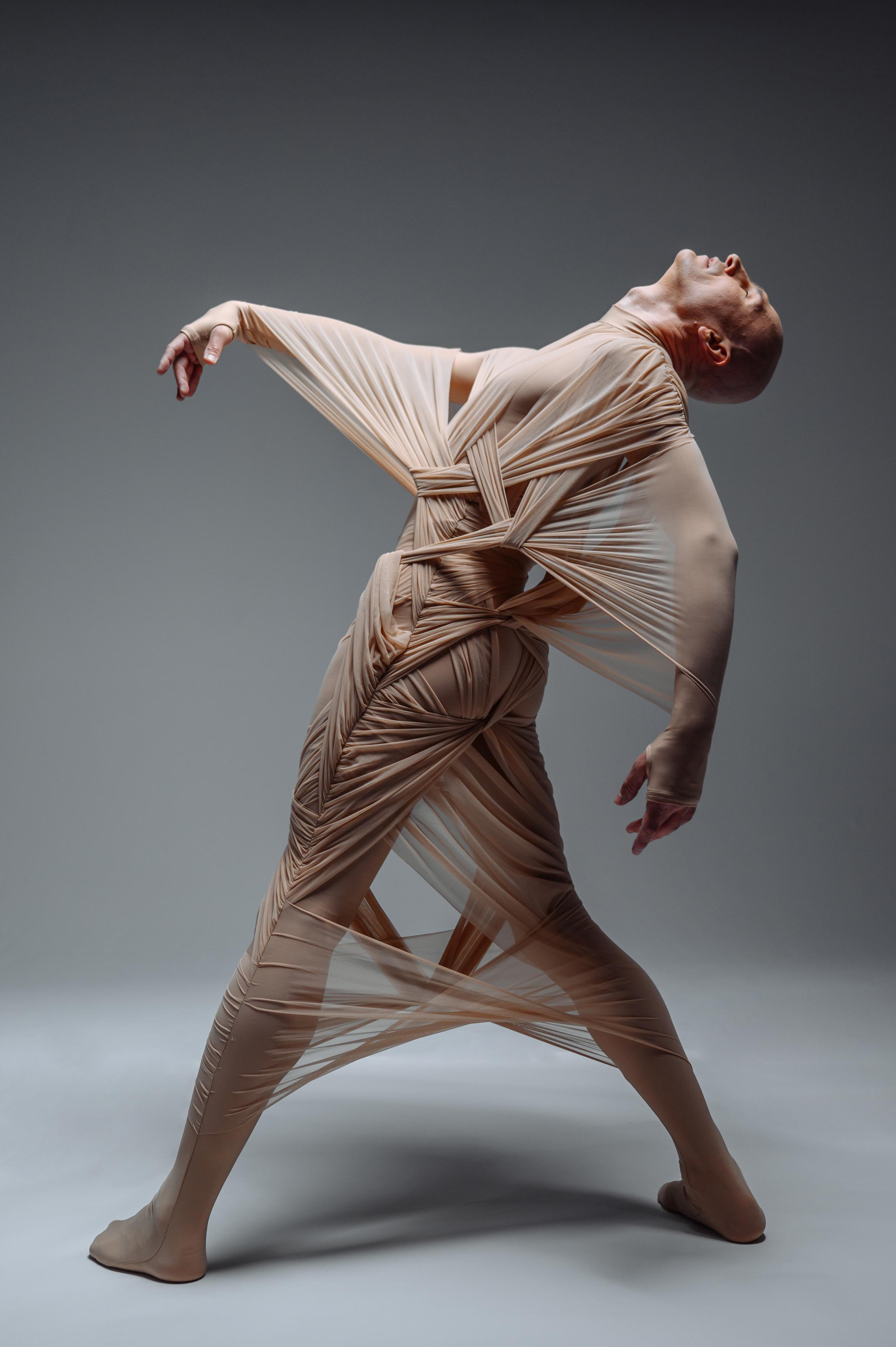
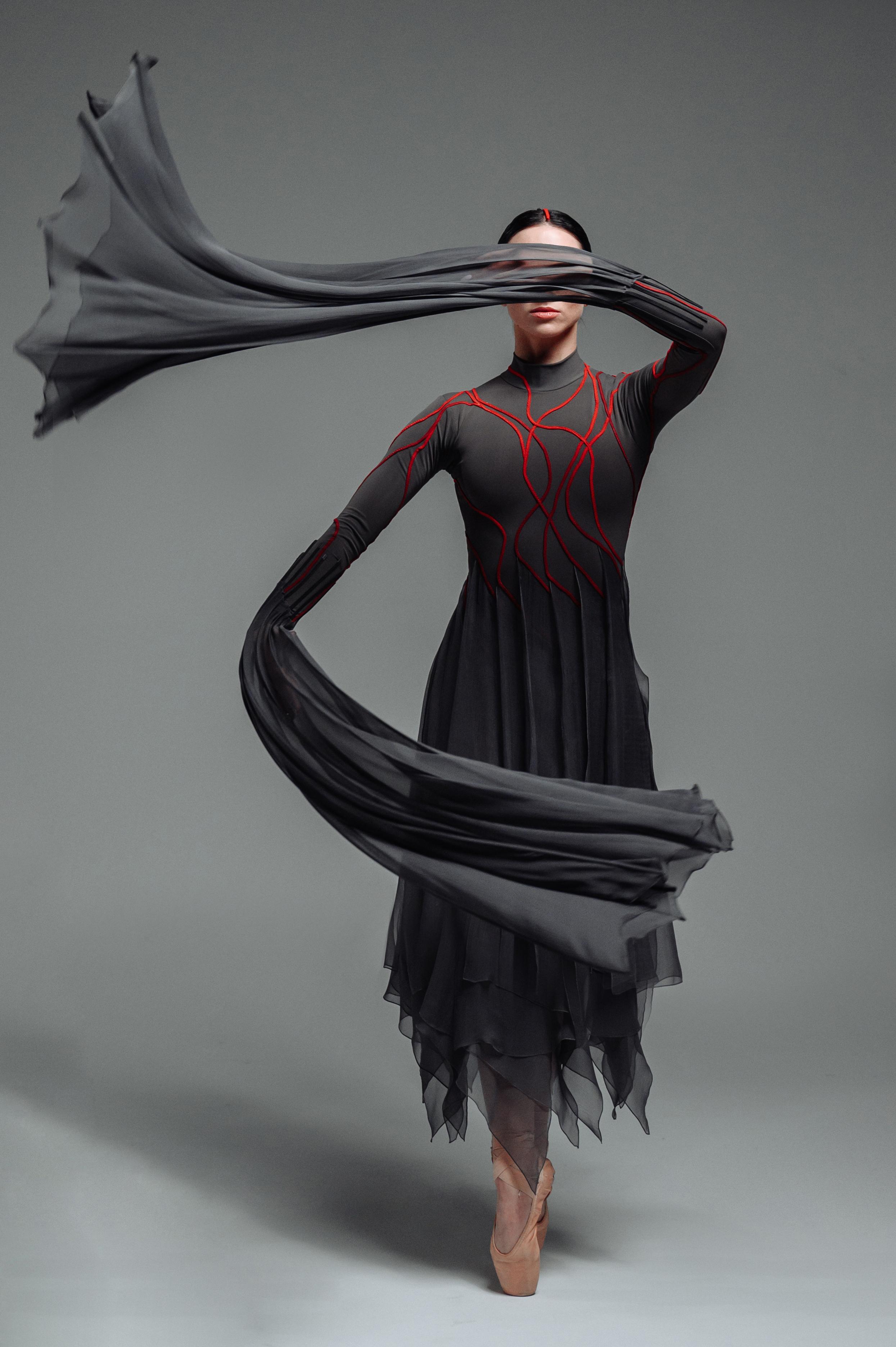
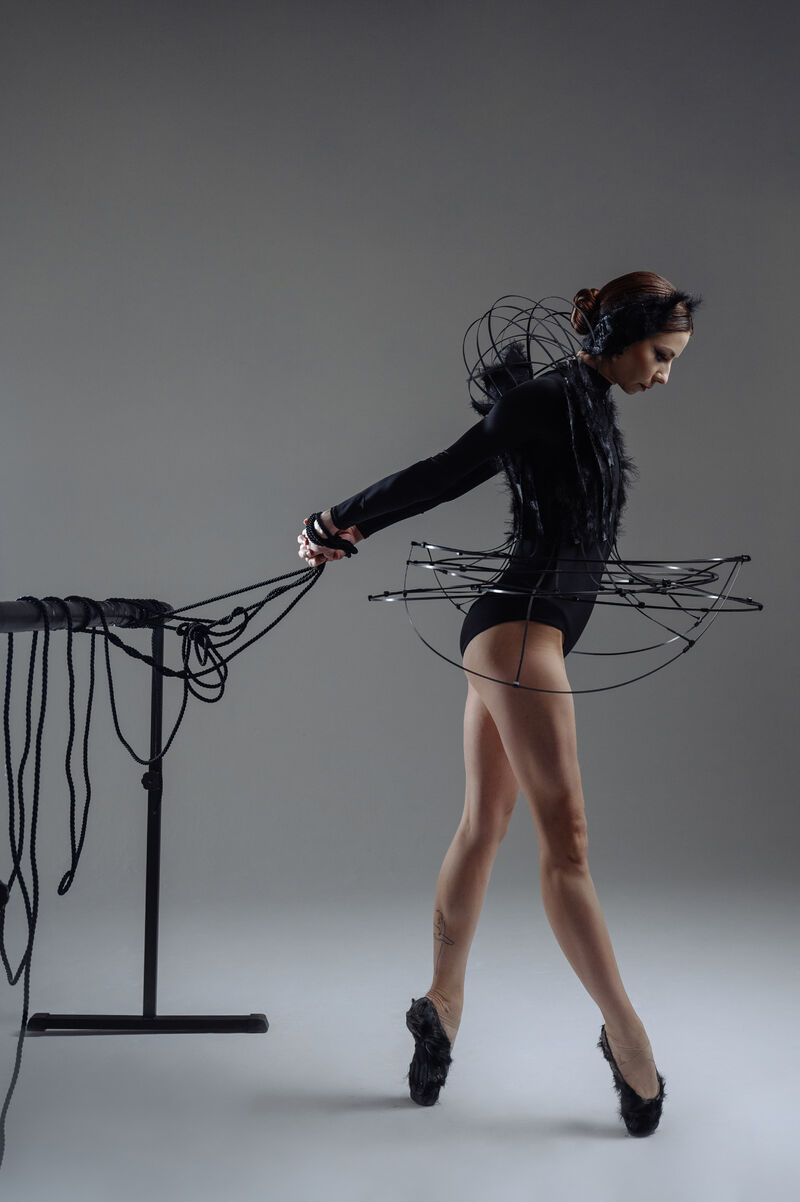
The experimental contemporary ballet costume collection reflects my personal experience in the process of learning ballet. In this collection, the costume becomes a tool that supports or changes a dancer’s movements, helping to express different emotions.
The collection portrays five individual periods, each linked to personal challenges and emotional experiences. The first costume symbolizes the time before ballet school – the innocence and simplicity of childhood. The second reflects the early years of training, marked by rules and restrictions. The third costume represents teenage struggles – the conflict with self-perception, a distorted relationship with the mirror, and one’s body proportions. The fourth shows the time of graduation – a feeling of growing freedom still shaped by discipline. Finally, the fifth period, a decade after graduation, symbolizes liberation, “crystallization’’ – the acceptance of one’s personal experiences.
The whole collection shows a transformation – from childlike innocence, through challenges, to mature freedom. I experiment with the interaction between fabric and body, between movement restriction and release. The main idea is how a costume can help express emotions through movement. I also explore new material possibilities by using carbon fibre, latex and feathers.
The performance is an important part of the project. It is presented by professional ballet dancers who have lived through similar experiences as I have. Because of this, they truly understand and can express each emotional state in the collection.
The music was composed by Nikita Kiriuchinas to support and highlight the emotions of each stage, helping the audience connect with the transformation shown in the collection. The choreography was created by Agne Steponkeviciute, a ballet dancer and choreographer, in close collaboration with me. Together, we shaped the emotional flow of the collection and translated it into movement.
The performance follows a clear, chronological narrative. Each emotional state transforms naturally into the next, showing a personal journey from childhood innocence to self-acceptance and emotional maturity.
In the first stage – innocence – the dancer appears from silence, like a memory. Her movements are light, spontaneous, and free. She dances without limits, expressing pure joy. Her first steps on pointe shoes symbolize the beginning of discipline and structure in ballet training.
The second stage – restriction – shows the transition from free movement to a world of strict rules. The dancer begins to limit himself, trying to meet expectations. His movements become slow and controlled, as if being watched. The music reflects fear and pressure.
The third stage – discomfort – represents teenage years and the struggle with body image. The dancer avoids her reflection, but the mirror "follows" her. Movements are mirrored and fragmented, showing inner conflict and the pain of not fitting into idealized ballet standards.
In the fourth stage – release – the dancer slowly starts to open up. Her arms stretch, and movement becomes more expressive. She finds freedom in motion and starts to grow beyond past limitations.
The final stage – crystallization – is performed without pointe shoes, symbolizing a release from restrictions. The dancer is calm, strong, and grounded. She embraces her past by gently connecting with the dancers who represented earlier stages. At the end, she shares a moment with the "child" version of herself. They exchange a look and a soft movement – a goodbye to the past and a full acceptance of the present self.
I hope this collection encourages people to think about their own experiences and helps them find a sense of personal freedom – a “crystallization’’ regardless of internal or external boundaries.