On a late summer afternoon in Taos, New Mexico USA, the scent of sagebrush lingers in the air as artist and performer Patricio Tlacaelel Trujillo y Fuentes prepares to step onto the stage September 20th and 21st. Dressed in ceremonial costume, framed by swirling fog and dimmed lights, he becomes not just a performer but a conduit—of memory, movement, and myth. This fall, his one-man adaptation of Yo Soy Joaquín, Rodolfo “Corky” Gonzales’s iconic Chicano poem, will be staged at the Taos Center for the Arts. For Tlacaelel, the performance is both homage and offering.
“I was born into this poem,” he says. “The sound of the Brown Berets marching in cadence still echoes in me.”
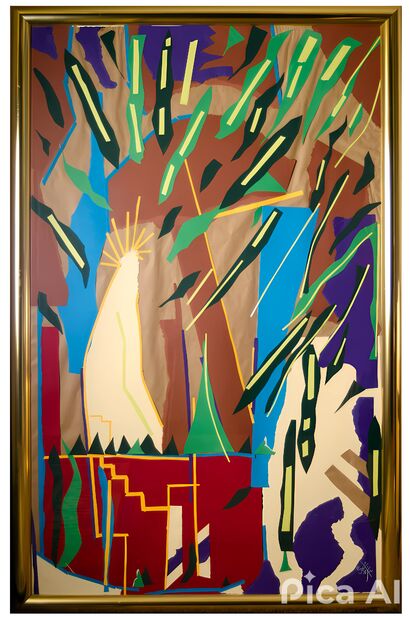
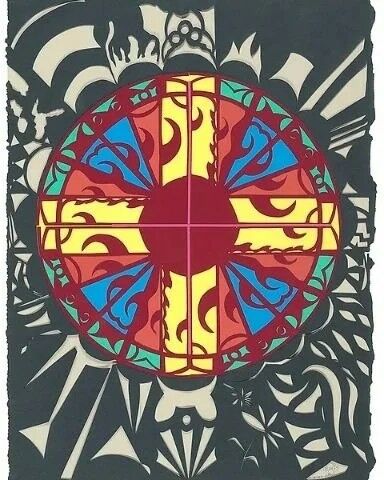
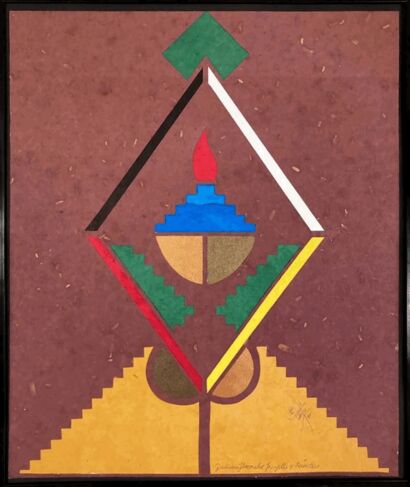
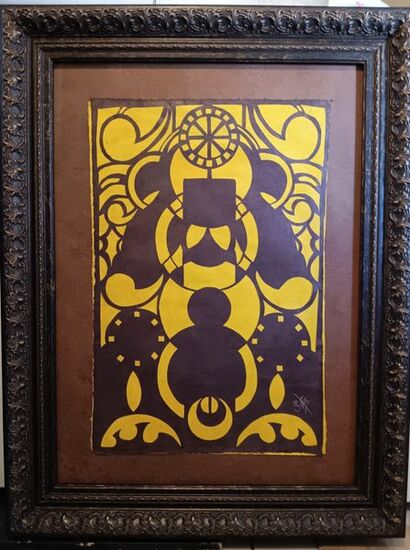
Known widely by his singular given name, Tlacaelel is a force of nature in New Mexico’s cultural landscape. His multidisciplinary career spans performance, visual art, and curation, all animated by a deeply personal pursuit of expression. His works, whether danced, spoken, or delicately cut into paper, embody a rare kind of intensity—rooted in tradition yet never content to remain still.
This year alone, Tlacaelel has co-curated ¡CHICANAO! Caminos Distintos, a landmark exhibition of Chicano art at the Millicent Rogers Museum, where his own papel picado installations are currently on view. Their finely incised layers recall generations of ceremonial craft, yet his compositions hum with contemporary urgency—an aesthetic both reverent and defiant.
His path to this moment has been anything but linear. Born and raised in the Southwest, he trained under celebrated modernists such as poet Owen Dodson and choreographer Paul Sanasardo, and has performed with El Teatro Campesino in California and at New York’s MoMA. Along the way, he’s collected not only accolades but a fierce sense of creative independence.
“He doesn’t separate art from life,” says longtime friend and gallery partner Michael Gorman, who represents Tlacaelel at the Michael Gorman Gallery in Taos. “There’s an obsessive rhythm to his work—it’s physical, poetic, and always evolving.”
Earlier this year, Tlacaelel’s cut-paper works were featured at Art Santa Fe’s 25th anniversary show, drawing attention for their layered complexity and striking cultural synthesis. Whether performing live or presenting a new visual piece, he invites his audience to look more closely—at their roots, their rituals, and the stories passed down between them.
And while his work often dances on the edge of the political, it resists easy classification. What emerges instead is something both ancient and immediate—a style, a voice, a presence.
With more projects on the horizon and ongoing representation through the Michael Gorman Gallery, Tlacaelel remains devoted to the work, however it takes shape. “I will keep going,” he says, smiling, “until they throw me away, like a little church mouse.”
But anyone who’s seen him in motion knows: Tlacaelel is not going anywhere. His story—like his art—moves forward with grace, grit, and unrelenting soul.