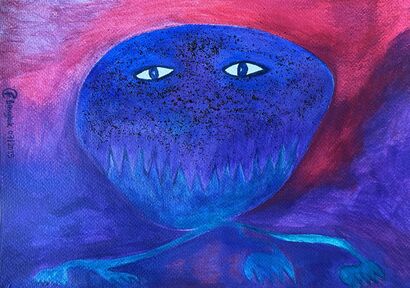
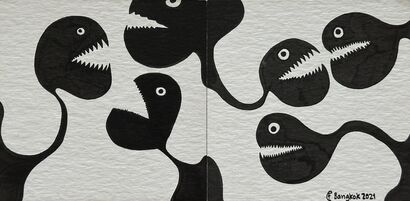
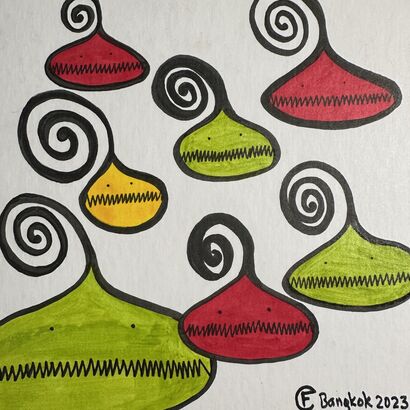
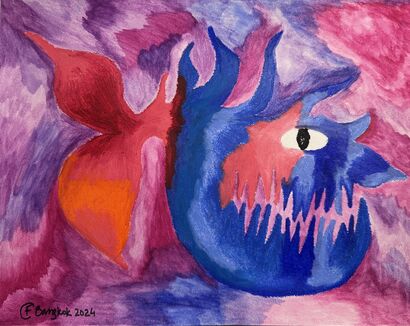
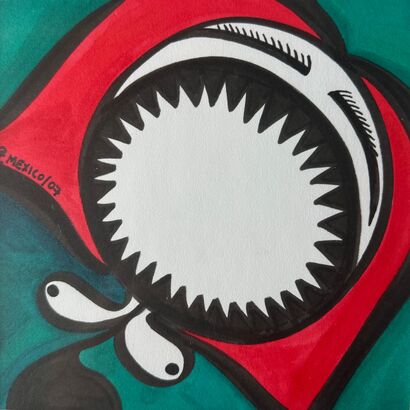
E. Felipe De La Torre (Ecuador/Spain) is a self-taught painter whose work explores hybrid beings that fuse organic shapes with human traits. His paintings follow a visionary, symbolic style, leaning toward the unsettling, where these creatures incarnate paradox as their...
Read MoreE. Felipe De La Torre (Ecuador/Spain) is a self-taught painter whose work explores hybrid beings that fuse organic shapes with human traits. His paintings follow a visionary, symbolic style, leaning toward the unsettling, where these creatures incarnate paradox as their essence.
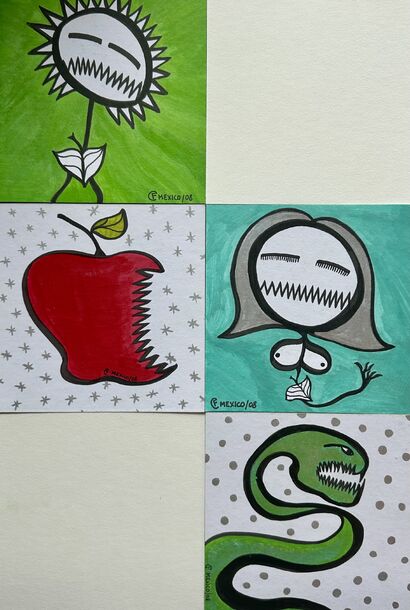
His artistic path began in childhood, inspired by Ecuador’s lush ecosystems—from the rainforest to the muddy mangrove lands. Their botanical splendor, and above all the strangeness of carnivorous plants, fascinated him. He sketched their sharp silhouettes on every piece of paper he found. Those first drawings developed into a consistent visual language, giving rise to more complex entities—half plant, half monster, very human—enriched by extensive travel and personal experiences.
Revisiting lifelong sketchbooks and past notebooks revealed figures that had hibernated long enough and deserved a territory of their own. This vision crystallized in Felihelos, an ongoing project named from Felipe and helos (Greek for marsh), an imagined habitat of batrachians. Beyond painting, his practice also extends to ceramics. His work has been presented in a collective exhibition in Barcelona (2025). Since 2020 he lives in Bangkok, the riverine metropolis whose vitality continues to shape his creative process, enabling new inhabitants to populate the marsh.
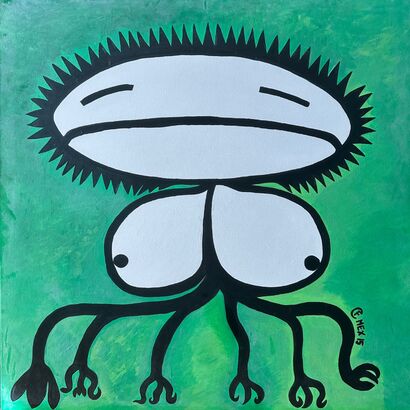
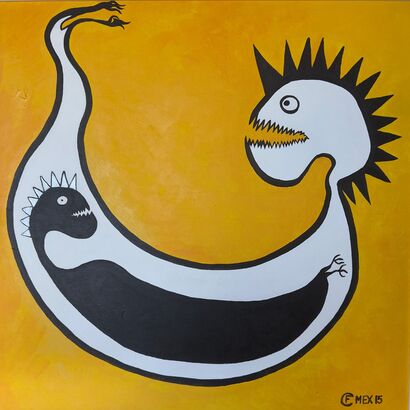
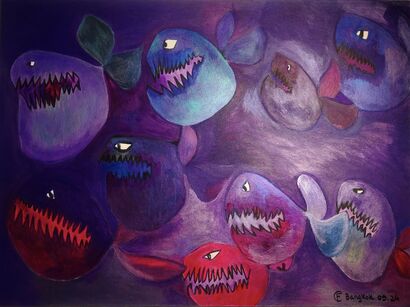
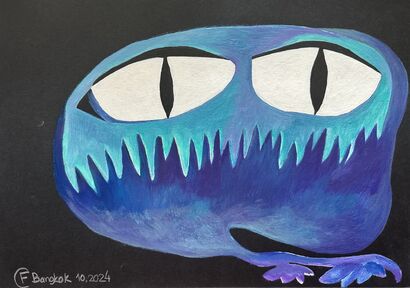
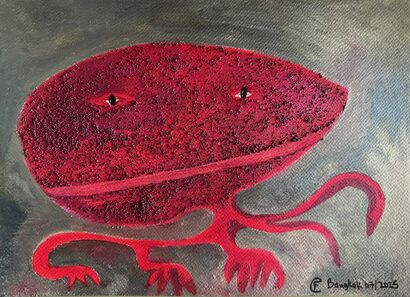
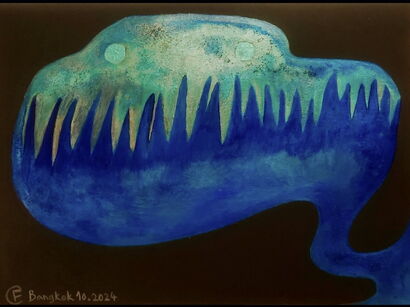
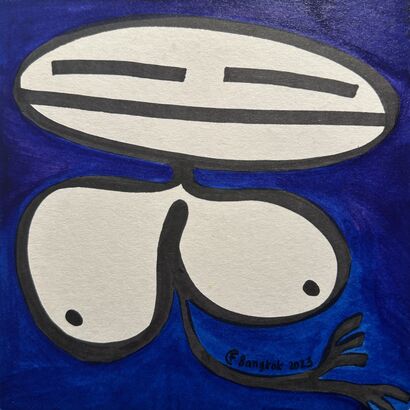
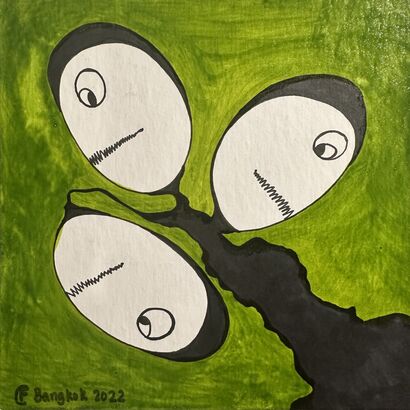
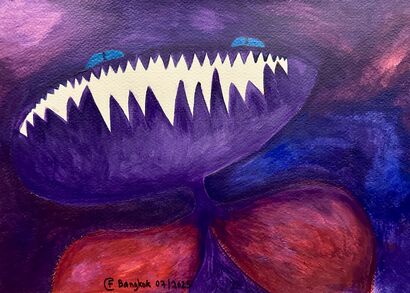
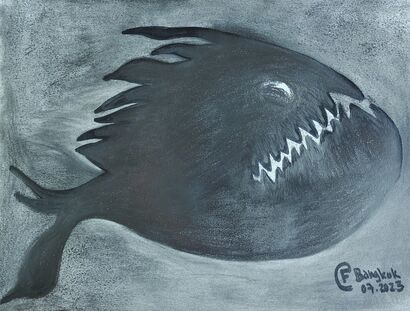
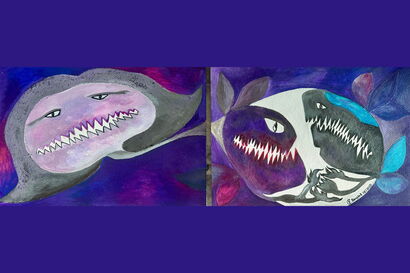
For this submission, E. Felipe De La Torre presents distinguished personalities of Felihelos, his evolving pictorial journey. The marsh becomes a stage where amphibious beings mirror the paradoxes of human existence, while its castes and divisions echo our own hierarchies. Some figures embody isolation, others servitude, authority, collective menace, or honor. Spikes and teeth trace their bodies like emblems of survival and threat—marks of struggle etched in every form. Drawn from both early explorations and recent works, these creations distill impressions of human nature, or else pure fantastical oddity. Alien yet familiar, they invite the viewer to recognize themselves in their distortions.