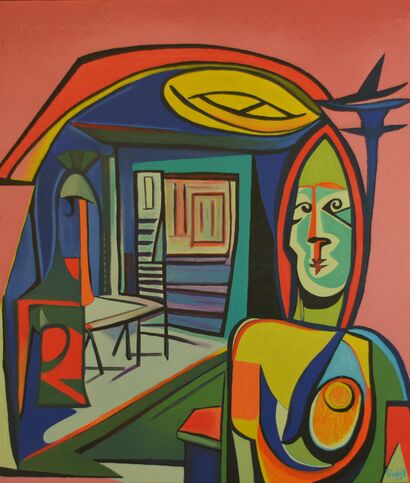
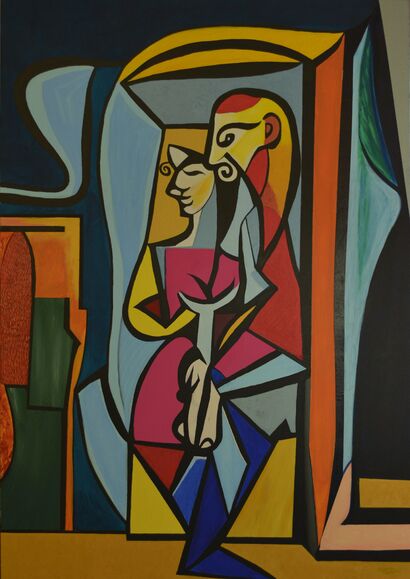
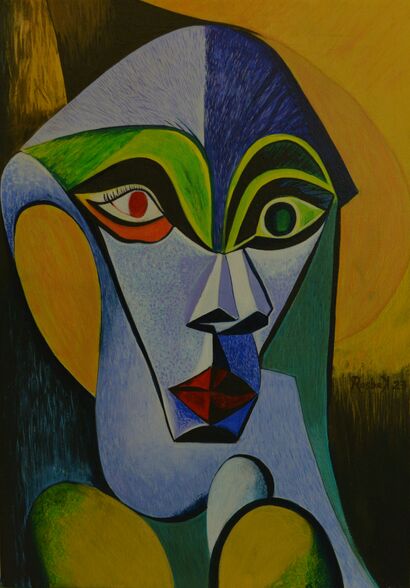
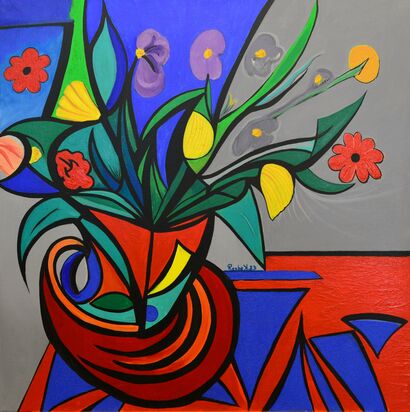
Roberto Santiago Becerra, alias Rosbek
Artist originally from Ecuador, but part of Italian tradition. In his
production he manifests an intense culture linked to the world of pre-Columbian
civilizations. Subsequently, through Spanish cultural mediation, he was able to
delve into European art and specifically the mannerism of El Greco, the baroque
art of Diego Velazquez and the artistic expressions of contemporaneity in which
he found many elements of inspiration, especially in the surrealist movement,
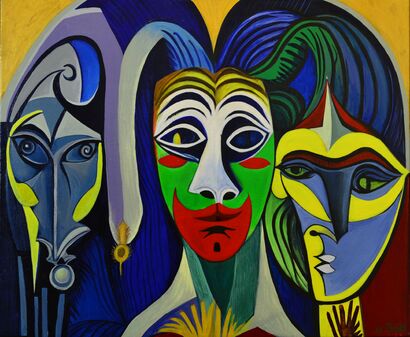
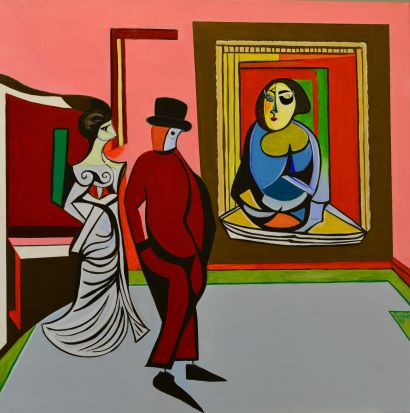
in Dalì , Magritte, Juan Mirò and Picasso with approaches to the expressionism
of Matisse. In these historical figures he appreciates the construction of the
figures and the supernatural research rich in symbolism, with the use of
ancient techniques.
His qualification as a Technician
for the Restoration of paintings and frescoes led him to approach
sixteenth-century painting techniques, rediscovering the use of oil applied to
ancient supports and above all the practice of fresco and Greco-Roman
encaustic. His painting is precisely characterized by this historical research
into ancient techniques and the research of perfection in materials that last unaltered
over time.
Rosbek and the journey of art between two continents
After an initial period of artistic orientation linked to the
representation of subjects from the ancient pictorial tradition, the artist
chose to orient his painting towards Spanish and subsequently Italian art.
Having arrived in Italy in the Veneto region, his family's native land,
he oriented himself towards the revival of the great Venetian mannerist culture
which convinced him of the great value of tradition. The figure has therefore
become the favorite subject.
Subsequently he approached the international artistic currents of the
twentieth century which can be identified in subjects full of symbolism and
attributable to specific contemporary protagonists.
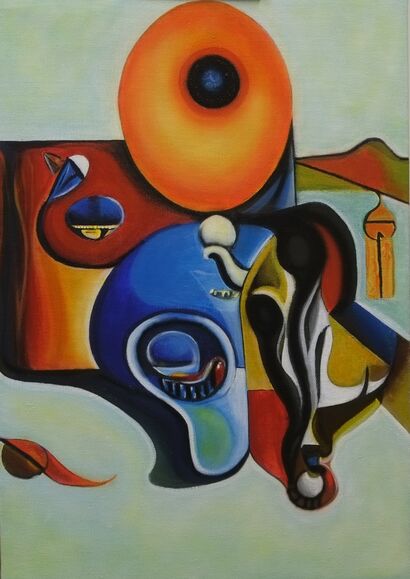
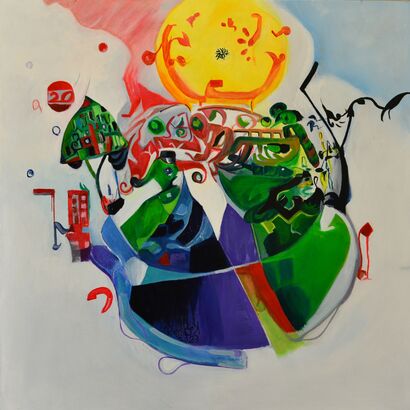
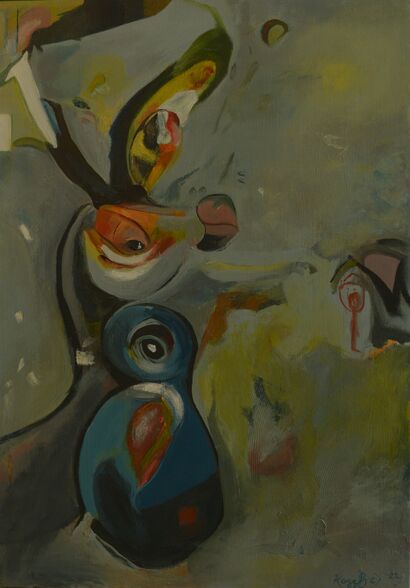
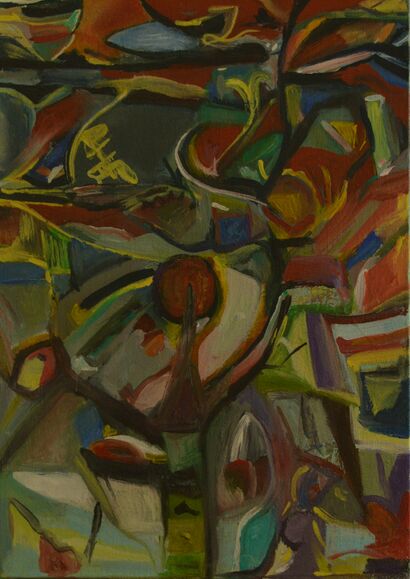
Finally, his representations denote a new research in the artistic field
which has allowed him to move away from the representation of interpreted
naturalisms, moving towards a very personal and innovative abstract language. He
then arrived at a manifest symbolism accentuated by the representation of
reasoned subjects for thematic 'areas' in which there is always a profound
desire to reclaim its original educational culture.
In this he appears quite eclectic in his continuous research and
obsessive experimentation which then pushed him to spatial and even geometric
research.
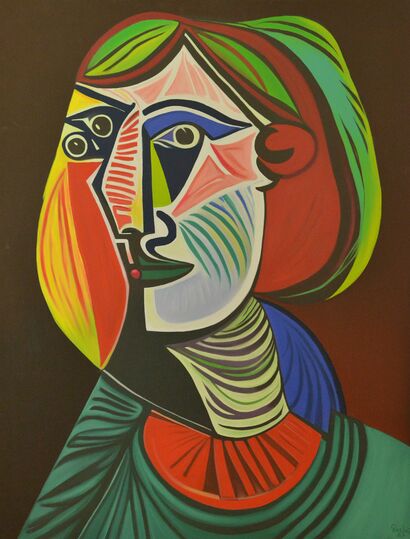
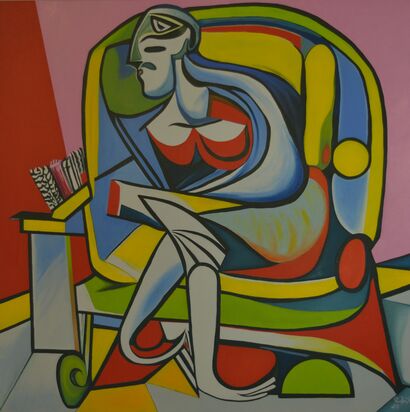
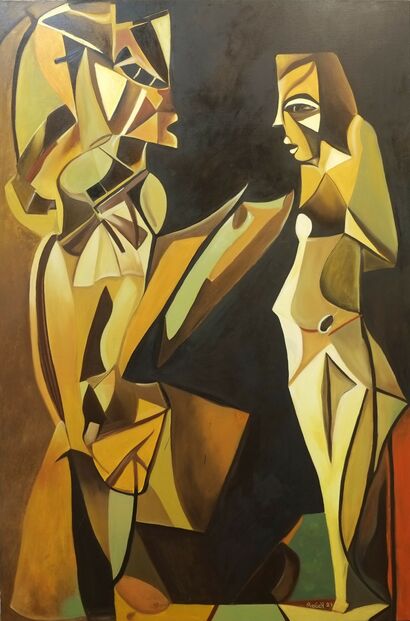
Among the numerous figurative and abstract cycles, there are still the
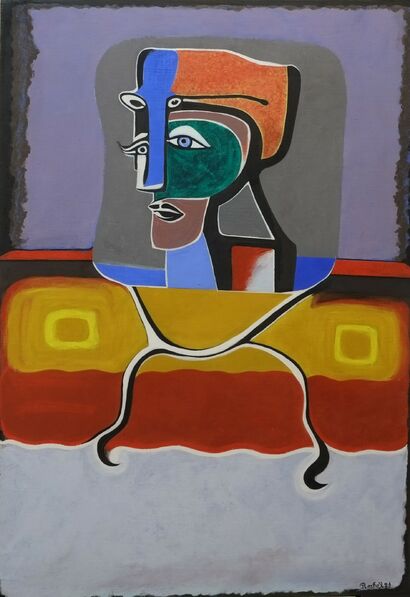
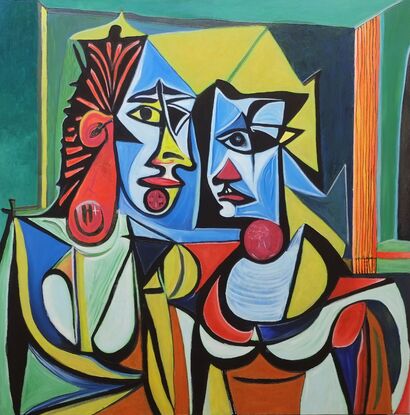
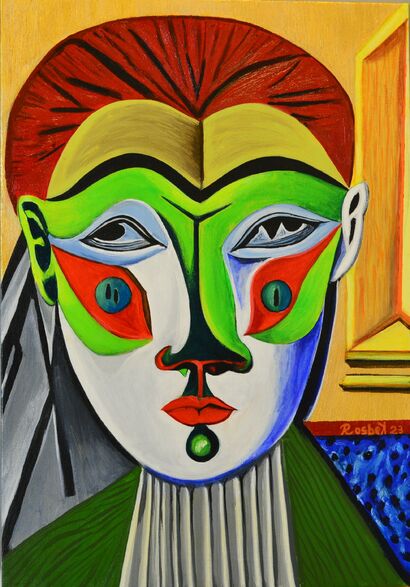
presence of portraits, but highlighted by particular stylized figures, and by
iconographies represented with accentuated surreal 'manners': geometric
figures, anthropomorphic representations, very imaginative figurative
architecture.
The techniques used by the artist are various: encaustic painting on
wood and canvas, oil on hemp canvas, linen and cotton, acrylic on cotton
canvas.